
Passivity’s Final Frontier?
When and why was the passivity rule born? Is the newest iteration the final frontier for this rule?
“Passivity” was born in late 2001 and first implemented during the 2002 season. I was in the delivery room as a member of the FIE Rules Commission at the time.
Sometimes rules are made as a knee-jerk reaction to a crazy and unique circumstance. This was epitomized in the birth of passivity.
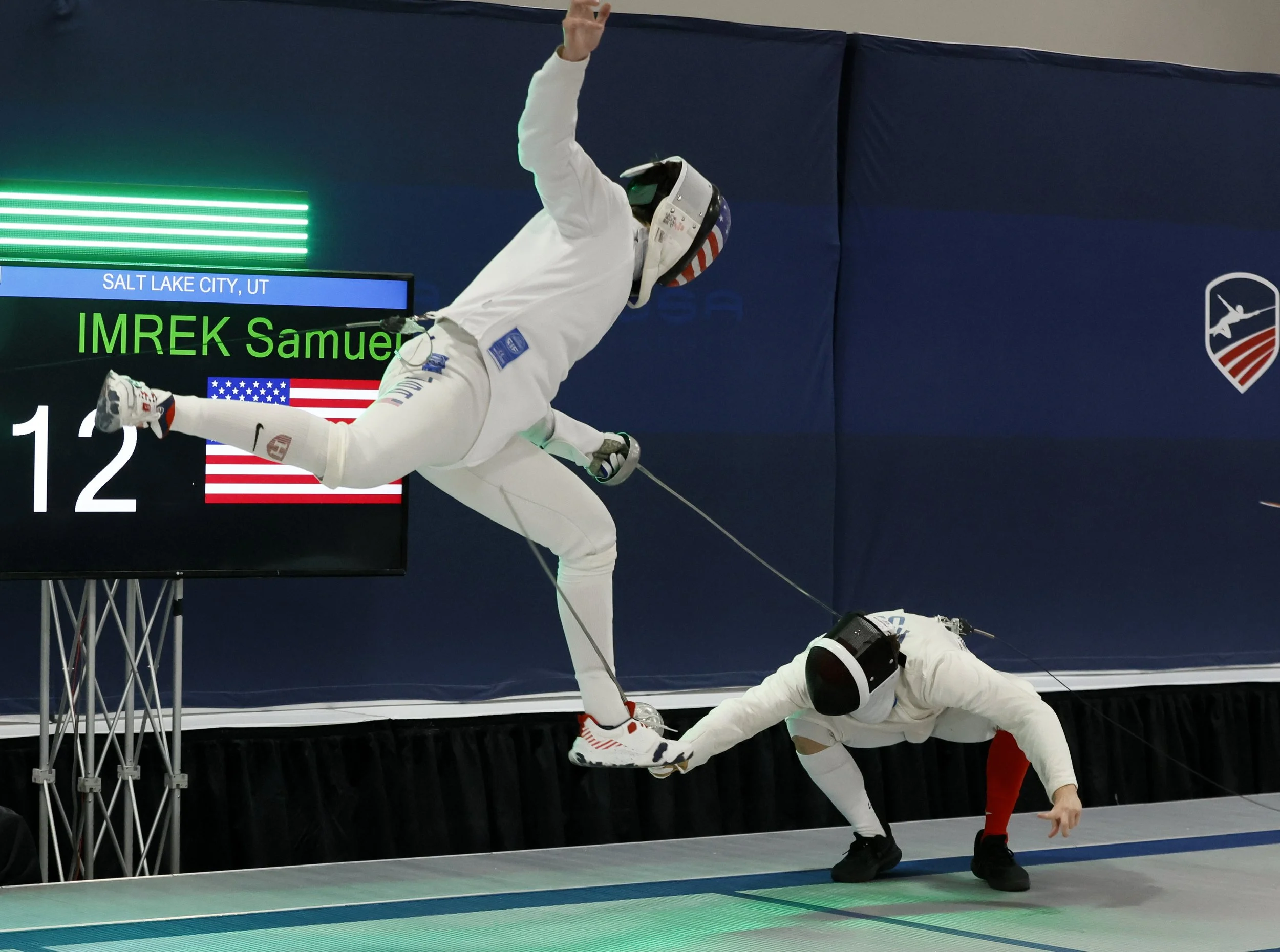
P-cards were introduced to further build upon the “passivity” and “non-combativity” rules and effort introduced in 2001 to encourage more active, visually pleasing fencing matches.
At the 2001 Senior World Championships in Nimes, France, the men’s epee team final was between Hungary and Estonia. Hungary was the heavy favorite, as it had three fencers ranked in the top sixteen in Krisztián Kulcsár, Iván Kovács and Géza Imre. Estonia, in direct contrast, had one top-10 fencer in Kaido Kaaberma, and two lower-ranked fencers in Meelis Loit and Sergei Vaht.
In the match, Estonia had a plan to have Loit and Vaht try to keep the score close by not engaging their Hungarian opponents in their legs. The goal was to let Kaaberma try to win the match on his own. It was Estonia’s best chance to win, but it took two to tango.
So, in Loit and Vaht’s bouts, each would retreat towards their end line and assume a completely passive stance. Amazingly, the Hungarians took the bait and did the same. Now, as a former team captain, I can assure you that was, at best, a questionable tactic by the Hungarians. In my opinion, the stronger Hungarian fencers should have gone after the weaker Estonian fencers. If Estonia had any chance to pull off the upset, it would be because Hungary allowed Loit and Vaht to keep the score close while hoping for Kaaberma to be a one-man band.
So, here we are at the finals of the World Championships with two fencers many meters apart and both in passive stances with their epees pointed to the strip. It was a real hoot, a yuck fest.
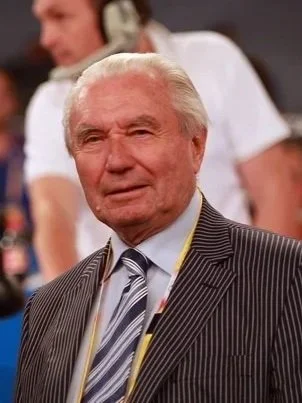
FIE former President Rene Roch.
But it was no laughing matter.
During the 2004 Olympic quad, fencing was a bubble sport, and the International Olympic Committee was considering dropping fencing from the Games. So, on this night in Nimes, the President of the FIE, Rene Roch, was hosting a special guest to show him what an exciting sport fencing was and why it should always be part of the Olympic program. That guest was the President of the IOC, Jacques Rogge.
Rogge was treated to a travesty, as he and Roch watched in horror as the fencers were making a mockery of the sport. Keep in mind that Estonia did not invent this tactic at the 2001 World finals; this was a tried-and-true, time-honored tactic. The problem was that it was employed at the worst-possible time.
Hungary went on to win the gold, 45-25. Estonia and the sport of fencing both lost that night.
The FIE Rules Commission was told to make a rule to ensure this NEVER happened again. Hence, the passivity rule was born. Ironically, in the rush to produce this rule, the Commission initially only addressed how it should be handled in individual bouts, although the problem had first and most visibly arisen in a team event.
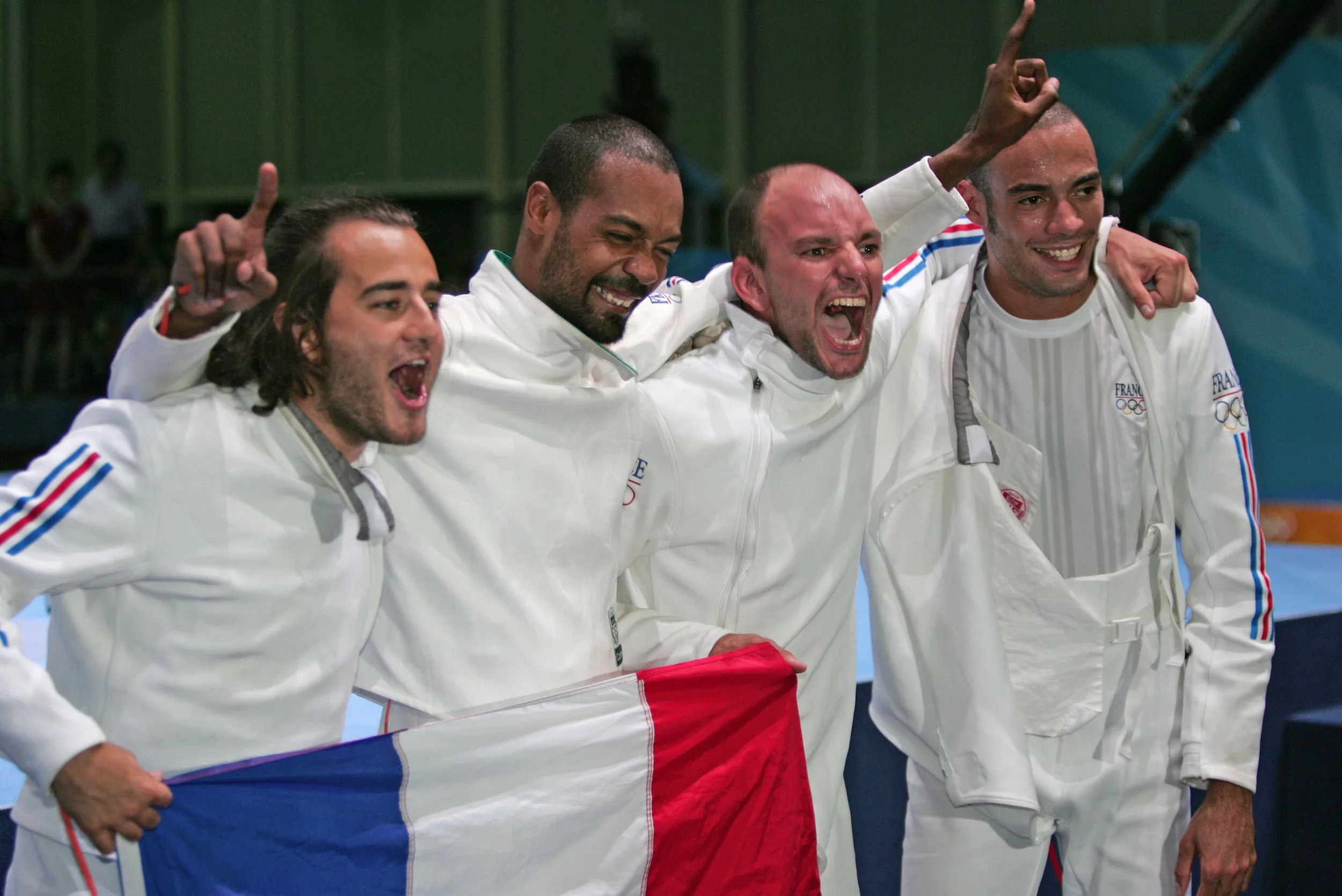
France’s Eric Boisse (far left) at the Athens 2004 Olympic Games.
The original passivity rule gave both fencers a yellow card if deemed they were not fencing. As I said on Day One in the Commission meeting, that was a flawed premise. In my opinion, the onus should never have been on the fencer leading to go after their opponent. But, in the haste to concoct the rule which would prevent embarrassment like we saw in Nimes, it was deemed that both fencers were equally at fault.
Sure enough, this flawed rule was exploited to gain an advantage, and at the World Championships, no less. In St. Petersburg, Russia in 2007, there was a bout in the men’s epee round of sixteen between the USA’s Seth Kelsey and France’s Eric Boisse. Kelsey, who already had a yellow card from something he did in the first period, was leading Boisse by one touch with about a minute and a half left in the third period.
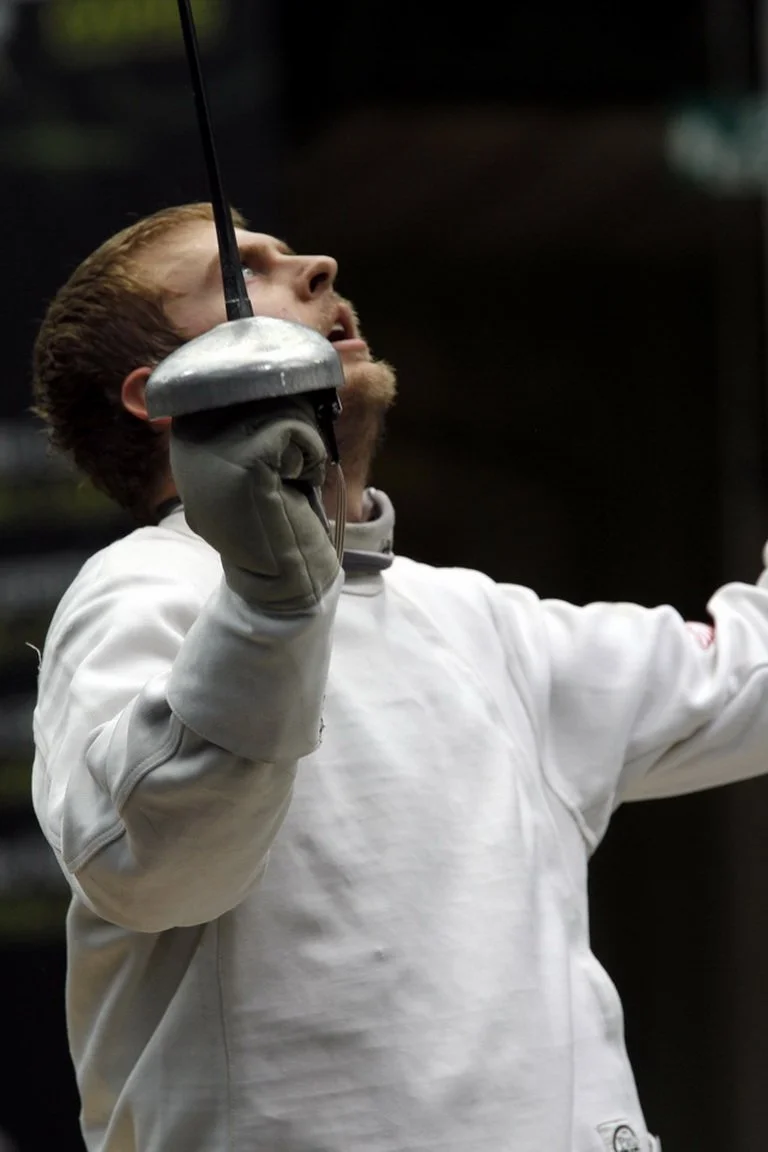
USA’s Seth Kelsey at the 2010 Paris World Championships.
Suddenly, Boisse took two or three retreats and dropped his weapon arm into a passive stance. Kelsey, leading by a touch, instinctively did the same. The referee, after just a few seconds, called halt and penalized both fencers for passivity. A war whoop went up from the French bench, which eerily pierced through the otherwise silent venue. While Boisse received a yellow card, Kelsey received a red card. This enabled Boisse to tie the score! It was a genius tactic by the French, as they took advantage of the illogical quirk in the rule. Kelsey had earned the right to protect his hard-fought one-touch lead. Instead, the initial version of the rule deemed his equally at fault as the trailing fencer, Boisse.
As the rule evolved from passivity to being deemed “non-combativity,” the mutual yellow cards were eliminated, which was a step in the right direction. However, there was still something inherently wrong, as the trailing fencer was never penalized for refusing to fence.
We have seen changes to what determined non-combativity, such as no blade contact for fifteen seconds, no touches for about a minute and excessive distance between the fencers.
Five years ago, the passivity rule was improved dramatically with the advent of the “P-cards.” That eliminated the previous flaw in the Kelsey-Boisse scenario, where a regular yellow card and subsequent passivity penalty would warrant a red card.
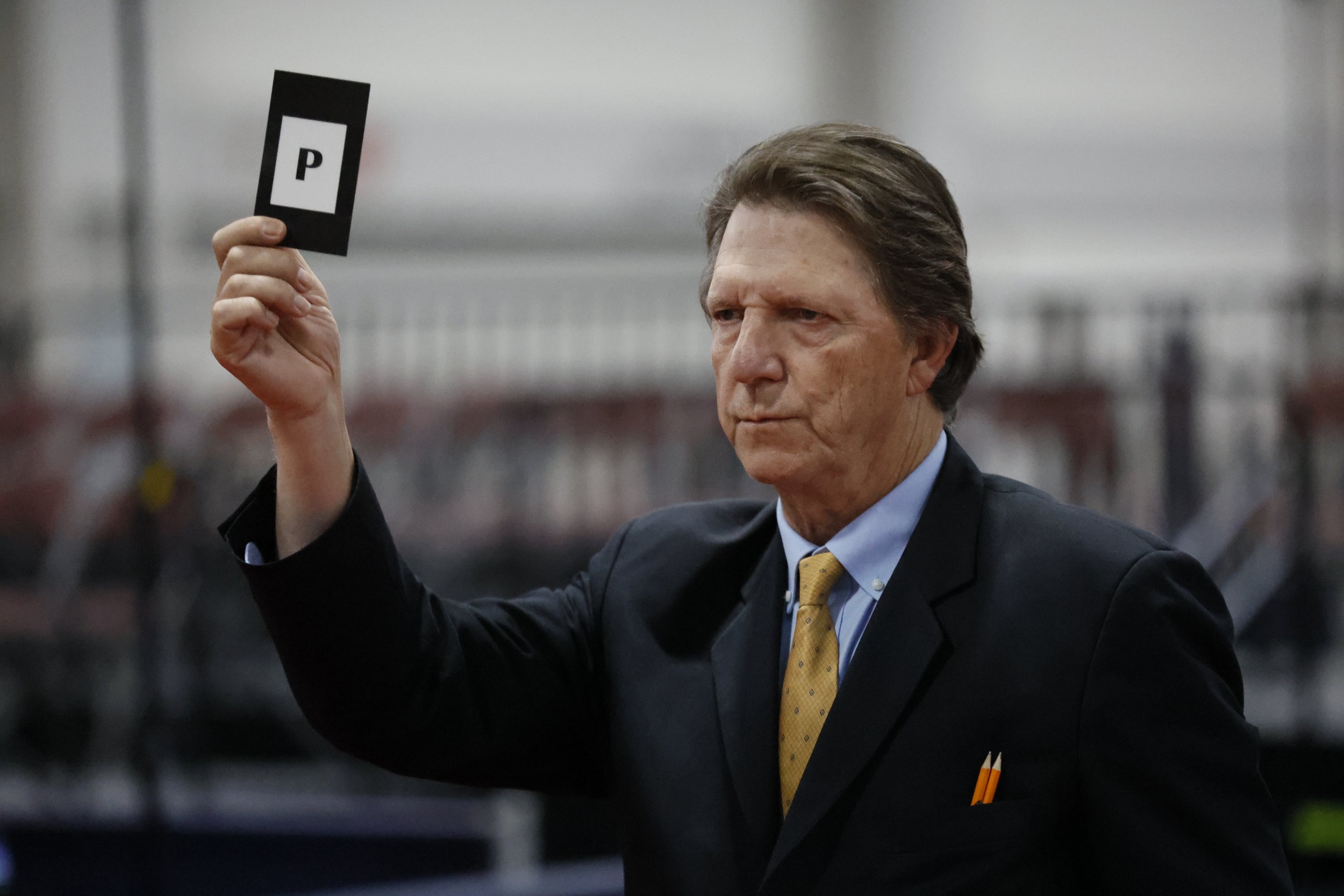
The dreaded P-black card.
In the two-decade evolution of the rule, the P-cards were the best solution to date. Of course, there was still, in my opinion, the flaw of leading fencer being penalized. Certainly, an argument can be made that both fencers are equally at fault, so let’s leave it at that.
At the recent FIE Congress in Manama, Bahrain, a new wrinkle to the passivity rule was proposed and passed. Very simply, there are no more P-yellow cards. The first instance of passivity, which is determined by the sole criterion of no touches in one minute of fencing, will result in P-red cards.
Excellent! Why didn’t we think of this sooner? Why should fencers get a preliminary penalty of a P-yellow card, a slap on the wrist, for doing something they should not be doing? Why prolong the agony and charade?
So, it has been almost a quarter century since the 2001 Nimes debacle. We have seen numerous changes to the rule. We have even seen changes to the name of the rule such as passivity, non-combativity and unwillingness to fight.
Congratulations to the FIE for tightening up the passivity rule with this logical change. The question is: Will this be the final frontier?
Photos: Serge Timacheff