
Learning What Deserves Urgency
After a medical crisis changed her relationship with ambition, Jasmina Denner returned to fencing and helped reveal a larger story about the veteran team preparing for the Veteran World Championships.
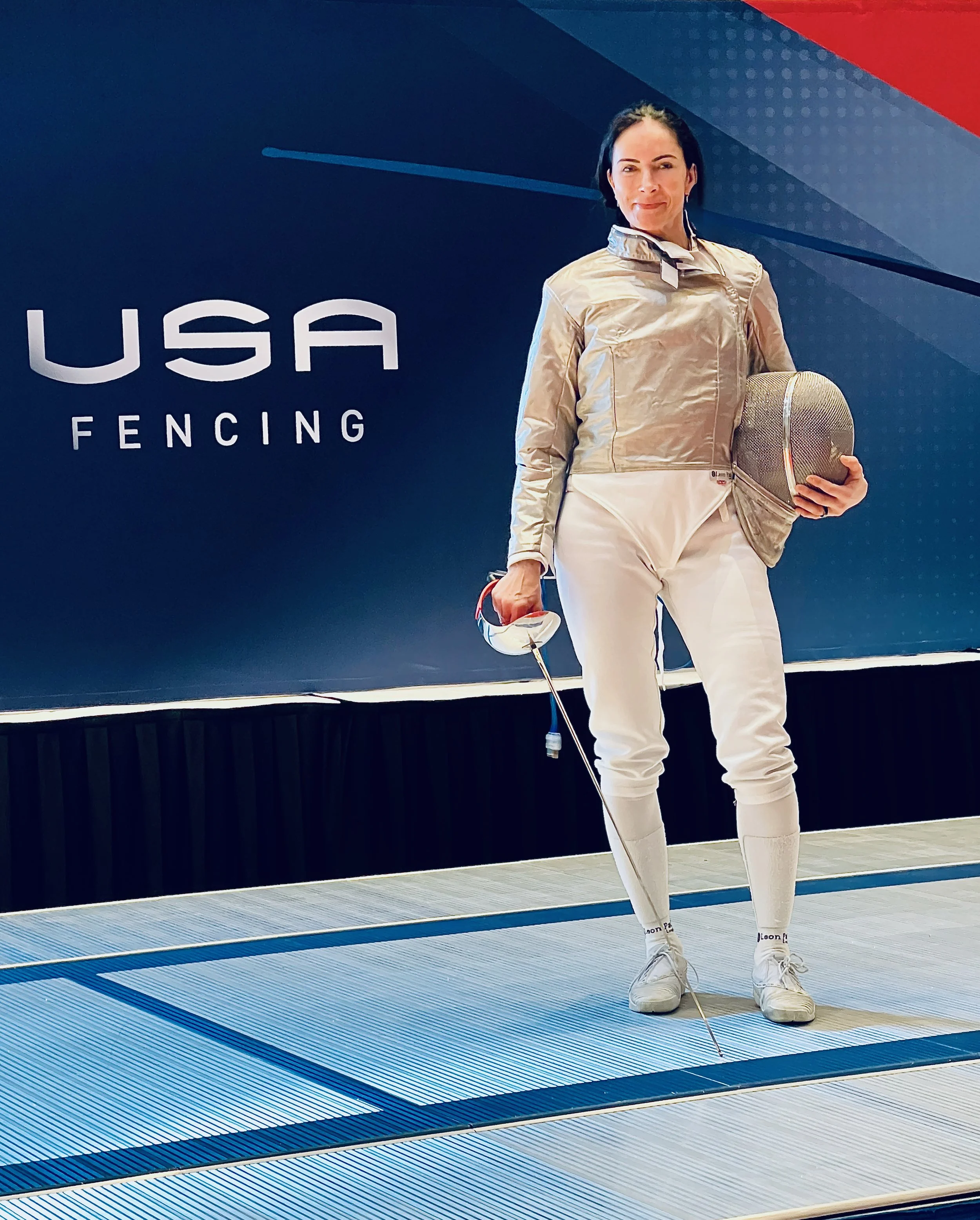
2024 Columbus Summer Nationals, ready for Vet 50 Women’s Saber finals.
Editor’s Note: This is the first story in our new column, “Veteran Stories,” by Adeline Chung-Feder. We’ll be exploring the many tales and experiences of all types of veterans as they continue to demonstrate their passion for fencing as a lifelong sport.
Jasmina Denner was preparing to write a book about longevity when her own life put its central questions to the test.
She had signed a contract for Longevity Intelligence in the spring of 2024 and spent the following months developing the book’s central ideas. The manuscript had barely begun when a serious medical crisis interrupted everything.
What changed afterward was not simply whether Jasmina would return to fencing or finish the book. It was whether she could continue living as if every ambition deserved everything she had.
“You can have everything. You can do everything, but not at the same time,” she said.
Jasmina was the last person I interviewed for what was supposed to be a straightforward article about members of the U.S. team preparing for the Veteran World Championships. We scheduled the conversation several times, but other responsibilities intervened.
Near the end of our eventual conversation, we laughed about the delays. I asked whether, before the medical crisis that nearly took her life, she would ever have rescheduled an appointment this many times.
“No,” she acknowledged. Before her illness, Jasmina approached work, family, fencing, club ownership and writing with the same intensity. “I was killing myself,” she said.
The rescheduling was not a sign our conversation did not matter. It revealed Jasmina had learned everything could matter without everything occupying first place at the same time.
When the Questions Became Personal
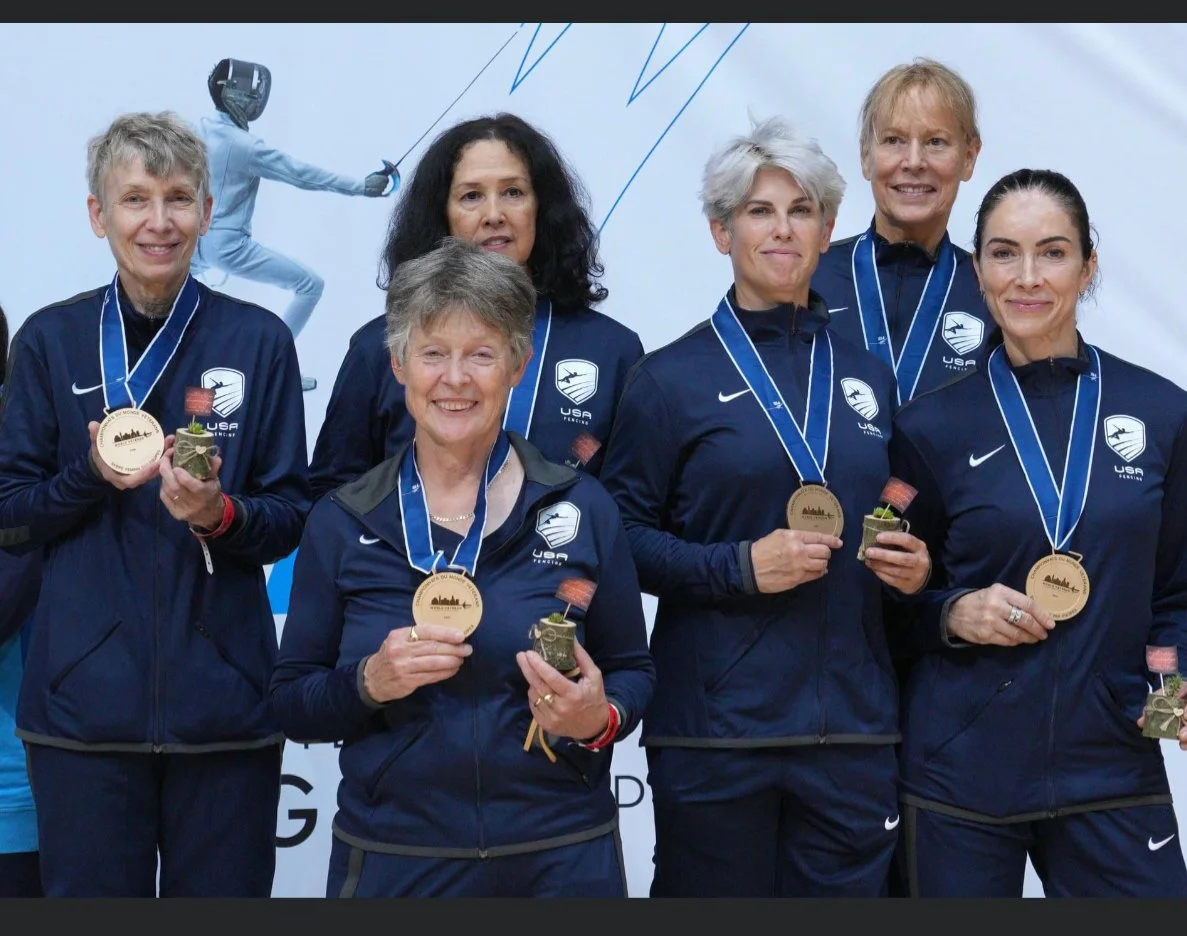
Bronze-medal in Women’s Team Saber at the 2022 Zadar, Croatia Veteran World Championships: Linda Dunn, Heidi Runyan, Julie Seal, Jane Eyre, Delia Turner, Jasmina Denner (L-R).
From November 2024 through January 2025, Jasmina spent nearly three weeks hospitalized across several admissions for severe gastrointestinal problems. An initial nine-day hospitalization was followed by surgery on December 30. Complications during recovery caused significant internal bleeding, required multiple blood transfusions and sent her to intensive care.
She lost approximately 14 pounds. Brain fog made writing difficult, physical weakness made training unrealistic and recovery required months of treatment. She had entered the hospital as a highly conditioned athlete and emerged grateful for something that had once seemed ordinary.
“I was happy being alive,” she said.
Recovery did not proceed in a straight line. Fencing offered movement, structure and an outcome she could pursue while her manuscript remained stalled. In April 2025, only months after leaving the hospital, she entered a national competition in Los Angeles and injured her right meniscus during a semifinal bout. The setback kept her from the 2025 Summer Nationals, the first she had missed in approximately a decade.
By then, Jasmina believed she might be finished with competitive fencing.
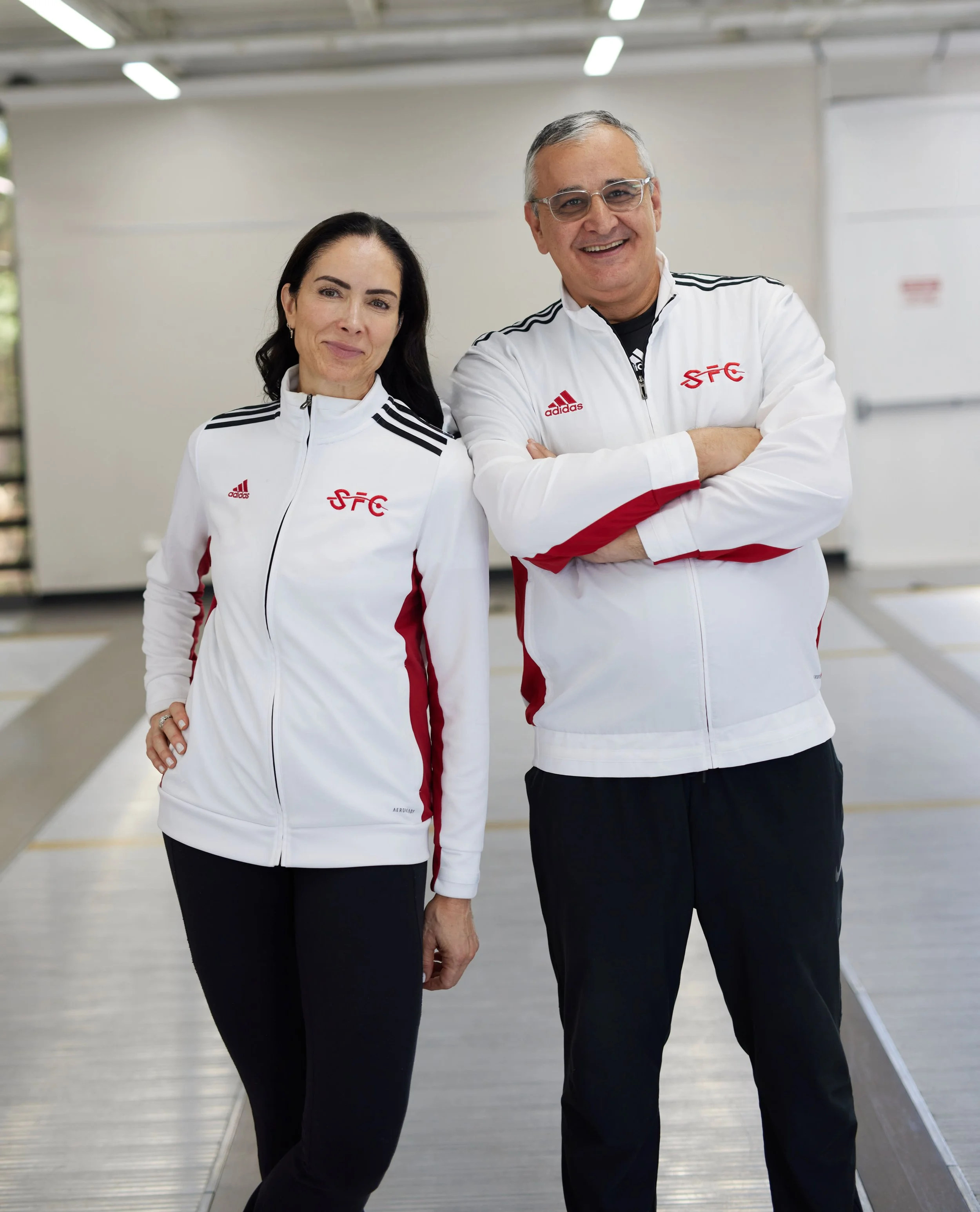
Jasmina with her coach and SFC cofounder, Achiko Lortkipanidze.
A Family Ecosystem
Leaving was complicated because fencing had been part of Jasmina's family for nearly 15 years. She first experienced the sport as a mother watching her sons, Lysander and Max, then decided she no longer wanted to remain on the bench.
She trained alongside elite young fencers, earned national medals, reached the veteran world team and won team bronze at the 2022 Veteran World Championships. Her involvement expanded when she co-founded Scarsdale Fencing Center, where she sometimes jokes she has more than a hundred additional “fencing children.”
What she wants those athletes to understand is not simply how to win. Medals matter, but so do the discipline, relationships, resilience, independence and self-knowledge developed while pursuing them. Fencing connected her family, friendships, competitive identity and belief in intergenerational community. Leaving would have meant walking away from much more than medals.
Returning on Different Terms
Jasmina's return began in earnest in early 2026, when she started working with a different coach. His technical, lower-pressure approach felt better suited to the athlete she was becoming. She began changing her technique, becoming more patient and enjoying training again.
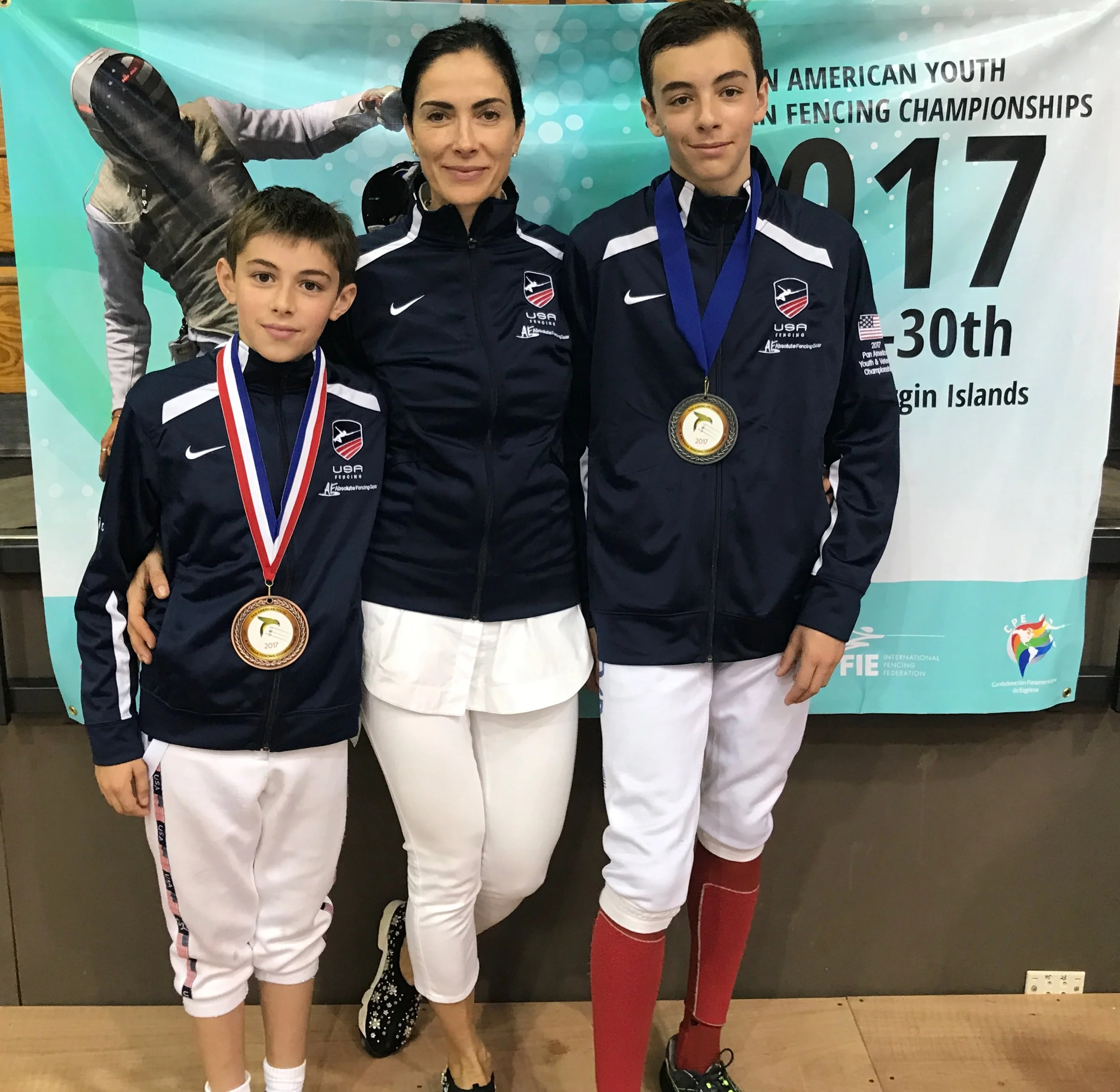
Jasmina with her sons, Max (left) and Lysander (right), competing at the Pan American Youth and Veteran Championships.
She still entered qualifying events and wanted to perform well, but she was learning to give herself permission to fall short. Jasmina did not initially secure one of the qualifying positions. When another athlete withdrew, the available place passed to her.
There was irony in the outcome. During the period when making the team no longer determined her entire sense of success, the opportunity nonetheless arrived. Once Jasmina knew she would be going to the Veteran World Championships, her competitive focus sharpened. The ambition remained. What had changed was her relationship with it.
She was not trying simply to recover the athlete she had been. She wanted to discover the athlete she could become next.
Selective Intensity
Jasmina's illness did not teach her to care less or become less ambitious. Instead, she became more selective about where intensity belonged. She could continue writing later, but she could not assume her body would offer the same competitive opportunity several years from now.
Choosing fencing in this moment was not abandoning her other goals. It was accepting that they did not all require equal urgency today. Nor would the World Championships become the measure of everything else. Asked what she was no longer willing to sacrifice for competition, Jasmina answered immediately.
“My sleep. Never.”
She still believes meaningful goals require sacrifice, discipline and enormous effort. What she no longer believes is every goal deserves unlimited sacrifice simply because she cares about it.
“Enjoy the process,” she said. “It's not the destination.”
She had not stopped caring about the result. She had changed what she was willing to sacrifice for it.
Fencing in a Longer Life
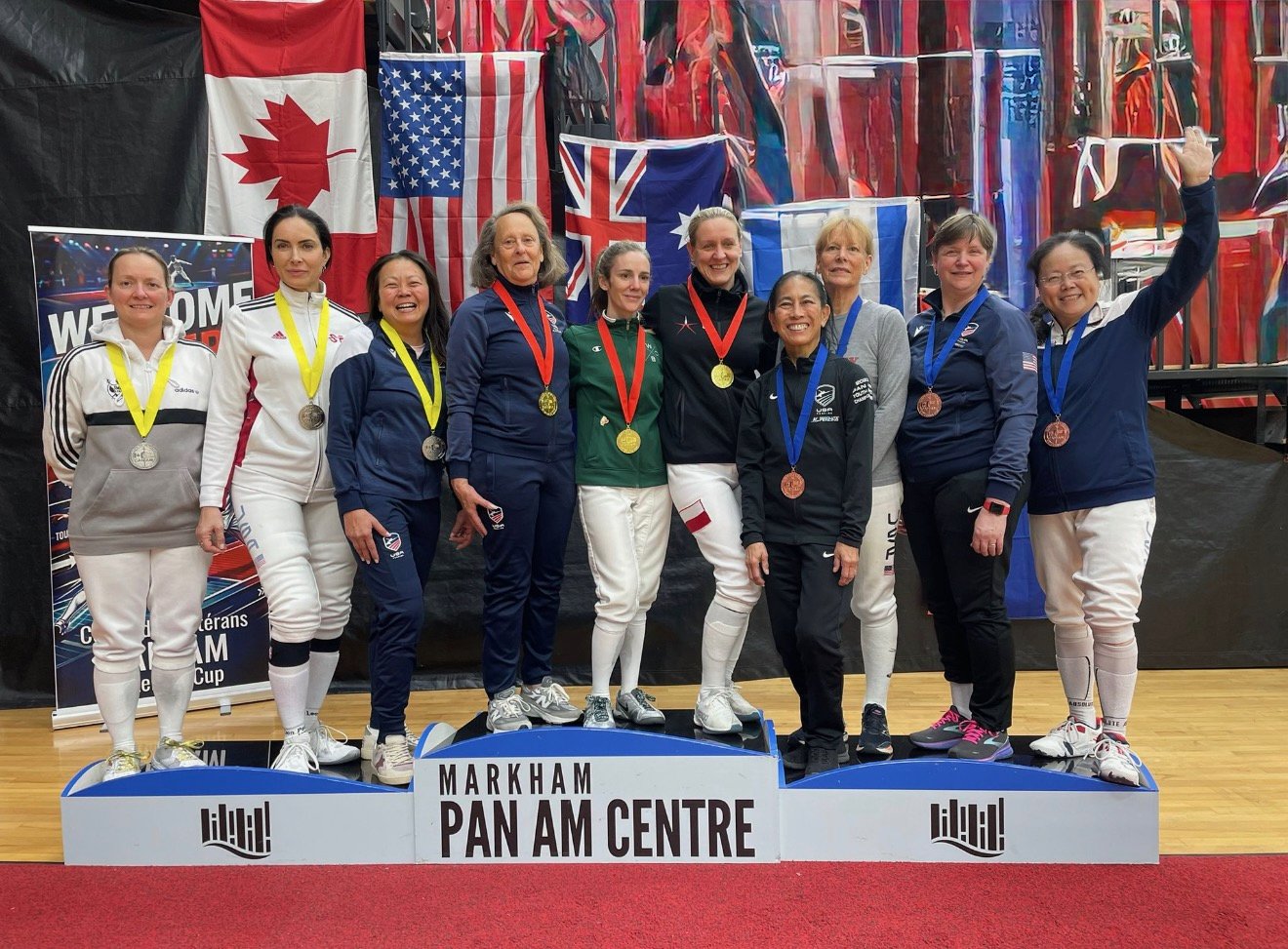
Bronze medal in Women’s Team Saber at the 2022 Zadar, Croatia Veteran World Championships.
The Longevity Intelligence manuscript is now substantially drafted, but Jasmina's illness forced her to experience its questions rather than examine them only as ideas. For her, longevity is not simply about adding years. It is about developing the agency and adaptability required when biology, circumstances and priorities change.
Fencing has become one place where she can practice that adaptation. The sport demands physical capacity, strategy, perception, decision-making and continual learning. An athlete cannot rely indefinitely on who she was five or ten years earlier. She must keep becoming the athlete she is capable of being now.
Jasmina is developing the concept for a possible future project connecting fencing and longevity through the idea of the “longevity athlete.” Her challenge is not deciding which of her roles matter. It is accepting they cannot all demand first place at the same moment.
The Last Interview Became the Beginning
I initially approached Jasmina with a simpler assignment. I expected to ask veteran athletes about training, conditioning, travel and the physical adjustments they make as they grow older. But it became impossible to discuss how they were preparing without understanding everything that had brought them to this point.
For Jasmina, preparation could not be separated from the children who introduced fencing into her family, the club she helped build, the health crisis that nearly took her life, the knee injury that interrupted her first return or the period when she questioned continuing competitive fencing.
The same realization appeared throughout my other interviews. Some athletes entered fencing because their children competed. Others returned after years or decades. Some crossed borders and represented more than one country. Others rebuilt after injuries, professional demands, family responsibilities, personal loss or periods when their competitive desire disappeared.
Their preparation did not begin a few months before the Veteran World Championships. It started years earlier. What began as one article about a team preparing for international competition became a story about why people continue.
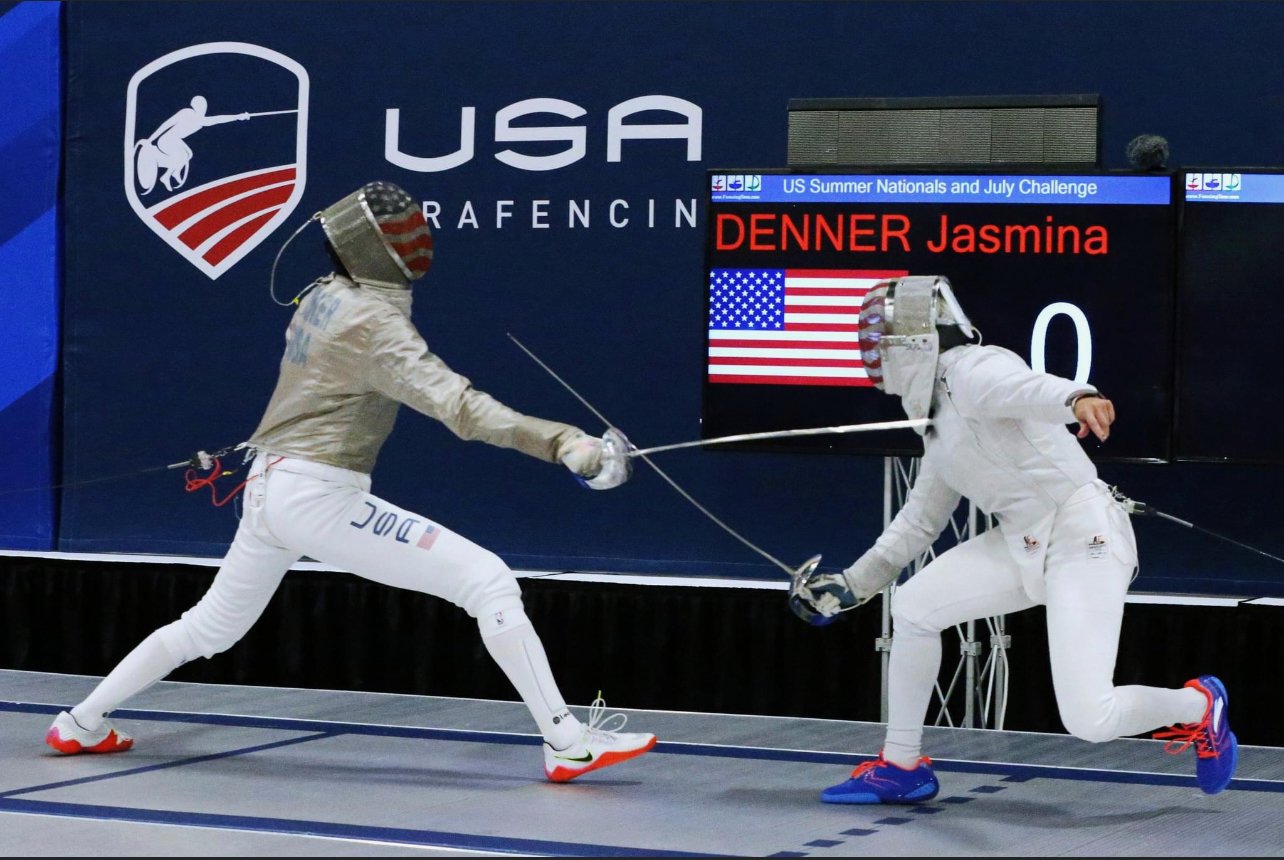
Gold-medal bout with Julie Seal in Veteran Women’s Saber at the Phoenix, Arizona 2023 Summer Nationals.
The articles ahead will group athletes by the experiences that carried them to the world stage: competing under more than one flag, returning on different terms, entering through family, sustaining a long athletic life, making room for personal ambition and rebuilding competitive fire.
Together, their stories show preparation includes the children who opened the door, the coaches who changed direction, the injuries that demanded adaptation, the countries that shaped identity and the moments when walking away appeared easier than continuing.
Jasmina's story begins this series because it contains so many of these journeys. She entered as a parent, became an athlete, helped build a club, survived a health crisis, endured another physical setback and returned with different priorities.
She was the last person I interviewed. Her story became the place this series needed to begin.
I set out to document how veteran athletes prepare for one day of competition. Instead, I found stories about everything that made them come back for that day.