
More Than a World Cup
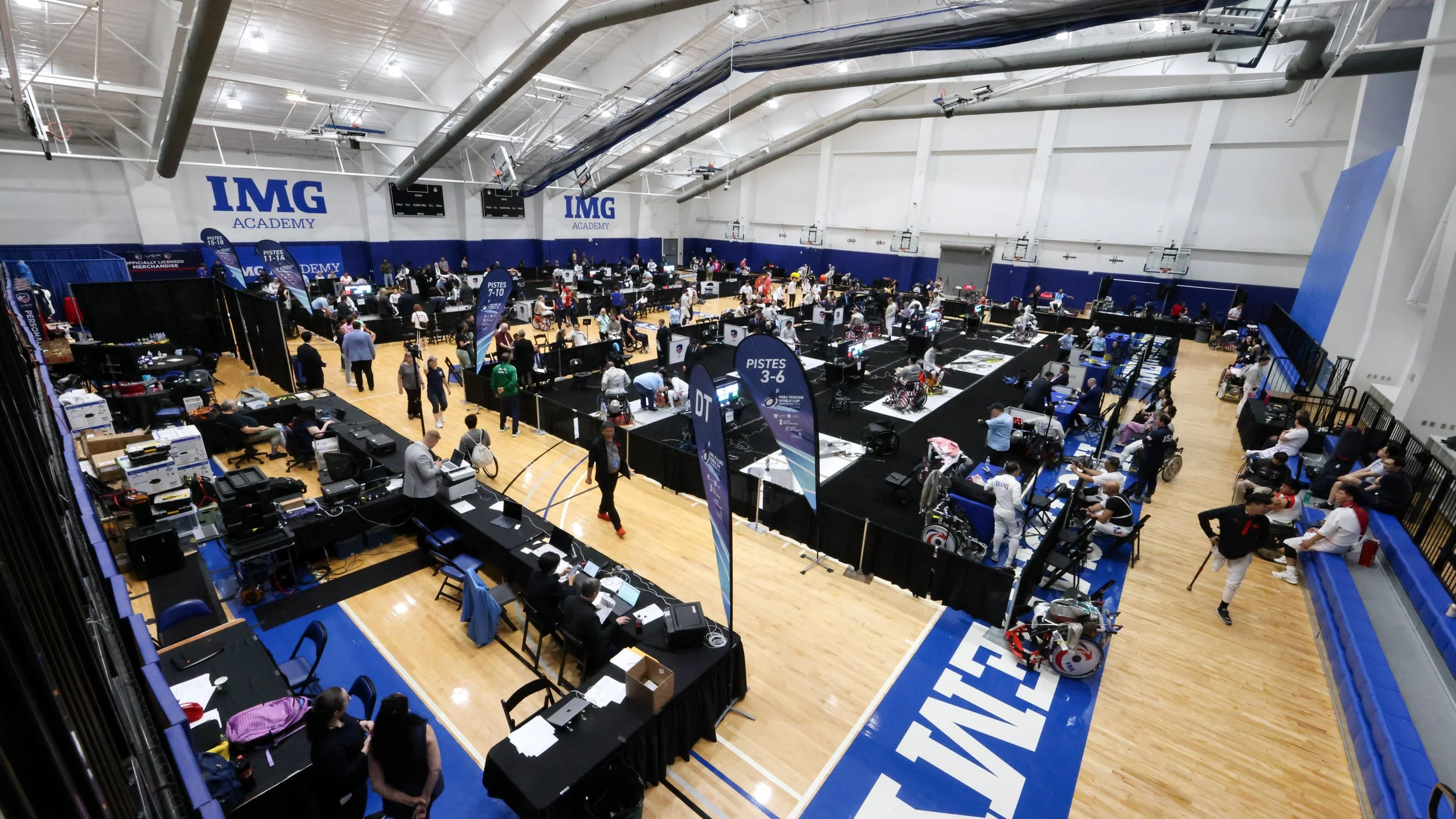
Coordinating any World Cup, Para or able-bodied, is a lot to ask of an NGB.
Para World Cups are different from able-bodied World Cups. It's like comparing oranges with apples.
At a Para World Cup, all three weapons are contested in both the men's and women's events, in addition to two physical classifications.
Three weapons × two genders × two classifications = 12 individual events (or 18 if Category C is being contested). That means a fencer who competes in epee on Day 1 may be fencing saber on Day 2.
At an able-bodied World Cup, there is one weapon contested for two gendered events, for a total of two individual events. Athletes fence only one weapon throughout the week.
“Coordinating any World Cup, Para or able-bodied, is a lot to ask of an NGB.”
If comparing the individual events is like comparing oranges with apples, then comparing the team events is like comparing bricks to feathers.
I reminded myself of that as I stepped-off the plane at Sarasota-Bradenton International Airport a few days before the Bradenton Para Fencing World Cup this past May.
The Bradenton Para Fencing World Cup was the second Para Fencing World Cup USA has hosted in recent memory, following the Washington, D.C., World Cup in 2023.
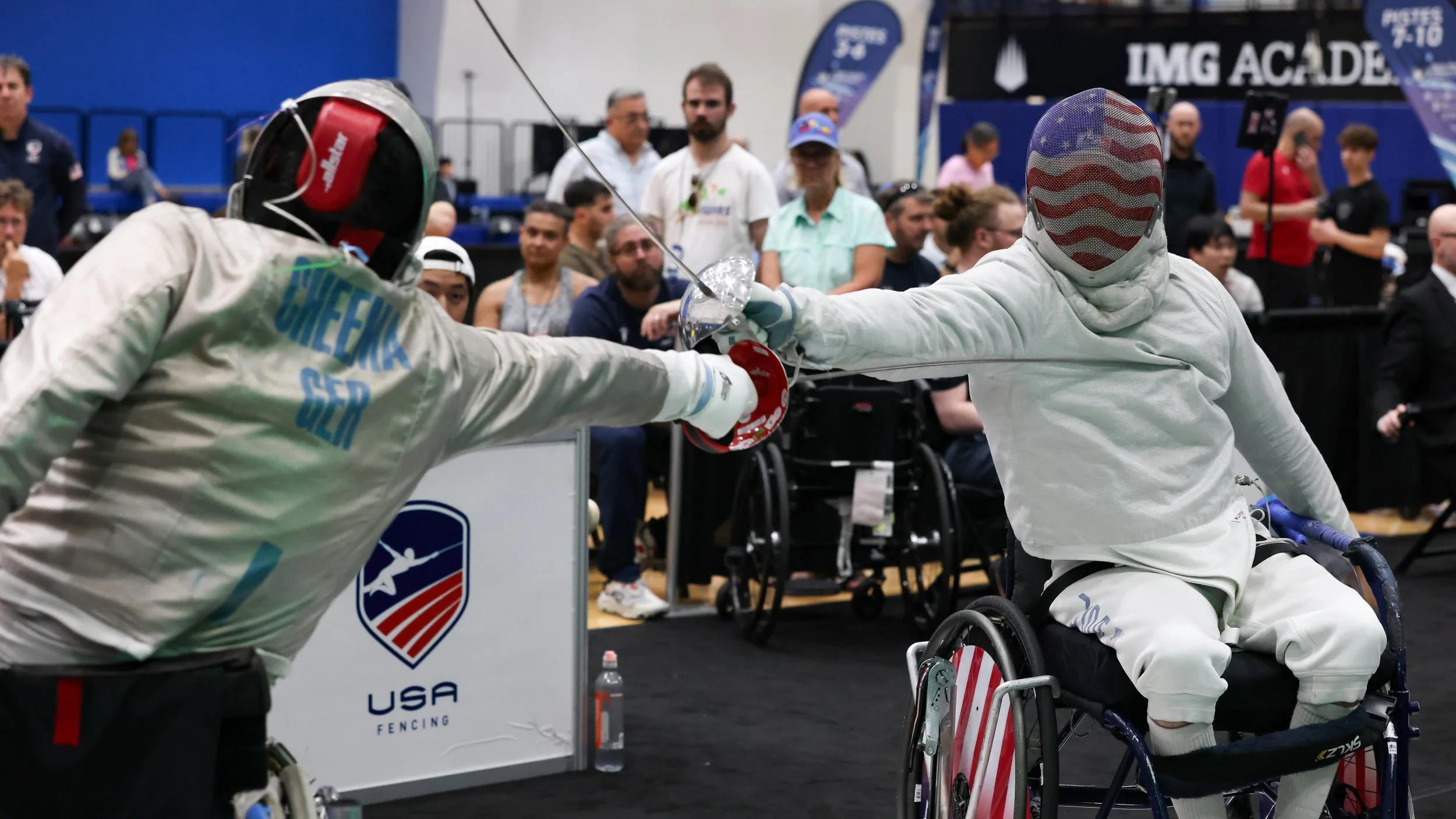
This aligns with our 2024–2028 Strategic Plan, which includes the stated goal to "Host at least one World Cup, Zonal or equivalent World Ability Sport event by 2028."
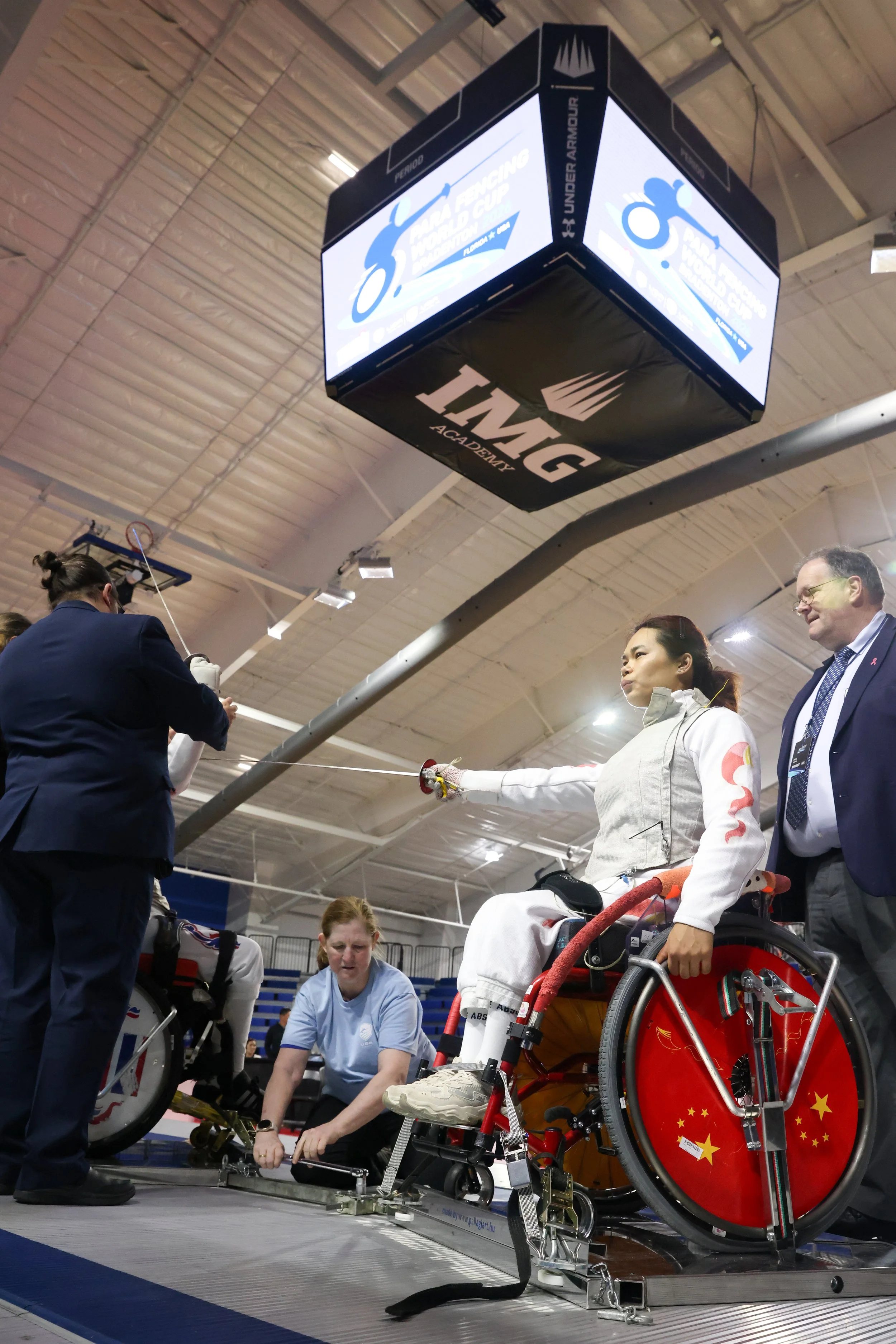
When I arrived at IMG Academy, our gracious hosts for the World Cup, I was met with the usual pre-World Cup “busyness”: setting-up wheelchair frames, athletes having their equipment tested, staging the finals piste and coordinating the broadcast booth – my eventual home for the event.
What was different this time was seeing such a large percentage of the National Office staff helping with all those tasks, along with seeing a cadre of American fencers I had yet to meet.
When I retired just before the 2020 Tokyo Olympic Games (which took place in 2021, due to COVID), the United States hosting a domestic World Cup felt almost impossible. Like any World Cup, it is expensive and requires massive organizational efforts. The benefits, however, rarely appear on an expense spreadsheet.
For Para fencers, hosting a domestic World Cup makes it significantly easier to undergo classification, which can only take place at a World Cup. International classification can only take place at a World Para Fencing-sanctioned event. Traveling to Japan as a new American fencer may not be a risk someone is willing to take, especially if they are unsure whether they will ultimately be eligible for the sport.
Imagine flying all the way to Japan to compete – entirely self-funded – only to learn the medical classifiers determined you are not impaired enough to compete in Para fencing.
Hosting a domestic World Cup removes much of that financial burden. Additionally, many Para fencers travel with someone who assists them with activities of daily living – another often self-funded expense.
By hosting a domestic World Cup, USA Fencing significantly reduces the financial barriers for new international Para fencers.
We grow the sport by hosting a domestic world cup in all the areas, on- and off-piste.
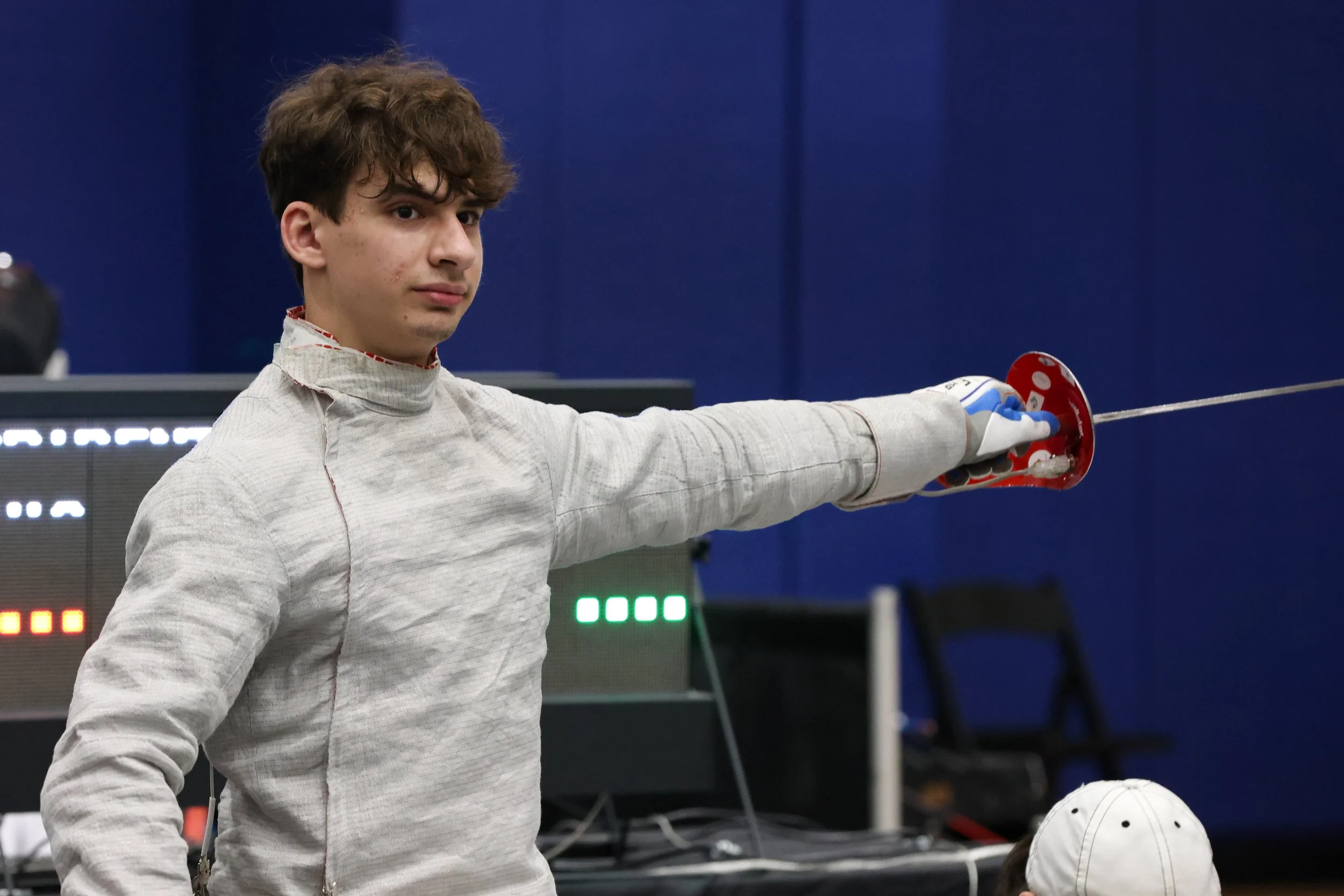
And because of that, I had the wonderful problem of not recognizing a majority of the American delegation.
As someone who advocates for the growth of our sport, I see it as a marker of progress that there are so many new faces filling the pistes I have yet to get to know.
The benefits are not just for our athletes – they also extend to our referees and medical classifiers.
The Bradenton Para Fencing World Cup hosted seminars allowing American referees and classifiers to earn official international certifications. Like our athletes, referees and classifiers can only achieve this status at a World Cup, as referenced above. Once again, hosting a domestic World Cup removes the financial burden of international travel.
This helps us make progress toward another strategic goal: "Increase recruitment of athletes, coaches, classifiers and referees."
We also strengthened and trained our volunteer workforce, built experience for our SEMI team and delivered a livestream inviting the world to discover – and hopefully fall in love with – Para fencing. Many viewers especially enjoyed the North American flair we added through the virtual reporting desk.
Beyond checking boxes in our strategic plan, these qualitative advancements strengthen the entire ecosystem of American Para fencing and lay the foundation for the United States to become a true international powerhouse.
While everyone's attention is understandably focused on LA28, I had the opportunity to see, in real time, the foundation being built for Brisbane 2032.
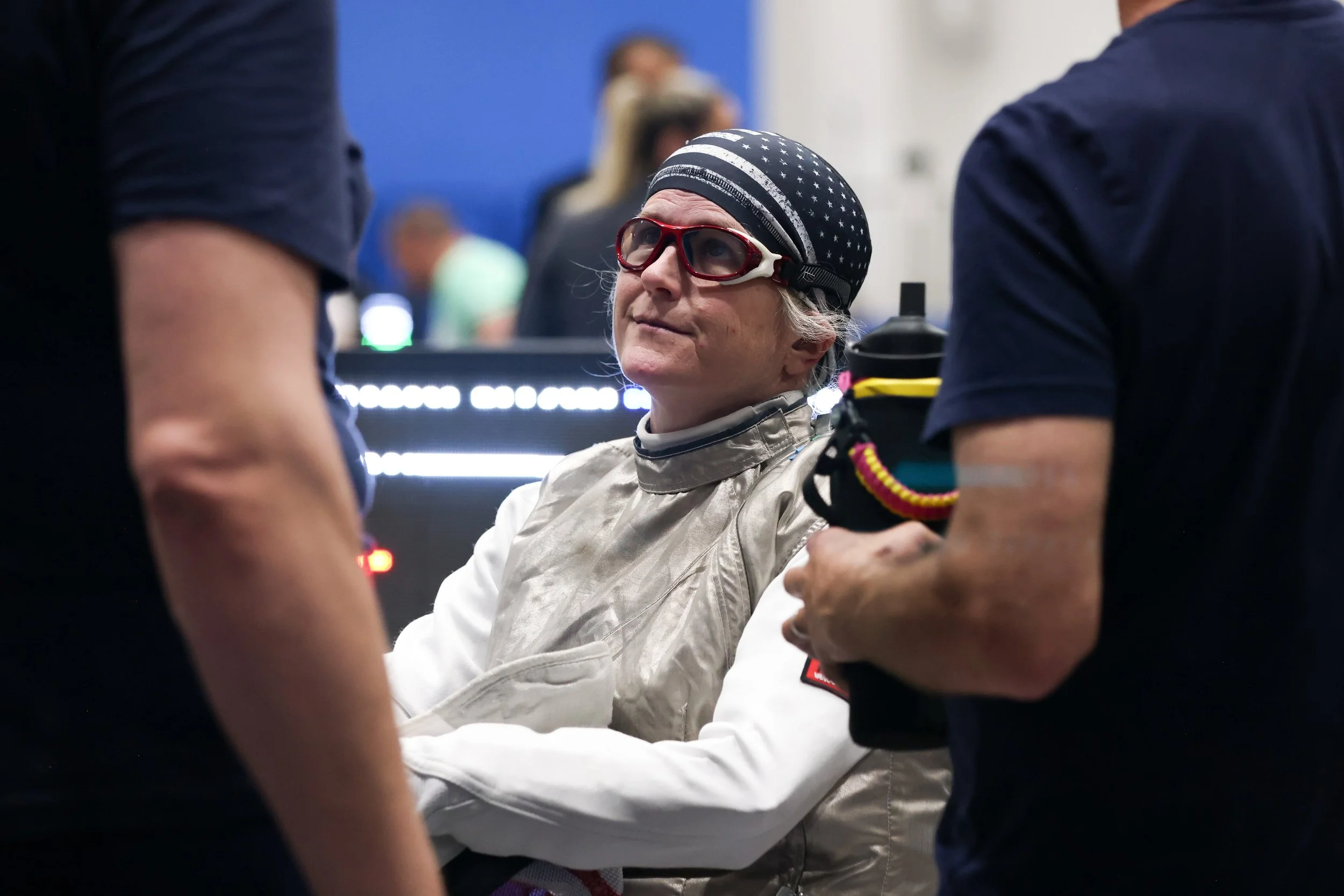
Looking at the Bradenton Para Fencing World Cup from an international perspective, it was also exciting to see how this event contributed to the evolution of the sport itself.
Kenya made its international debut, and we saw more of the reimagined mixed-gender team events. On the final day of competition, team events were contested in all three weapons.
The mixed-gender format goes to 20 points with 4 relays, and the new by-gender team event goes to 30 with six relays, with athletes only competing against opponents of the same classification and gender. It is very different from the current able-bodied team format, where World Cups typically feature only a single team event.
In life, we rarely receive a clear signal saying, "Hey, I know there's still a lot left to accomplish, but take a moment to appreciate how far we have come."
Toward the end of the Bradenton Para Fencing World Cup, I realized it was approaching the 10-year anniversary of my qualification for the Rio 2016 Paralympic Games.
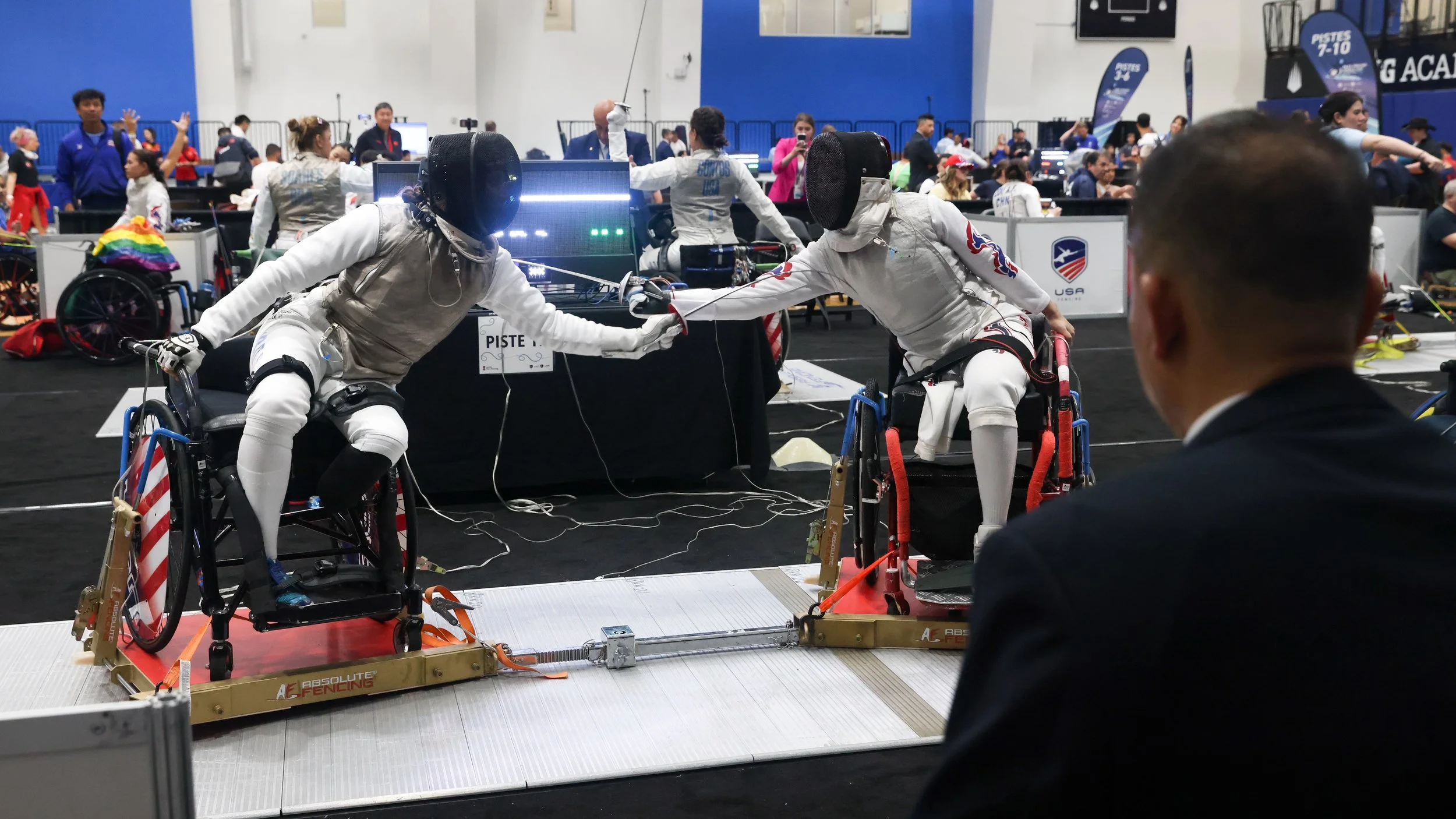
At that point in our history, the United States qualified only two athletes for the Paralympic Games.
Since then, we have qualified an entire women's team for Tokyo and both men's and women's teams for Paris.
The progress is undeniable.
Coordinating any World Cup, Para or able-bodied, is a tremendous undertaking for an NGB, and I am incredibly grateful to the National Office staff who traveled to Florida to make it happen.
They not only performed their regular jobs but also drove event personnel to the dining hall, assisted athletes into wheelchair frames at piste side and, after the final medal ceremony, took off their blazers and began loading the U-Haul in the Florida humidity.
While hardly glamorous moments, they are what make an event like this possible.
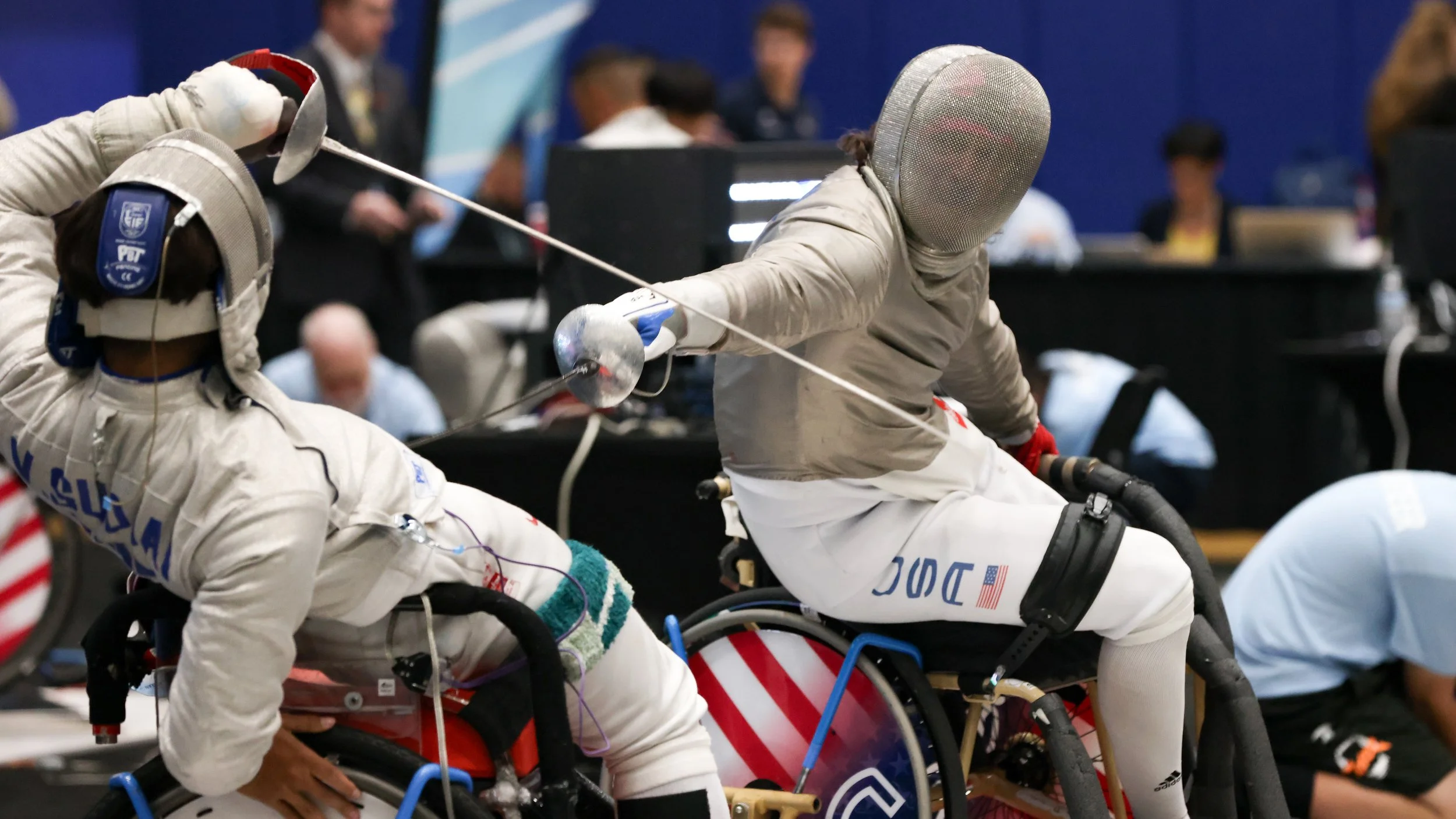
This World Cup left me excited about the future of USA Fencing in the Para space as we continue building on our momentum. It also gave me a much-appreciated moment to reflect on just how far we've come as we begin the final push toward a home Paralympic Games.
Want to contribute to the USA becoming a Para fencing powerhouse? Want to volunteer your time and skills or maybe sponsor an element of Para fencing? I would encourage you to reach out to our CEO, Phil Andrews. Similar to me not knowing our ever-growing American cadre, having more Para fencing champions is a fabulous problem to have.
Photos by Ginny Torry/USA Fencing