
DIFFERENT BY DESIGN
How Four Distinct Personalities Turned the U.S. Men’s Foil Team into the Team the World Had to Beat
They were sometimes called the “Fab Four,” an appropriate nickname for a collection of American fencers who had become as recognizable for their personalities as for their results. But there was nothing interchangeable about them.
Gerek Meinhardt was the veteran — the immensely gifted athlete Miles Chamley-Watson called a “freak of nature.”
Race Imboden was the student of the game, forever studying opponents and fencing videos, a fighter whose intensity followed him onto the strip.
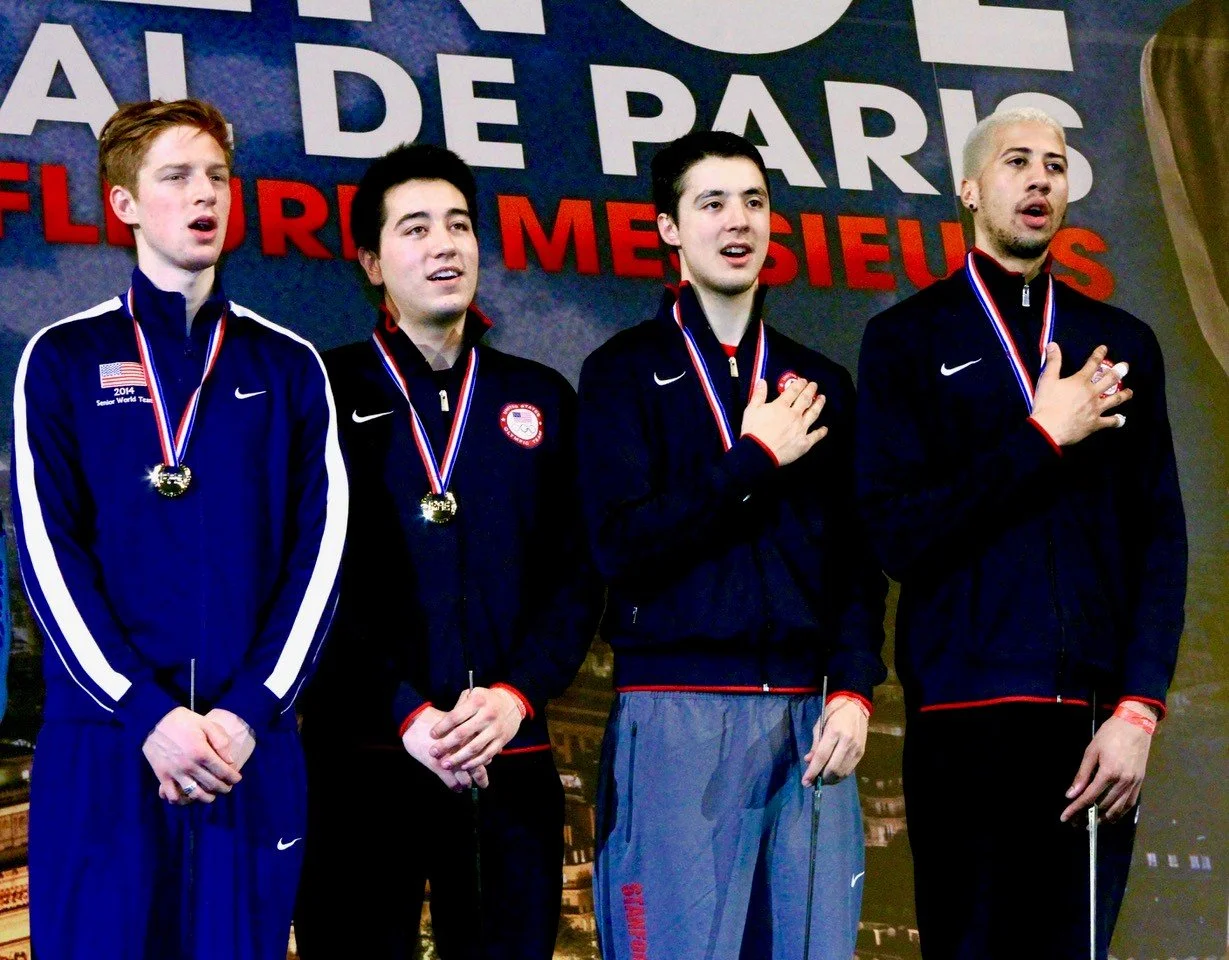
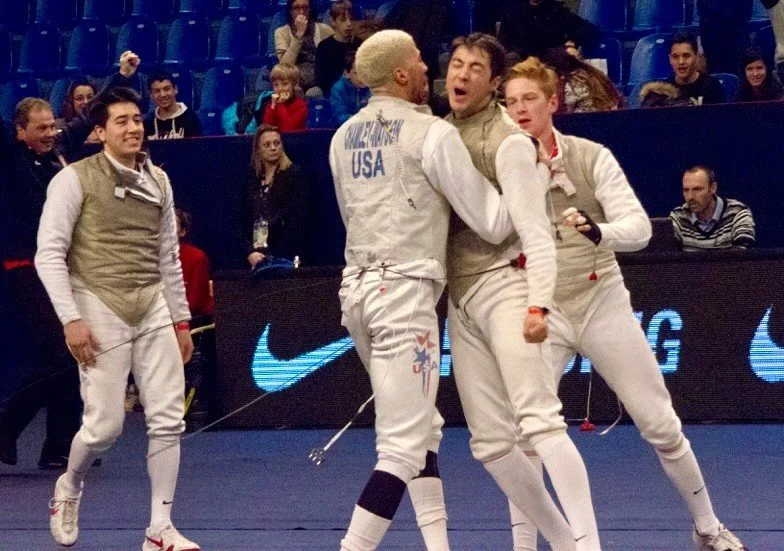
The “Fab Four” U.S. men’s foil team: (L-R) Race Imboden, Gerek Meinhardt, Alexander Massialas, Miles Chamley-Watson.
Miles Chamley-Watson was the improviser, the showman, the man Race described as possessing “the hand from God,” capable of producing touches that sometimes left even his teammates wondering how he had made them.
And Alexander Massialas was the anchor — the man his father and coach, Greg Massialas, compared with a quarterback, entrusted with finishing the match when everything was on the line. Greg called Miles the team's “energy spark plug,” its “emotional jolt,” while describing the depth of the lineup as a luxury few coaches possessed.
They fenced differently.
They thought differently.
They behaved differently.
And that may have been precisely why they were so good together. Miles put it more simply: “If we were all the same personality, it would never work.”
Donald Anthony Jr., then president of USA Fencing and a vice president of the International Fencing Federation (FIE), in 2019 called the American men's foil squad the dominant team in the world. Their success, he believed, reflected a much larger transformation of the sport in the United States. Former USA Fencing high performance director Jim Page saw it in equally dramatic terms, “U.S. Fencing has become one of the great success stories,” he said. The transformation was particularly remarkable because fencing remained a relatively small American sport. Yet the United States had managed to cross the line separating an improving program from one that expected to compete with — and beat — the best in the world.
For the men’s foil team, that expectation had been years in the making.
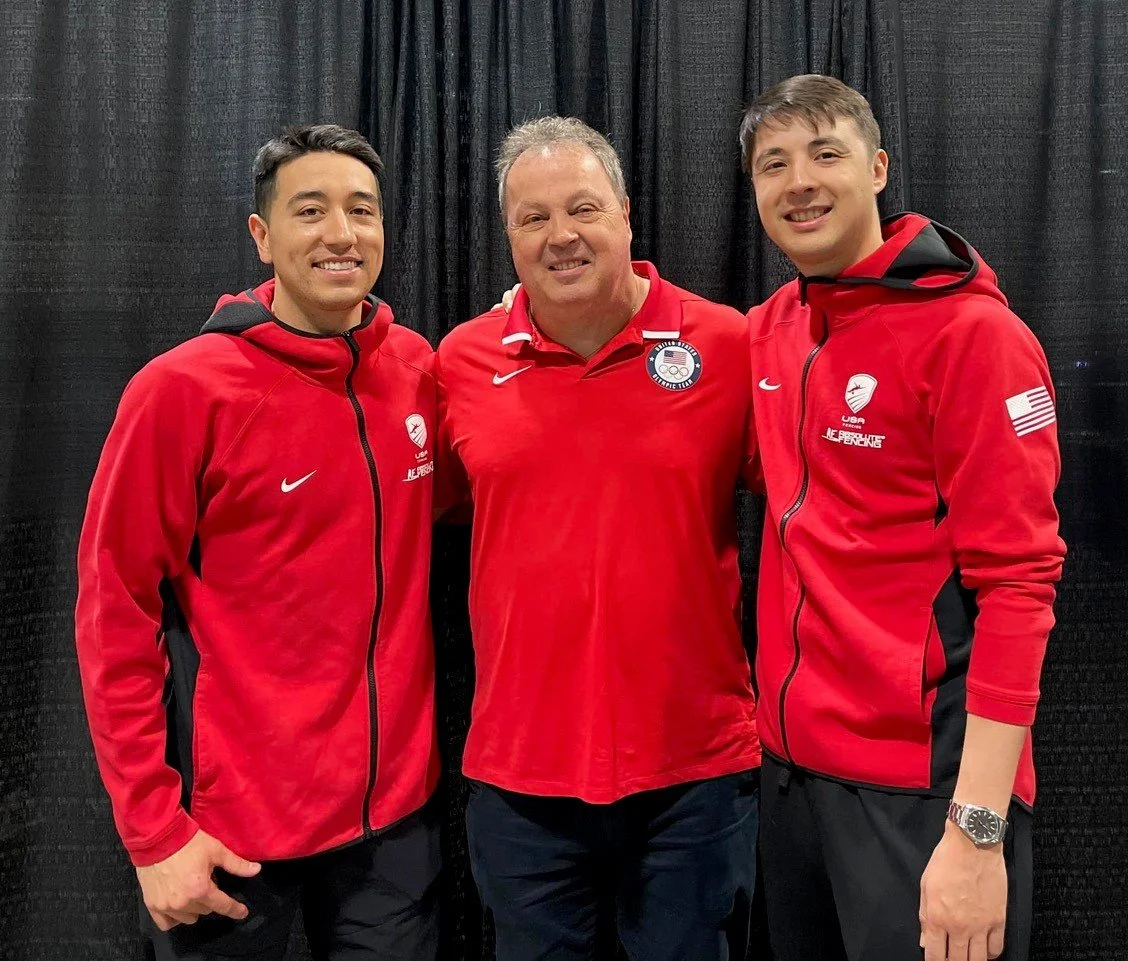
Coach Greg Massialas (center) with Gerek Meinhardt (L) and Alexander Massialas (R).
From Boys Fencing Men
Greg Massialas had watched the transformation from the closest possible vantage point. A two-time Olympian himself, Massialas became the architect and coach of a generation of American foilists who refused to accept the traditional hierarchy of international fencing. Don Anthony remembered watching the young Americans at the London Olympics. They were talented but still developing. It was, he recalled, almost like watching “boys fencing men.”
Then the boys grew up.
Over successive seasons they became sophisticated international competitors who understood not only their opponents but one another. They had fenced together, traveled together, won together and lost together.
By the Tokyo cycle, Anthony said, they could practically communicate without speaking. “They know each other, they have the confidence in each other, they have a great chemistry,” he said. “They enjoy being with each other and they win together.”
Massialas had a name for them: The Fab Four. The comparison was appropriate for more than their success. These were athletes with personalities. Chamley-Watson was flamboyant and unpredictable, a world champion whose explosive fencing and showmanship could electrify a room. Imboden brought an entirely different personality and rhythm. Meinhardt, the veteran, had been an Olympian since 2008 and combined elite fencing with formidable academic ambitions. Massialas had become an Olympic silver medalist in Rio and one of the world's most recognizable foilists. They were stars individually. The remarkable part was what happened when they became a unit.
Individual Sport, Collective Ambition
Fencing presents an unusual psychological challenge.
One day, two Americans can be trying desperately to eliminate each other from an individual tournament. The next, they may depend upon each other to win a team championship. For less cohesive groups, the transition can be difficult. For the Americans, it became one of their strengths. “We've all beaten each other. We've all lost to each other,” Imboden explained. But whatever happened during an individual bout stayed on the strip. Afterward they could return to being teammates — and sometimes roommates.

Carl Borack (OLY)
Meinhardt described the same paradox. Many of these athletes had competed against one another since childhood, yet years of camps, competitions and life together had created an unusual degree of trust. When an individual result went badly, they learned to put it aside. The next morning brought another opportunity. A team opportunity. “We set it aside and we want to win gold the next day,” Meinhardt said. The next, they may depend upon each other to win a team championship. For less cohesive groups, the transition can be difficult. For the Americans, it became one of their strengths.
Greg Massialas encouraged that independence rather than trying to control it. His philosophy of team building was strikingly simple: The team wasn't about the coach. It was about the fencers. He wanted his athletes to take responsibility for themselves and one another. The coach's job was to create the environment in which that relationship could grow. The result, he believed, was the tightest group in international fencing.
Here were world-class athletes who could serve as ambassadors for a sport often struggling for attention in the United States. Their personalities, rivalries, friendships and contrasting styles gave spectators a reason to care about the people behind the masks. Anthony called them the vanguard of a movement that could connect audiences not merely to fencing itself, but to the athletes and the drama surrounding them. Imboden understood the historical implications from another perspective. As a boy, he remembered watching fencing videos in clubs. The great team matches seemed invariably to feature European powers — France, Italy, Germany. Now American children could watch the United States in those finals. “Now it's the U.S.,” he said, “and we're in the final all the time.” That may be one of the most important legacies of this generation. Young American fencers no longer needed to imagine what an American world championship team might look like: they could watch one.
Becoming World Champions
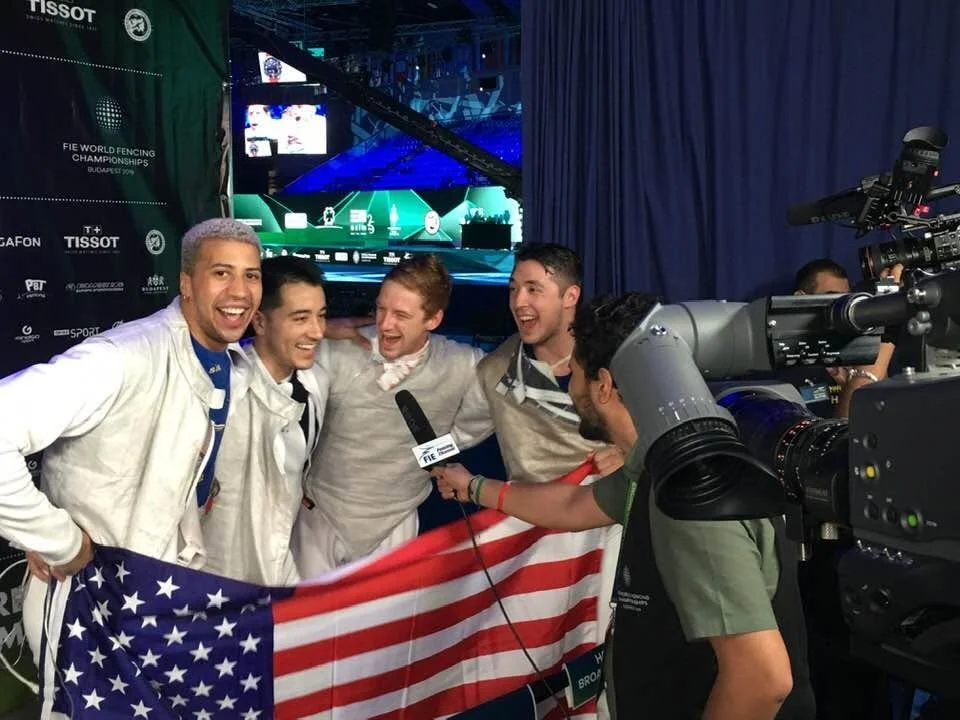
World Champions, Budapest 2013.
For years, the Americans had come tantalizingly close. They had won World Cups. They had accumulated medals. They had proven they could beat anyone. But the World Championships team title remained elusive. That changed in 2013 in Budapest. For Meinhardt, the victory carried the weight of all the years that had preceded it. “Winning World Championships was incredible for us as a team,” he said. “We put in so much time, years and years, all individually and combined to make that come true for us and to make history for U.S. Fencing.”
What mattered wasn't simply winning, it was the way in which they won. The Americans didn't sneak through the draw. They produced the kind of commanding performance expected from a team believing it was the best in the world. And suddenly the psychology of international fencing had been reversed. Former high performance director Page put the change succinctly: “Other countries were now going to Tokyo hoping to beat the Americans, rather than the Americans arriving hoping to beat them.” That distinction — between hoping and expecting — may have been the most important development of all.
How America Got Here
The rise of the men's foil team did not happen in isolation. It was the product of a decades-long transformation of American fencing. Anthony traced part of that transformation to the breakup of the Soviet Union and the arrival in the United States of Eastern European coaches who established clubs and developed young fencers across the country. That was followed by another generation: American-developed coaches increasingly capable of succeeding at the highest international level.
At the same time, programs such as the Peter Westbrook Foundation expanded access to fencing, giving talented young athletes opportunities that once might have been unavailable to them.
The Fifth Man
Success created its own cruel problem. There were more world-class American foilists than Olympic positions. Nick Itkin was emerging rapidly, putting pressure on a lineup that had spent years growing together. Anthony described the drama openly. Itkin, already a Junior World and NCAA champion, was pushing Chamley-Watson, the 2013 individual world champion and one of the personalities who had helped define the team. The internal competition could have fractured the group. Instead, the veterans largely treated it as another expression of what had made them successful. The Olympic spots had to be earned. Meinhardt acknowledged there would be a tremendous fight for the available positions, but insisted the larger objective remained unchanged: Whoever earned those positions would have the support of the others. The goal was bigger than any one fencer. The goal was Olympic gold.
The Final Opponent
Italy remained dangerous. So did France. So did Russia.
Chamley-Watson described encounters with Russia and Italy as a “blood bath.” Massialas believed when all three Americans in a team match fenced at their best, they were virtually unstoppable. Yet Imboden offered perhaps the simplest description of the obstacle standing between an elite athlete and an Olympic competitor. Asked to identify his toughest competition in Tokyo, he didn't name a country. “Myself,” he answered. “When I fence the other guy in front of me, I have a pretty good shot. When I'm fencing myself on the strip, it's a little bit harder.” The hardest competition, he said, “is always yourself.” That answer captured something essential about this American team. The Italians could be studied. The Russians could be scouted. The French could be prepared for. The greater challenge was handling expectations. By this point, an American medal was no longer considered extraordinary. Silver could feel like disappointment. The target was gold.
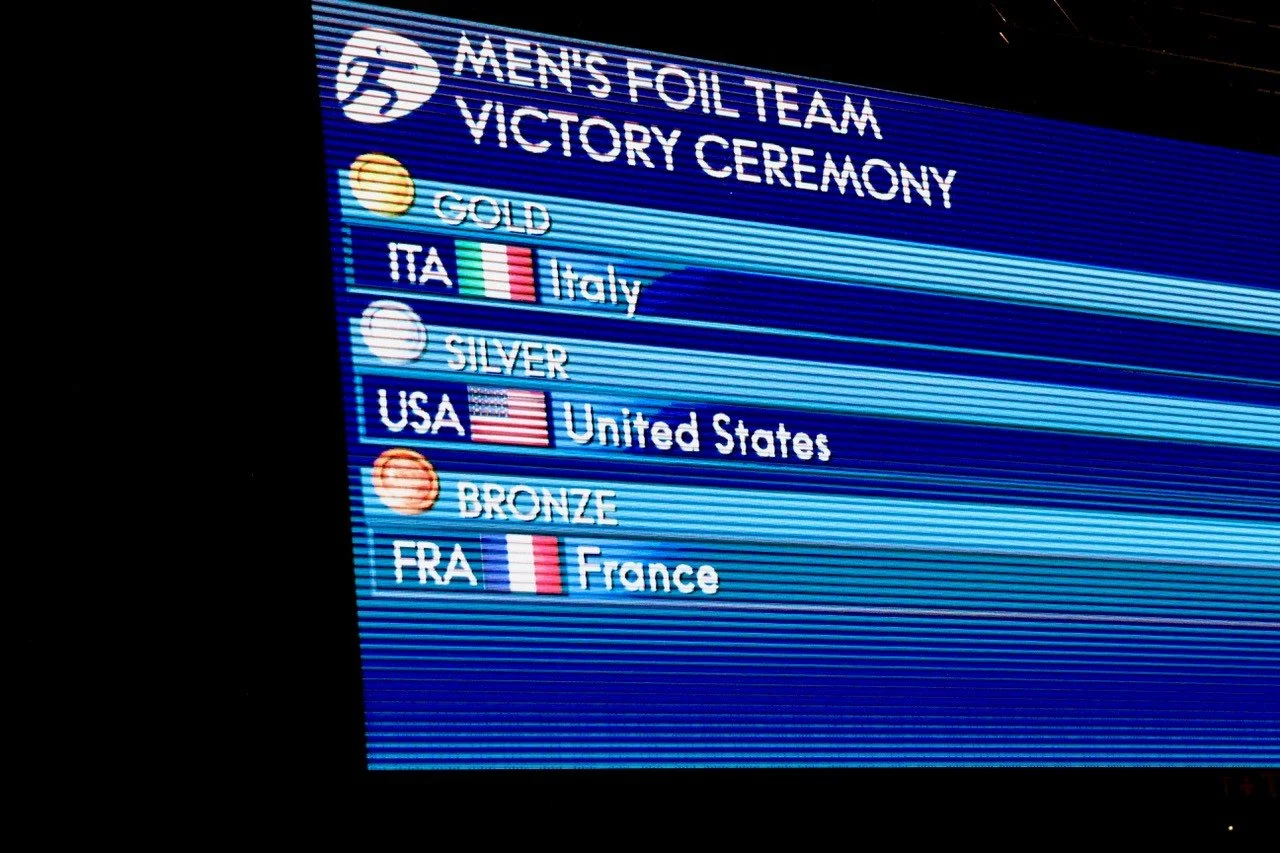
In Tokyo 2021 they won a bronze medal.
Today they are rebuilding to scale the Olympic mountain in LA28. In the 2025 World Championships they took second place and in 2026 they took third. Looking towards LA28, the team will have Nick and Alexander, since Gerek had injuries this season and was not on the team in 2026. the third slot (number 3, 4 on team) will be newer fencers. If Gerek recovers from his injury and the responsibilities of being a new father, he can vie for one of the two spots, and would be his fifth Olympic Team. With two years to go, they have a solid group that will be competing for a strong position in the Olympic gold run. The Olympic Games are a unique experience for any athlete, no matter how many Grand Prix events, World Championships or World Cups they have competed in. The pressure and tension are like no other. Fencing at home in an Olympic Games will be a totally new experience for the athletes and will add to their excitement. It will undoubtedly add to their pressure or motivation and will exciting, albeit nerve wracking, to watch.
Here are some of my favorite quotes from interviews in 2019 & 2021:
Race Imboden: We came together as brothers, we dominated.
Alexander Massialas: We came from just nothing.
Donald Anthony Jr.: They can probably communicate things without any verbal communication.
Greg Massialas: They would sacrifice individual success for the team gold.
Miles: There's no point ... let's get together and let's just win tomorrow.
Race: And now it's the U.S.

Editor’s Note: In 2019 Carl Borack conducted interviews at the U.S. Olympic Training Center in Colorado Springs with the U.S. men’s foil team for a film about their 2013 World Championships gold team medal and their preparation for the Tokyo 2020 Olympic Games. Then COVID struck and the Games were canceled, so the film was put on hiatus. In 2021, when the Games were back on, Borack interviewed the athletes once again in Colorado Springs.
The interviews from both sessions were transcribed and used in the editing process of ”Bold Journey,” a documentary about the men’s foil team on the run up to the 2021 Olympics.
Borack was only able to use a small fraction of the interviews in the film and felt there was a lot more story to tell, as there was so much additional insight and perspective. Four very different athletes became one of the greatest teams in the history of American fencing — not because they were alike, but because they learned how to make their differences work.
Thus, Carl Borack’s article, “Different by Design.”
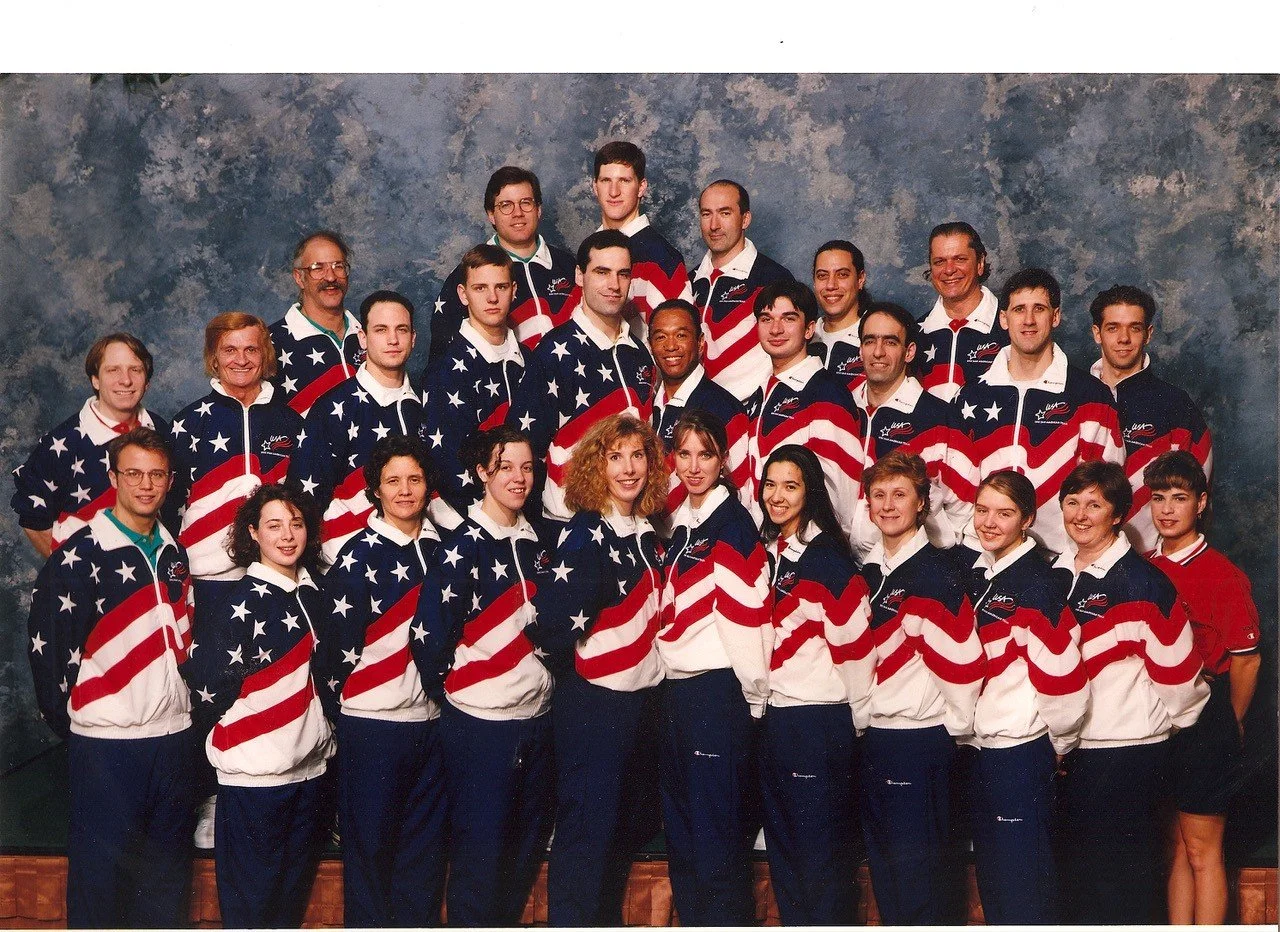
1995 Pan American team: Carl Borack (third from right, top row).
Carl Borack was a national champion in foil, a two-time team gold medalist in the Pan American Games (1967 epee, 1971 foil), and Olympian (Munich 1972). He served as USA Fencing team captain from 1985 to 2000, including the 1988,’92,’95, & 2000 Olympic teams. As writer, producer/director of the film “Bold Journey,” he conducted all the interviews that provided, many of the quotes included in this article.