
Fencing Competition and the Fear Factor
How Fear Works
Fear is one of six universally experienced emotions along with mad, sad, glad, surprised and disgusted. Fear is a complex and comprehensive mind-body experience driven by underlying neurophysiology. For sake of simplicity, this can be broken down into a series of mechanisms, including those rooted in the brain, the peripheral nervous system, the muscular system and cognitive processes (thoughts about the meaning of fear).
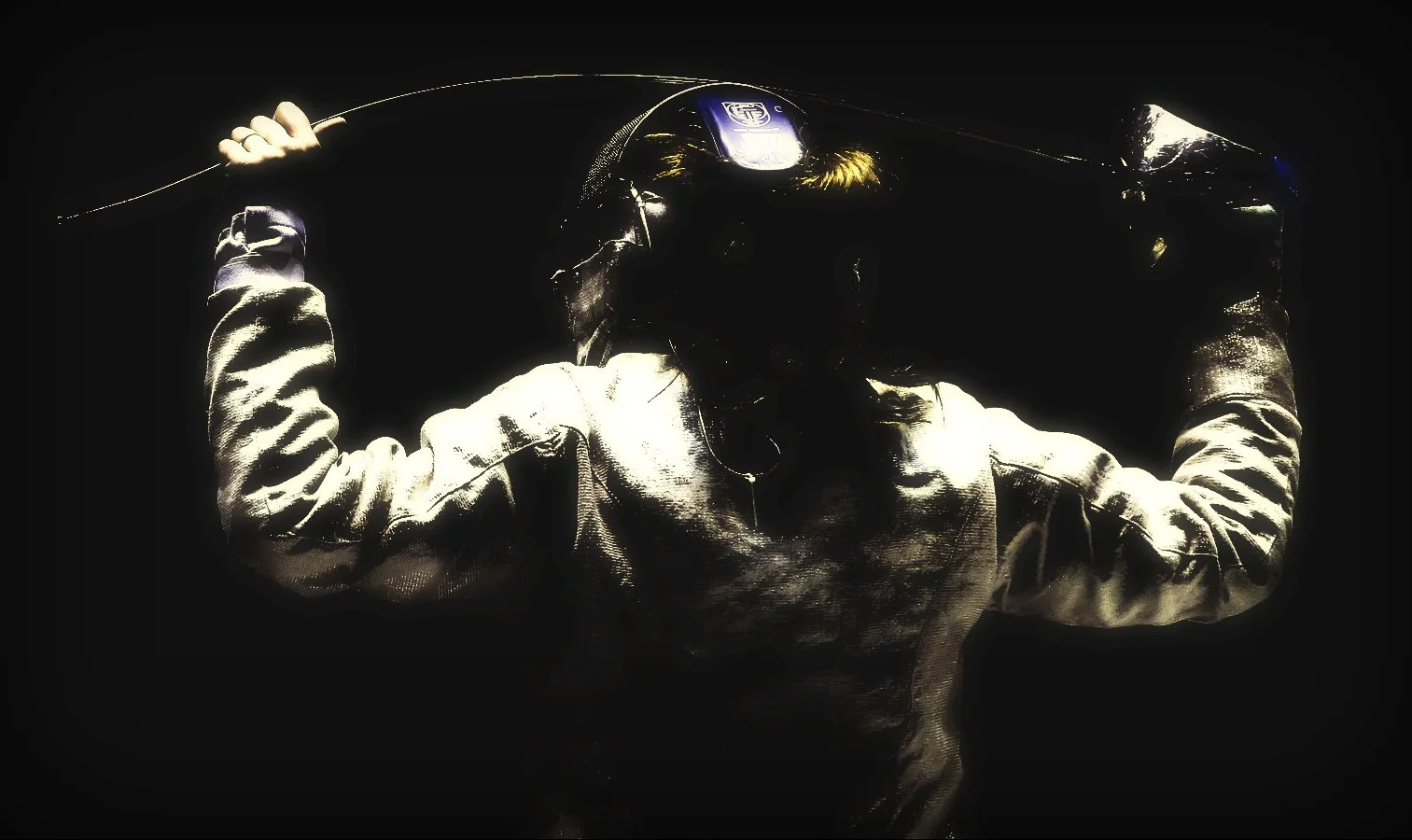
Fear is a part of being in competition. For the most part, fear can be managed even as it poses a challenge. However, when fear goes into overdrive it can be outright disruptive. Let’s look at the following factors:
Examine the underlying neurophysiology of fear with its cascade of effects
Consider the paradox of fear as a self-fulfilling prophecy
Present methods for managing the mind-body experience
Once triggered, fear creates a series of mind-body effects. Deep in the brain, there is a fear center (the amygdala). It is linked to the survival response, functioning as an early-warning system for danger. While it serves an important function, fear processing is prone to breakdown and can be difficult to rein in. One triggered, it immediately activates the “fight or flight” system, accelerating heart rate and releasing an abundance of adrenaline. This increases intensity, potentially pushing the fencer up-and-out of the “zone.” At the same time, muscles tighten, particularly in the shoulders where the body language of fear is expressed. This undermines point control. With fear comes a surge in negative thoughts, which can overwhelm cognitive information processing abilities and lead to a breakdown in tactical decision making.
Summed up, when fear is poorly managed it drives flight instead of fight. It can lead the fencer to be overly defensive and hesitant, and to have difficulty committing to actions that might otherwise be effective. At its worst, it can cause the person to lock-up or freeze physically and mentally, resulting in a “deer in the headlights” scenario, which is referred to in the Russian sport system as “extreme stupor.”
The Paradox of Fear
The more fearful a person is, the more likely their fears are to come true because of the cascade of mind-body effects described above. That is, if you fear it then it is more likely to become reality. We can draw a lesson from the ancient sword fighters in the Zen warrior tradition: They trained to fight without fear, understanding that when thinking of fear one is not thinking about fighting. How these warriors can get to a place of fearlessness is difficult to know. But it begins by developing a relationship with fear, understanding it as a potential resource, as the early warning system it is intended to be.
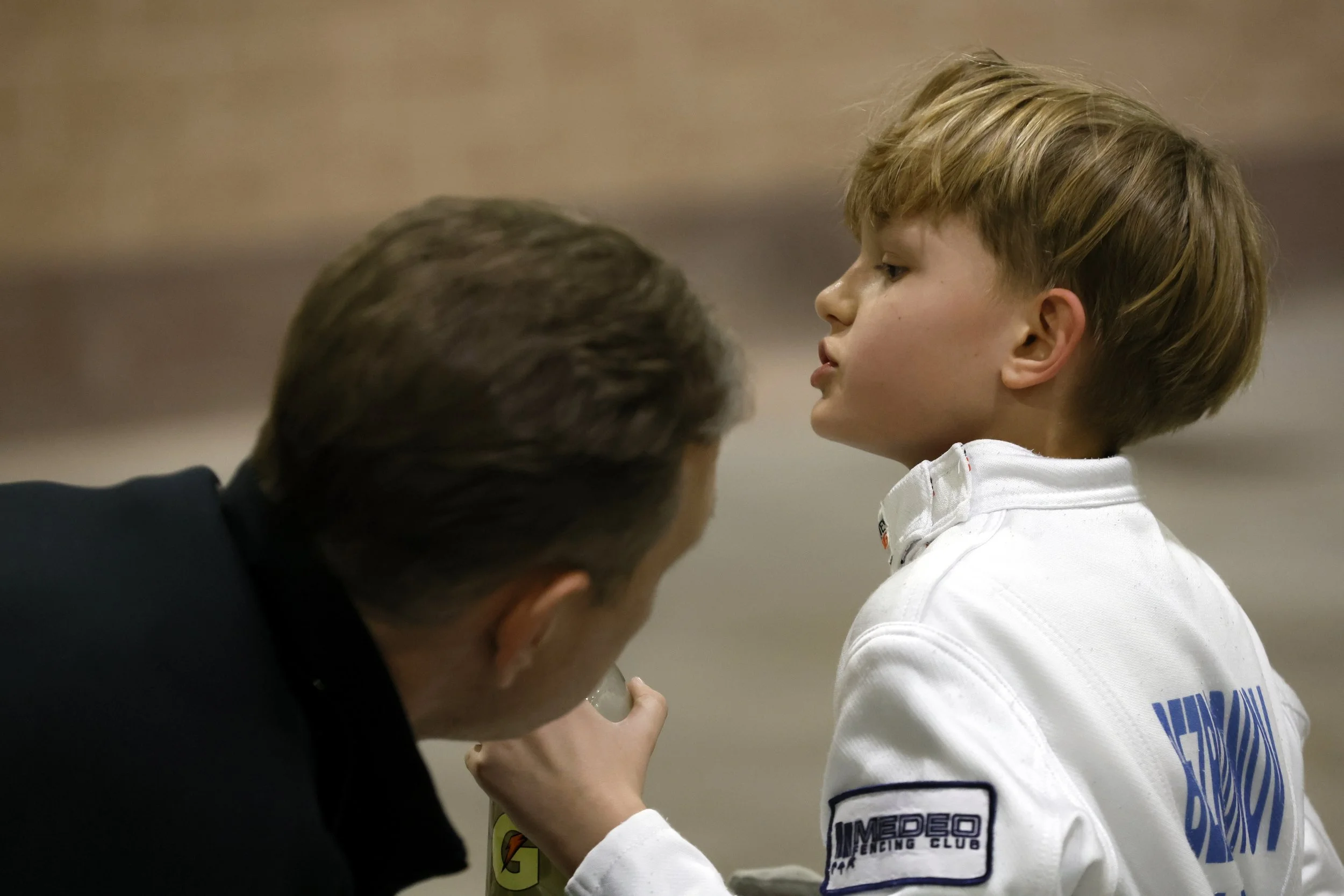
Consider the quote from Into the Kill Zone (Klinger, 2004):
If I’m fearing something that means I’m missing some important information. So when I feel it, I try to pick up what I am missing. Once I get all the info, it brings me back to a calmer state, a more controlled state and I can do my job better.
I have heard much the same thing from a friend who is a gold medal-winning bobsled pilot.
How The Fencer Can Work with Fear
Working with fear means being proactive, dealing with it daily and practicing turning it on and off. Waiting until competition to deal with fear is a setup for failure. Being proactive means addressing fears outside of competition and developing a plan to deal with fear when it occurs in competition, because it most likely will.
In Training. Start by examining your fears. Make a list. This might include fear of losing, fear of failure, fear of embarrassment, fear of disappointing a coach or family or teammates, fear of rejection by a coach or family or teammates, fear of lost opportunity, fear of competition anxiety, fear of injury and so on.
Ask yourself, “how realistic are these fears?” Do your fears arise from you or from the unrealistic expectations of others? How bad would it be if they happened? When examined in a quiet moment outside competition fears are likely less intimidating. Feel free to discuss this with coaches and teammates since everyone can relate.
My own personal revelation came as young springboard diver, coming in tied for last in my first league competition. Turns out, this worst-case scenario was not nearly as bad as I thought. It was never quite as bad for me after that. An Olympic saber fencer from a prominent club told me of a team plan for shrinking fear – by being supportive of teammates, win or lose.
Keep in mind the obvious: Virtually every fencer at every event the day ends with at least one loss. Don’t confuse losing with being a “loser.”
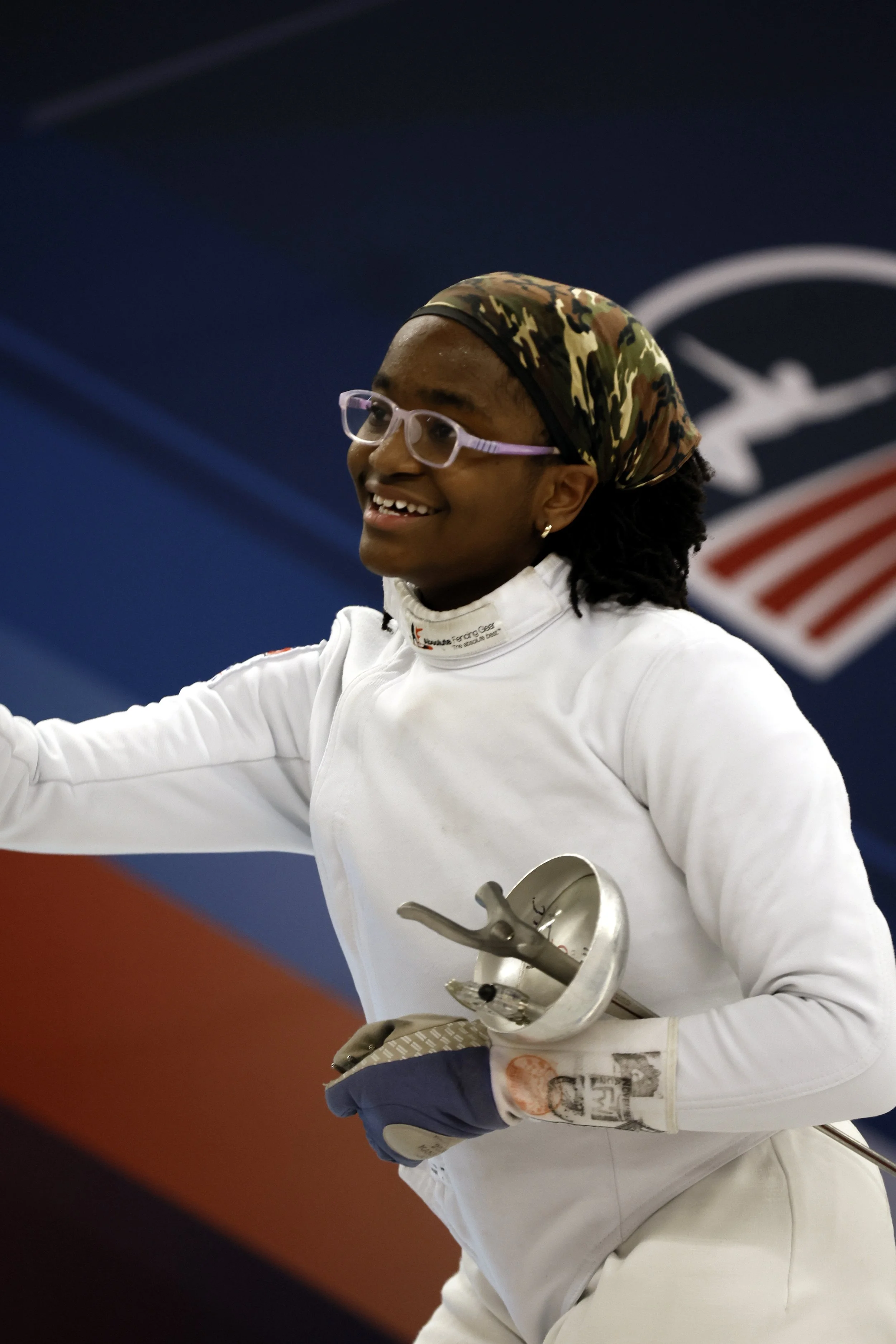
In Competition. Getting a grip on fear in competition best begins with taking a long, slow, deep breath. This starts to reset the neurophysiology driving fear. It doesn’t make the fear go away, but is a first step in taking control by reducing its intensity and making it more easily managed. Calming down in this way can help fencers get back into the “zone.” The next step is relaxing your muscles, especially your shoulders that express the body language of fear. Fencing with more relaxed arms and shoulders helps regain point control. Next, slow it down to the extent you are able in your particular situation. This allows the other steps to start to work and creates an opportunity to reset fear thinking and jumpstart your tactical thinking. With your coach, you may want to develop a “go-to plan” when fear creeps in, before it gets too intense. Fencing master Ziemek Wojciechowski believes fencers have an instinctive fear action. This can be worked into your tactical plan. At the very least, thinking about what to do instead of what to be afraid of is a big step in shifting from flight back to fight mode.
Then there is Olympic gold medal figure skater Alysa Lu’s approach -- finding joy in competition. Isn’t joy what drew you to fencing in the first place?
Learn more about the physiology of fear in this YouTube video.
Photos: Serge Timacheff