
Fencing Under More Than One Flag: Vet Worlds
Kathryn Pierrynowski once fenced for Canada, Dayana Martinez Hansen represented Venezuela and Anne-Marie Walters is building the sport in Trinidad and Tobago. At Veteran Worlds, all three are representing USA while carrying histories that cross national borders.
This article is part of an American Fencer series following members of the U.S. team before and after Veteran Worlds. Drawn from interviews with 19 athletes, the series explores the families, countries, interruptions and second chances behind their journeys to the world stage. Each installment brings together three fencers whose individual paths reveal a larger theme within veteran fencing.
In “Fencing Under More Than One Flag,” Kathryn Pierrynowski, Dayana Martinez Hansen and Anne-Marie Walters examine what it means to represent the United States while carrying fencing histories connected to Canada, Venezuela and Trinidad and Tobago. Their stories reveal that wearing one country’s name does not erase another. It can also create new ways to understand belonging, opportunity and legacy.
Kathryn Pierrynowski
2026 Vet-40 Women’s Foil and Vet-40 Women’s Saber Team
Ten Touches, Two Weapons and a New Flag
Kathryn Pierrynowski had 10 touches to decide how badly she wanted it.
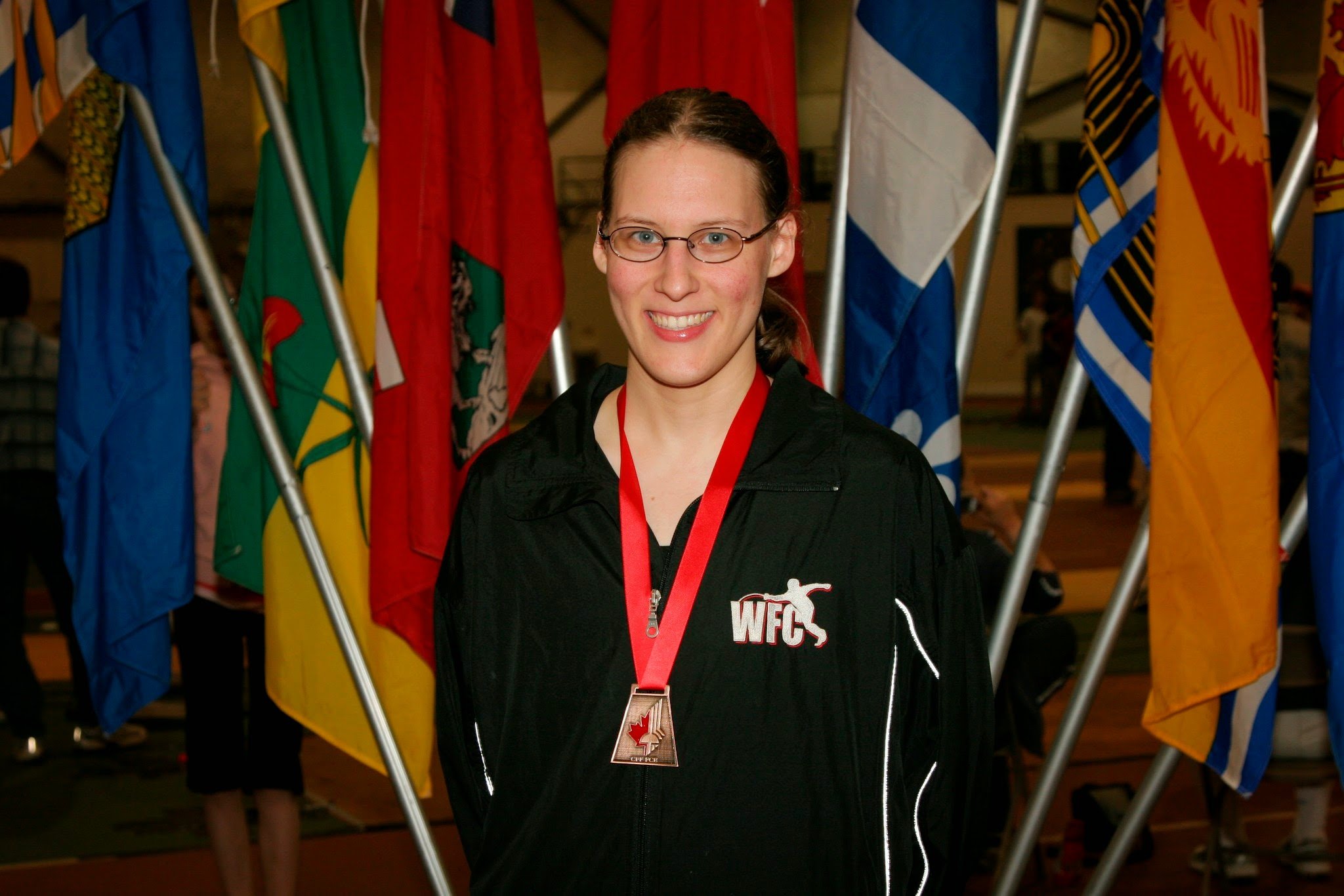
Kathryn Pierrynowski
Her place on the U.S. Veteran World Team in saber was already secure before Summer Nationals. Foil was different. The previous year, she missed the foil team by effectively one touch after losing a decisive bout 10-9. This year, the final position again came down to a fence-off.
“Here are these 10 touches,” she remembered thinking. “Do I want this?”
The answer was yes.
Pierrynowski settled herself and fenced the bout she needed to fence, winning 10-5 to earn the foil position. She left Summer Nationals having qualified for the 2026 Veteran World Team in both Vet-40 Women’s Foil and Vet-40 Women’s Saber.
The result was especially meaningful because foil is the newer and less instinctive of her two weapons.
Pierrynowski began fencing during her first weeks at a university in Hamilton, Ontario. She joined the school’s team, fell in love with the sport and later began training at a private club. Saber became her primary weapon and eventually carried her to the Canadian B team.
Fencing also introduced her to her husband, Darius, an American living in Rochester, New York, where they met and began dating. They decided Pierrynowski would move to the United States rather than Darius move to Canada. They chose Portland, Oregon, because it offered strong women’s saber and Darius had an opportunity to become a full-time coach at Northwest Fencing Center. They later moved to North Carolina when he accepted a coaching position at Duke University.
Pierrynowski only began fencing foil after the pandemic. The decision was partly practical. Her husband was a foil fencer, and their club scheduled foil and saber practices on different nights. Training in foil made it easier for them to coordinate fencing, parenting and family life.
What began as a scheduling solution eventually became an entirely new competitive pursuit.
The transition from saber to foil required Pierrynowski to develop skills that did not feel automatic. Saber allowed her to draw on years of experience, even as she adjusted those instincts to what her body could do at 46 rather than 26. Foil demanded more deliberate technical work, especially in point control.
With saber, much of the timing and muscle memory remained. She could remember what she used to do and then determine how to make those actions work for the athlete she is now. Foil required what she described as “day in, day out” attention, including lessons, point work, disengages and repeated practice.
That difference made the Summer Nationals fence-off more than another qualification bout. Pierrynowski had already come within one touch of making the foil team the previous year. When another 10-touch opportunity arrived, she had to decide whether she was prepared to claim it.
Once she did, the reward created a new challenge: preparing for a World Championship in two weapons.
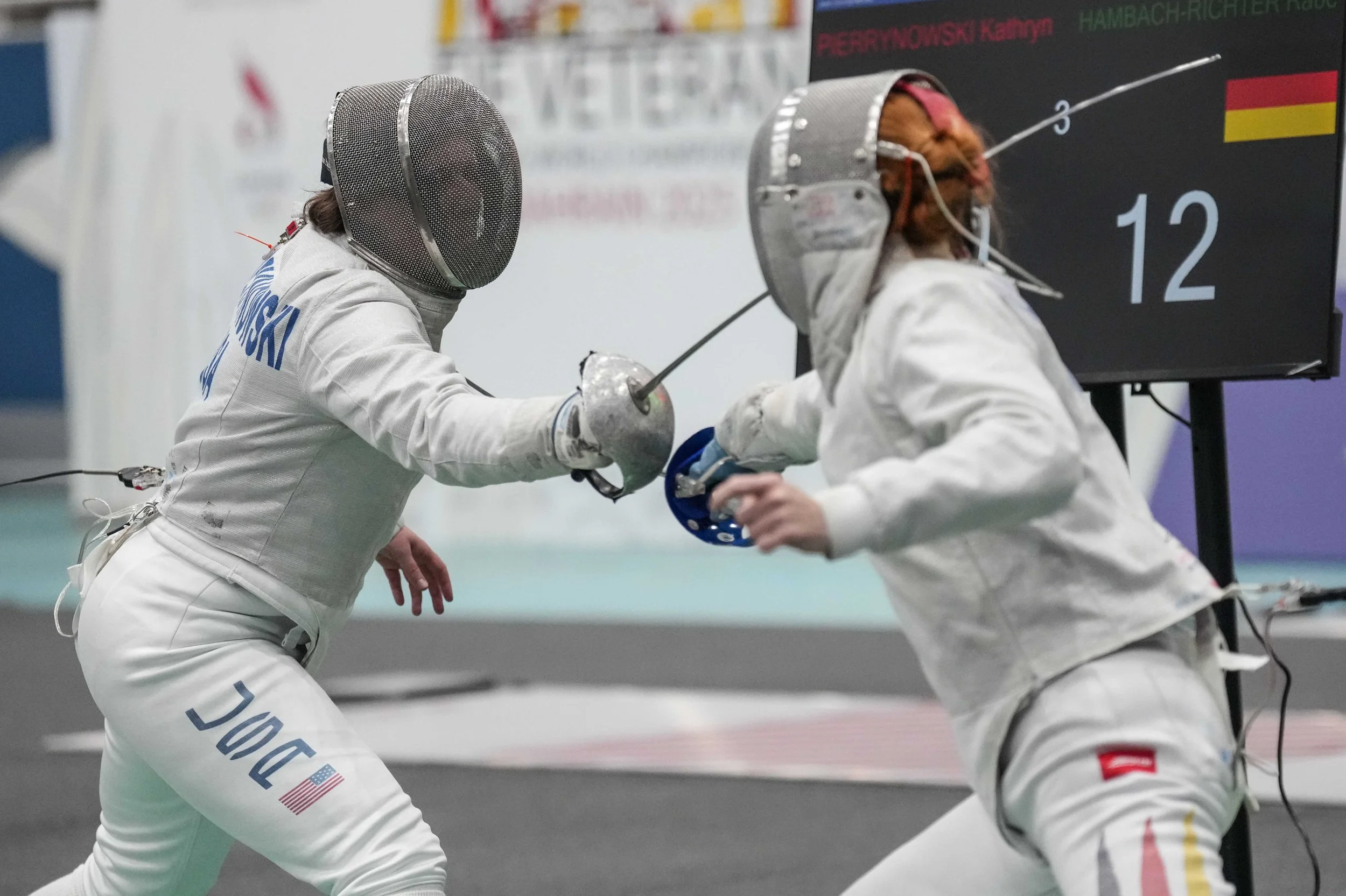
Kathryn Pierrynowski
Her saber training requires her to reactivate old instincts and adjust their timing. Her foil training requires continued repetition and technical development. Finding appropriate saber training partners presents another difficulty because the veteran women’s saber community is relatively small. Pierrynowski sometimes must travel to specialized clinics or camps to train with a larger concentration of veteran saber fencers.
All of that must fit in with a full-time career as a software engineer, her child’s swimming schedule and the everyday logistics of family life. A typical evening can involve finishing work, collecting them from swimming, getting them home and fed, and then trying to reach fencing practice on time.
Preparing for two weapons means finding space for two kinds of training within a life that already has little unclaimed time.
The two weapons, however, are not the only identities Pierrynowski will bring to Veteran Worlds. She also carries the history of two countries.
She spent her twenties fencing for Canada. Qualifying later for the U.S. Veteran World Team, the transition felt more complicated than changing the letters on a uniform.
Pierrynowski deliberately left “USA” off the back of her lamé until her position on the American team was officially announced. Until then, the lamé carried only her last name.
“It was only at that point that I got USA put on the back,” she said.
Even after adding the letters, Pierrynowski described representing USA as “bittersweet.” She appreciated the organization, support and transparency surrounding the American veteran program. The qualification process clearly established which tournaments counted, how athletes earned points and how ties would be resolved.
For Pierrynowski, that structure mattered. She knew where she needed to compete, what results she needed and how those results would determine her position. The path was demanding, but it was visible.
Canada nevertheless remained part of her fencing identity. Representing USA did not erase the country where she first discovered the sport, developed as a saber fencer and competed at a high level.
Her first Veteran World Championships with Team USA helped the new identity begin to feel real. In 2025, Pierrynowski won bronze in Vet-40 Women’s Saber. She described the experience as “sparkly and magical.”
The medal carried more than merely the satisfaction of reaching the podium. It came with the experience of joining a new national team, entering an unfamiliar veteran community and discovering she could belong there without discarding what had come before.
This year, that transition has deepened.
Pierrynowski will return to Veteran Worlds representing the United States in the weapon she carried from her Canadian career and in the weapon she learned after building a life in America.
Saber represents memory, instinct and the athlete she once was. Foil represents adaptation, persistence and the athlete she is still becoming.
Both will now carry the same three letters on her back.
Dayana Martinez Hansen
2026 Vet-40 Women’s Epee
The Heartbreak Was Not the Sport
When Dayana Martinez Hansen learned she might be moving to Utah, her first concern was not school, geography or the distance from Venezuela.
It was fencing.
“I don’t want to go to Utah because there is no fencing,” she remembered telling her mother.
Dayana came to the United States initially to learn English. She was approximately 17 and already accustomed to traveling internationally as a competitive fencer. A college scholarship later brought her back to the United States, but fencing remained the constant around which the rest of her life moved.
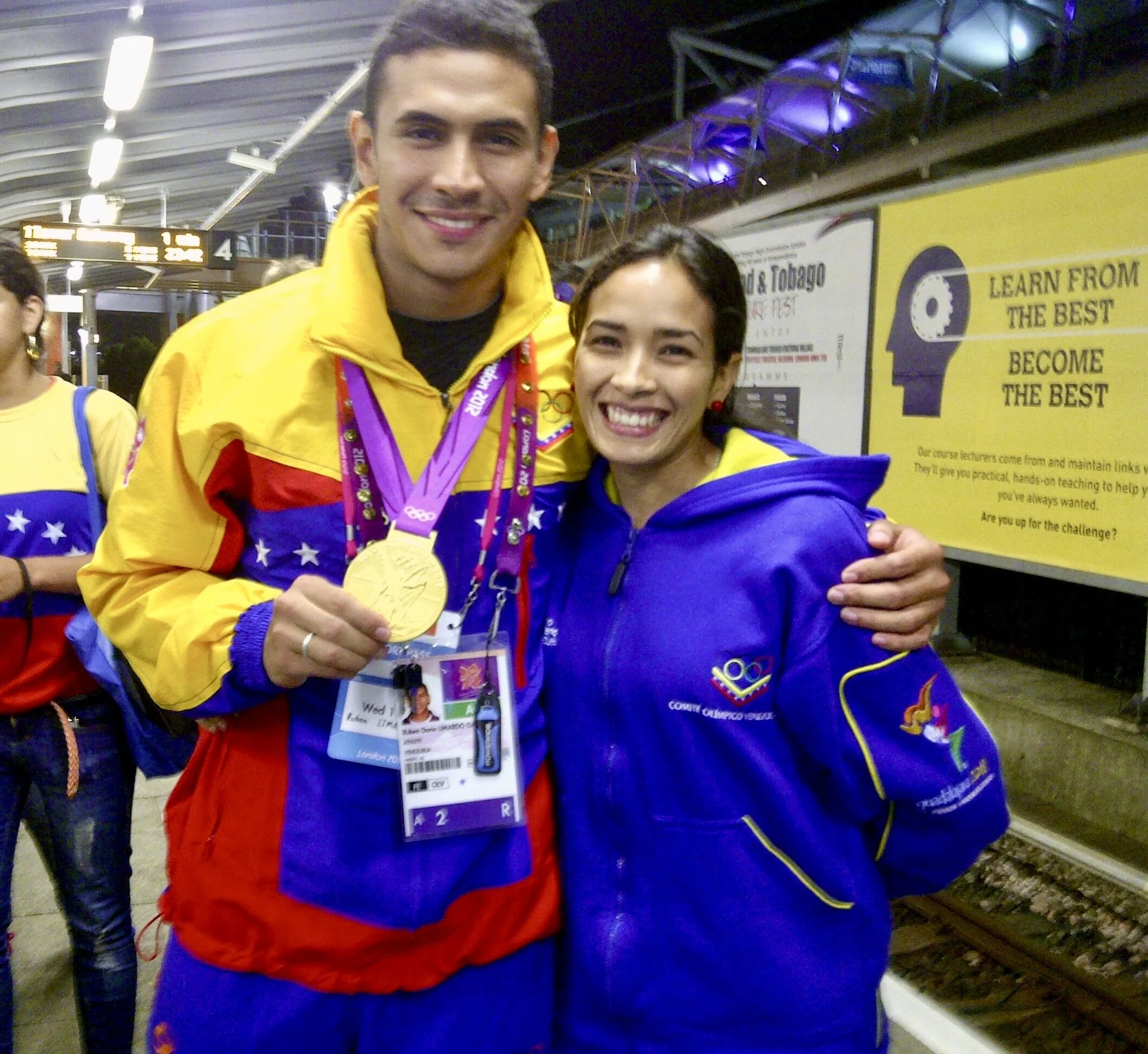
Dayana Martinez Hansen with cousin and Olympic champion Rubén Dario Limardo Gascón
Then, while traveling down a road in Utah, she saw a sign for a fencing club.
She stopped.
“Oh, there’s fencing here,” she remembered thinking. “Great.”
The discovery did more than give her a place to continue training. Through fencing in Utah, she met the man who would become her husband. Years later, they would build a family there while Dayana continued trying to understand whether the sport that had shaped nearly her entire life still had a place for her.
Fencing had begun as a family project in Venezuela when Dayana was approximately seven. Her uncle, a fencing master who had trained in the Soviet Union, returned to Venezuela, and the adults in the family offered their children as his first students.
Dayana did not always want to practice, but her mother saw something in her and continued pushing. The sport soon became part of the family’s identity.
Her sister, Maria Gabriela Martínez, became a two-time Olympian. Her brother, Benry Martínez, became an Olympic coach. Her cousins Rubén Dario Limardo Gascón, Francisco Limardo and Jesús Limardo are also Olympians; Rubén won individual epee gold at the 2012 London Olympics. Her niece now fences, and Dayana expects her own two sons may eventually try the sport as well.
“It runs in our blood,” she said.
Her sister was more than a successful athlete within that family. She was Dayana’s example.
“She was always my inspiration,” Dayana said. “She and my cousin really created the path for everyone else to make the team, make results and win medals.”
Dayana believed she might follow that path. She represented Venezuela at the cadet, junior and senior levels, spending approximately a decade on the senior international circuit. She divided her time among the United States, Venezuela, Poland and competitions throughout Europe. At one point, she took a year away from college to pursue Olympic qualification.
She traveled to the London Olympics as a sparring partner after her sister qualified. She was not an alternate and did not compete, but she was close enough to see the stage she hoped to reach herself.
Dayana and her Venezuelan teammates later attempted to qualify for the Rio Olympics. The team came close but did not secure its place. An individual pre-Olympic qualifier appeared to offer another path.
At that point, Dayana said, she was the top-ranked fencer in Venezuela. She had trained, earned international results and accumulated the necessary points. But the Venezuelan Federation selected another athlete for the qualifier.
“I won a satellite World Cup. I made my points. I was up higher, but at the end, they still cut me out.”
For Dayana, the decision felt like a betrayal by the system she had represented for most of her life. It was also one in a series of painful experiences with the federation. The hardest part was not simply missing an Olympic opportunity. It was feeling that performance alone could not determine whether she would be allowed to pursue it.
Her sister remained on the Venezuelan team, which made walking away even more painful.
“We were part of the team for so many years,” Dayana said. “That was kind of sad, just to leave her there.”
She tried to return after becoming a mother. With her first son still an infant, Dayana traveled back to Venezuela for the national championships and placed third. The result suggested her ability remained, but the support she needed did not.
She found herself facing the same uncertainty and emotional toll.
“I don’t know if I want to deal with that same process again,” she recalled thinking. “It wasn’t a one-time thing. It was multiple things. It just felt like maybe they just didn’t want me.”
Dayana stopped pursuing a position on the Venezuelan team, yet she never stopped loving fencing.
Even when she was not competing, she remained connected to the sport. Her husband teases her because she will wake up in the middle of the night to watch a World Cup or follow her sister and cousins in competition.
“Fencing for me, I think it’s just part of me now,” she said. “I have a passion for it, and that will never change.”
The distinction between the sport and the institution governing it became essential.
“It did give me a heartbreak,” she said, “but it wasn’t the sport that gave me the heartbreak.”
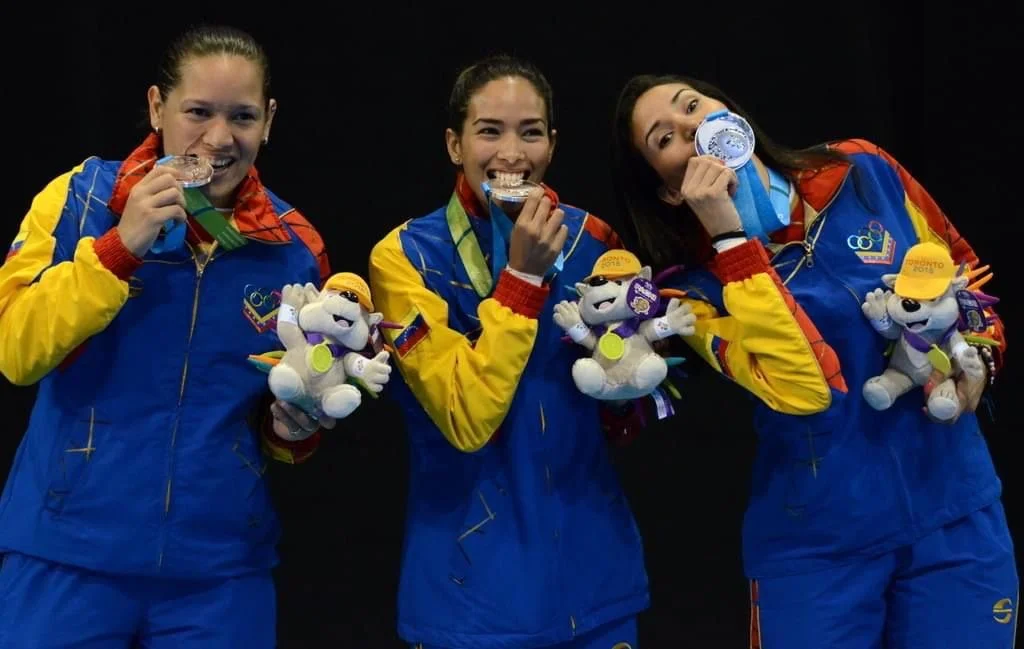
Women's team epee at the 2015 Pan American Games, July 24, Toronto, Canada.
The heartbreak came from the Federation and politics surrounding selection. Fencing itself remained the place she kept trying to find, whether she was traveling internationally, attending school in Utah, raising her children or recovering from surgery.
After stepping away to have her children, Dayana initially returned to fencing recreationally. Julie Seal, the owner of the Utah club where Dayana fenced, saw that Dayana still possessed the ability and competitive drive to do more.
“You have to try this,” Julie told her, encouraging Dayana to enter veteran competition.
Dayana was uncertain. Julie was not.
“You can make it,” she kept telling her.
Eventually, Dayana decided to try. On Sept 4, 2024, she underwent hip labrum surgery, followed by a full 12-month recovery.
The interruption might have ended another comeback. Instead, the possibility of Veteran Worlds gave her something to work toward. Her first NAC after surgery came in February, approximately five months after she was cleared to return to fencing full time. In Richmond, Virginia, she did not know what her body would allow. She planned simply to try her best and see how she felt.
She won.
The result gave her enough confidence to believe the larger goal might still be possible. She continued training while balancing work, two young sons and the help required to travel to national competitions. Her mother-in-law, husband, friends and members of the fencing community helped care for the children when Dayana needed to train or compete.
Returning as a veteran was different from competing as a younger international athlete, but the competitive drive remained. What changed most was the path to the team.
In the United States, Dayana found a selection process in which expectations were established in advance. Athletes knew which events counted, how to earn points and what results they needed.
“You know from the start what you need to do to make the team,” she said. “You just need to fence, make the results, get the points and that’s it.”
For someone who had once felt her results could be overridden by federation politics, that clarity carried emotional weight. The system could not guarantee she would win, but it allowed her fencing to determine how far she could go.
Now Dayana has qualified for the 2026 Veteran World Team in vet-40 women’s epee. She will return to the world stage representing the United States for the first time.
It is not the route she imagined while trying to follow her sister onto Venezuela’s Olympic team. It is a return made possible by the country where she studied, found a fencing club, met her husband, raised her children and rebuilt her competitive life.
She once believed leaving the Venezuelan team might mean losing the sport that had shaped her family and nearly all of her life. Instead, fencing followed her.
Or perhaps Dayana kept finding it.
On a roadside in Utah. In the club where she met her husband. In the community that helped with her children. In the first tournament after hip surgery. And now, on a United States team headed to Veteran Worlds.
“I think I’m most excited just fencing for Team USA,” she said. “Being back at the high level, being back at Worlds.”
The flag will be different. The love that brought her there is not.
Anne-Marie Walters
2026 Vet-70 Women’s Epee and Vet-70 Women’s Foil
An Invitation Passed Forward
Anne-Marie Walters was playing basketball at Brooklyn College in the 1970s when her friend Jennette Starks-Faulkner approached her with an unexpected request.
The women’s fencing coach needed more girls for the team. Would Walters come try it?
She knew nothing about fencing and had no reason to imagine how profoundly accepting that invitation would change her life.
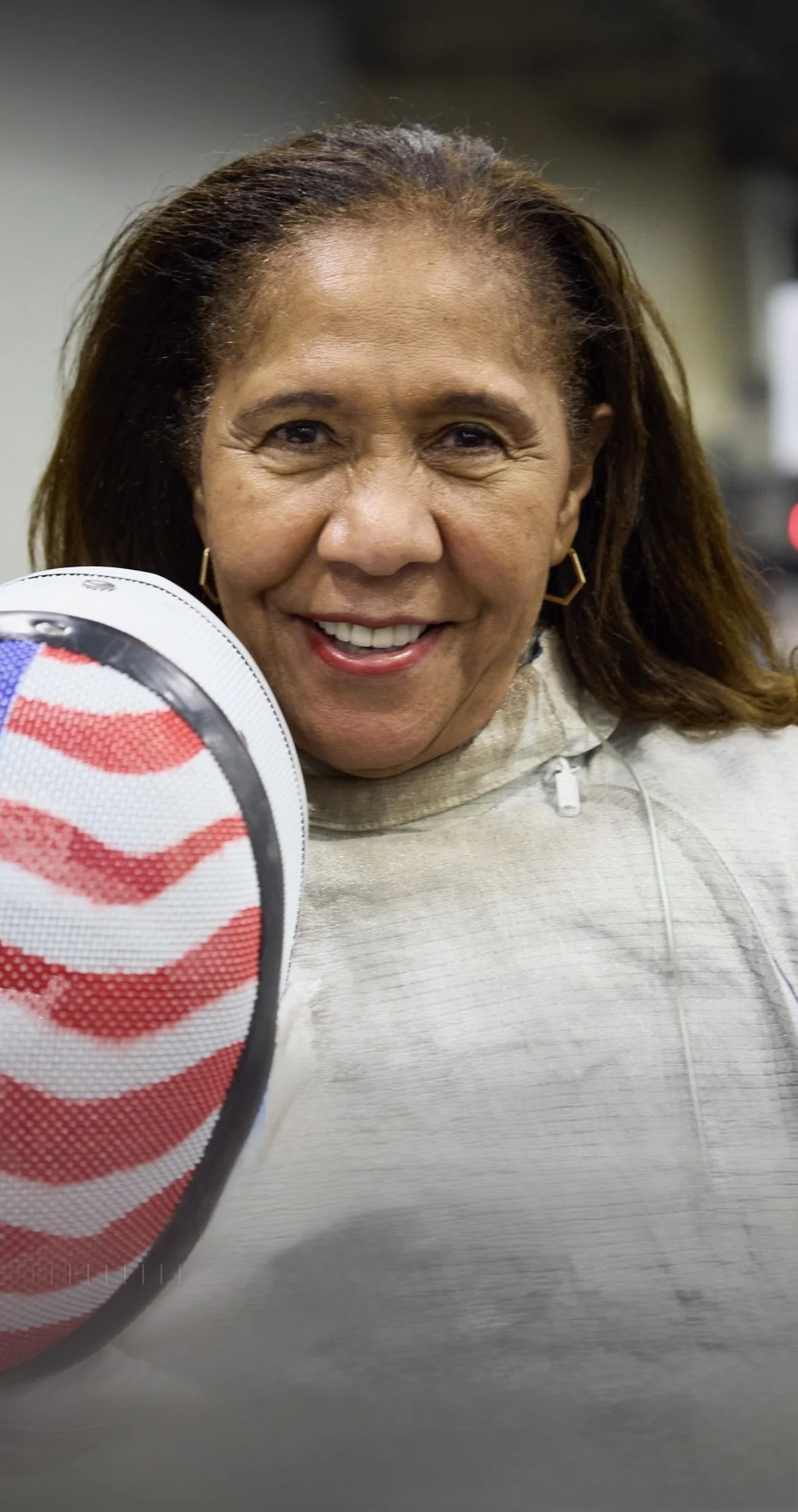
Anne-Marie Walters
More than five decades later, the two women are still connected by that moment. Jennette brought Anne-Marie into fencing. Years later, Anne-Marie would bring Jennette back.
After Jennette had been away from competition for nearly two decades, Walters called her in 2006 and encouraged her to return through veteran fencing. Walters wanted a roommate, training partner and someone with whom she could warm up at Veteran North American Cups.
Jennette returned and went on to win national and world titles in veteran foil and saber. She was selected for induction into the Class of 2026 USA Fencing Hall of Fame,.
Now Walters will follow her as the veteran athlete selected for the Class of 2027 Hall of Fame.
The friend who opened the door for Walters, and the woman Walters later brought back through that same door, will become Hall of Famers in consecutive classes.
Walters’s 2026 season adds another unexpected chapter. She qualified for the Veteran World Team in both foil and epee, marking her first World Team position in women’s epee.
Foil has always been her primary weapon. This year represents what Walters described as her 19th Veteran World Team selection in foil. Epee began as something she fenced for enjoyment. She added other weapons because she was already investing the time and money to attend national competitions and wanted more opportunities to fence.
She did not expect epeeto carry her to Veteran Worlds.
“I was in shock,” Walters said. “When they mentioned my name, I was almost in tears because I wasn’t even expecting that.”
At the World Championships, Walters will arrive as two different versions of herself. In foil, she is a three-time individual Veteran World Champion and one of the most accomplished American veteran fencers in the weapon. In epee, she is a first-time World Team member preparing to face opponents with substantially more experience in the weapon.
“Foil is my thing,” she said. “I am always going for the gold on foil.”
Epee carries a different expectation. Walters plans to try her best, enjoy the experience and see what happens.
Preparing for two weapons requires her to divide her training between the weapon she has spent decades mastering and one she is still learning. She traveled to an epee club in Miami for additional guidance while continuing her regular foil training.
She must also respect the physical limits imposed by decades of competition. Walters said she has sometimes returned from tournaments limping or requiring wheelchair assistance at the airport. Her challenge is to train enough to be ready without pushing so hard that she cannot compete.
“I want to push myself, but I know my limits,” she said. “I’m just trying to get to Worlds uninjured.”
Experience has taught her how to adapt. It has also given her an international family. Many of the same women have progressed through the veteran age categories alongside her, meeting year after year at World Championships.
“There’s a group of us who came through the fifties together,” Walters said. “We came in our sixties. It’s like a family, really, my international family.”
Walters will return to that community in 2026 while building another fencing community in Trinidad and Tobago, the country where she was born.
She initially thought she could introduce fencing there and allow local interest to take over. She quickly discovered that creating a sustainable program required equipment, administrative work, local leadership and repeated visits.
“This project was much bigger than I thought,” she said.
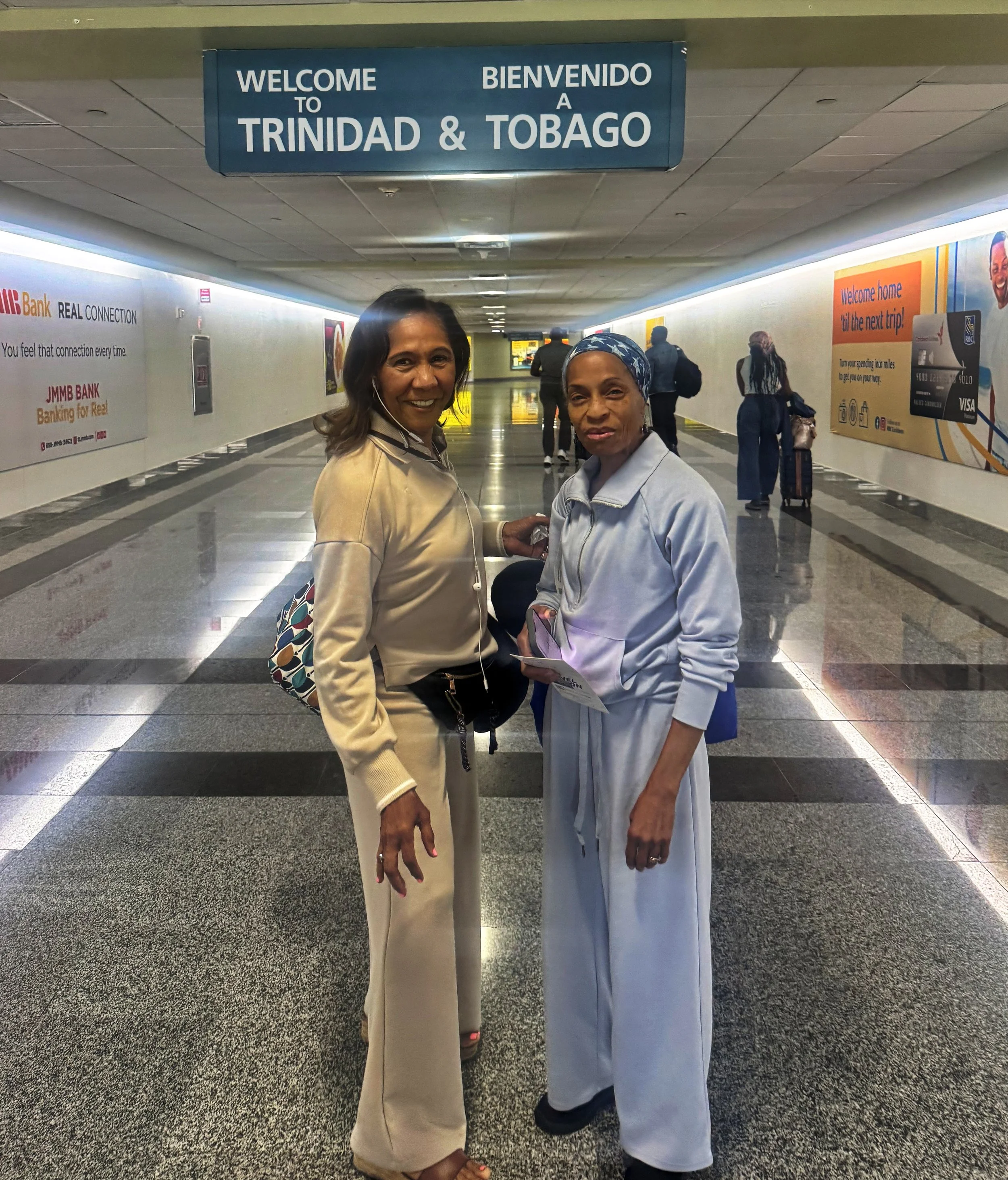
Jennette and Anne-Marie arrive in Trinidad and Tobago for a workshop.
A Trinidadian Paralympic leader contacted Walters after attending the Paris Games and expressed interest in developing parafencing in the country. Walters saw an opportunity to build parafencing and able-bodied fencing together.
Because she does not live in Trinidad, she needed someone within the country who could manage the paperwork and administrative process. Equipment presented another challenge. Walters collected donated supplies through friends, family members and the fencing community, then paid to ship them to Trinidad.
The Trinidad and Tobago Fencing Federation has applied to join the FIE, and the application has been accepted for review. An FIE delegation is expected to visit Trinidad and Tobago to evaluate the program before the FIE Congress votes on the Federation’s acceptance in November in Budapest.
The first sessions drew approximately 18 participants. On a later visit with Jennette and other experienced fencers, attendance grew to approximately 79.
For Walters, that growth demonstrates what can happen when someone is invited into an unfamiliar sport.
She knows because the same thing happened to her.
In the 1970s, Jennette needed another girl for the Brooklyn College team. Walters accepted the invitation without knowing it would lead to collegiate fencing, teaching, coaching, national titles, World Championships and the USA Fencing Hall of Fame.
Now Walters is extending that invitation to Trinidad and Tobago. She wants people there to encounter fencing even if they have never seen the sport, held a weapon or imagined themselves standing on a strip.
At Veteran Worlds, Walters will represent USA in two weapons, one she has mastered and one that surprised her. Away from the Championships, she is using everything her American fencing career gave her to build opportunities in the country where she was born.
Jennette opened the door for Anne-Marie. Anne-Marie later reopened it for Jennette.
Now she is holding that door open for Trinidad and Tobago.