
Has this ever happened to you? You’re at a tournament, and suddenly you discover one of your favorite weapons is misbehaving before an important bout. What’s to be done? Maybe there is an on-site armorer or vendor who can help you … but what if there isn’t? It’s best to be prepared to do simple equipment repairs. The following list of tools and parts will help you take care of simple emergency repairs, assuming your weapons have been properly assembled and tested before the tournament.
Foil Tools
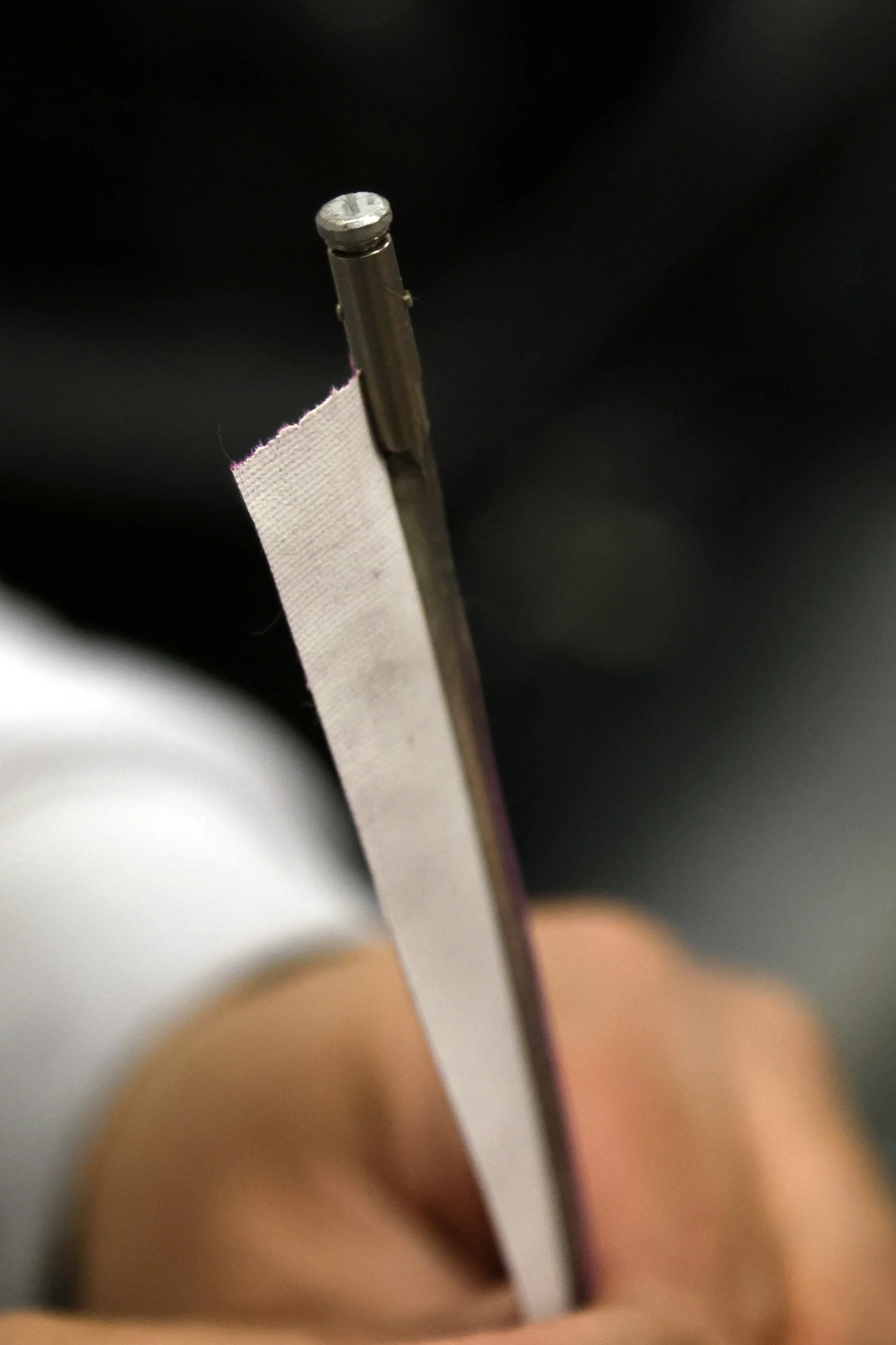
Did you know? Foil tip tape insulates the weapon in the case that both tip and blade make contact with the lamé.
Pommel tightening tool: Usually a 6mm inside hex (Allen) key, or an 8mm outside wrench for orthopedic grip pommels. Hopefully, all your pommels are the same so you don’t have to carry two different pommel tightening tools. The use of a 6mm lock washer will also help to minimize the need to tighten and re-tighten your weapons’ pommels. French grip pommels usually can be tightened by hand. Do Not use chemical thread-locking substances to prevent your pommels from loosening.
Tip Tape: It is not uncommon for the insulating tip tape to become ragged during a tournament. Its purpose is to prevent the shorting of the blade and the tip during a valid hit – if the tip and the blade are both in contact with the lamé when the point is depressed, no touch will be scored. Therefore, it is in your best interest to replace any ragged tip tape, especially around the barrel. How much of the blade should be taped? 15cm (+/- 1cm), approximately the length of a dollar bill.
Optional Tools for a More Sophisticated Tool Kit
LED Test Box or Multimeter. Used for testing both the foil and body cords.
500 gram Foil Test Weight. Used for testing the foil’s pressure spring.
Tip Tightening Wrench. A 5mm crescent wrench used for tightening the barrel of the point, used with a 4” adjustable wrench.
Tip Screw Screwdriver. A magnetized 1.5mm slotted screwdriver: used when replacing a broken foil tip.
Spare Parts:
Pressure Springs. Be sure the spare springs are from the same manufacturer as the point, as there are myriad different pressure springs made by the different manufacturers of points (e.g., Absolute Fencing, FWF, Prieur, AMD, Allstar/Uhlmann). Some fencers will change all the pressure springs in their weapons before major tournaments so they don't have to worry about them going “soft” and not passing the 500-gram weight test..
Spare Tips. Due to their construction, foil tips can, and do, come apart. It’s best to carry a spare one.
Tip Screws. Be sure they are from the same manufacturer as the point. There are generic “German” tip screws, but no generic “French” tip screws.
Epee Tools
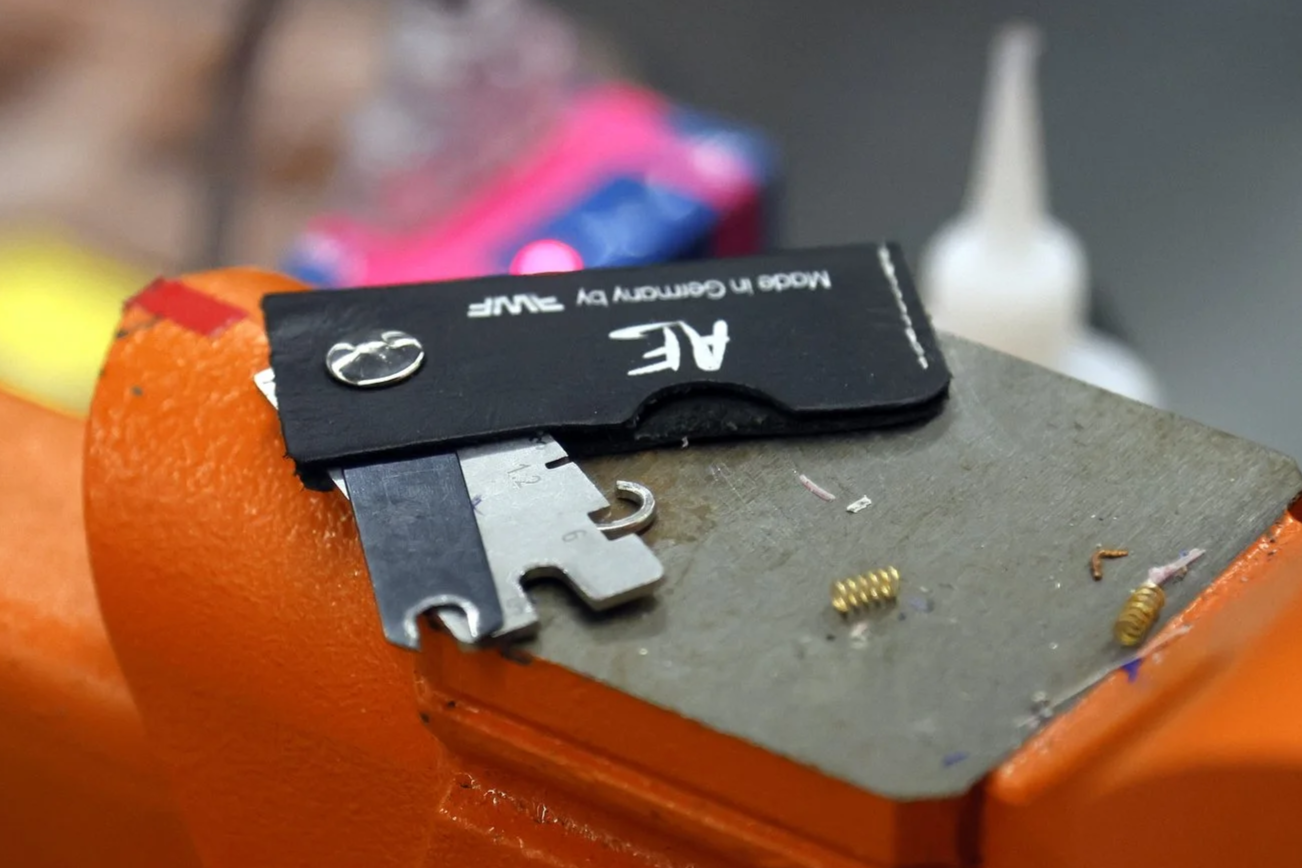
Use a shim gauge to check your epees prior to any competition.
Pommel Tightening tool: See above.
Tip Screw Screwdriver: After every bout, it should be routine to check the tightness of the tip screws to prevent their loss. A magnetized 1.8mm slotted screwdriver is ideal for inserting and tightening the most common tip screws. While the NEPS tip screws have a dedicated driver, they can be inserted using the 1.8mm slotted screwdriver.
Barrel Tightening Tools: As a loose barrel will trigger a “yellow card” penalty, a 6mm crescent wrench and 4” adjustable wrench can provide a quick, between-the-bouts fix, if a thread-locker (e.g., Loctite #242) hasn’t been used when assembling the epee.
Optional Tools for a More Sophisticated Tool Kit

Not just for referees! Have your own weight for your foil or epee, to test and ensure your weapons are ready for your bout.
LED Test Box or Multimeter. Used for testing both the epee and body cords
Epee Shim Gauges. Used for testing the “travel” in an epee’s point.
750 gram Epee Test Weight. Used for testing the epee’s pressure spring.
Tip Tightening Wrench. A 6mm crescent wrench used for tightening the barrel of the point when used with a 4” adjustable wrench to tighten a point.
Saber
Pommel Tightening Tool. If a saber is assembled and everything is tight, it should work. The majority of saber pommels use a 6mm inside hex key while others use an outside wrench.
Reminder!
Before going to a tournament, you should check, at a minimum, the two weapons and body cords which you will be using, making sure they are functional and meet the regulations.
Bonus Tips
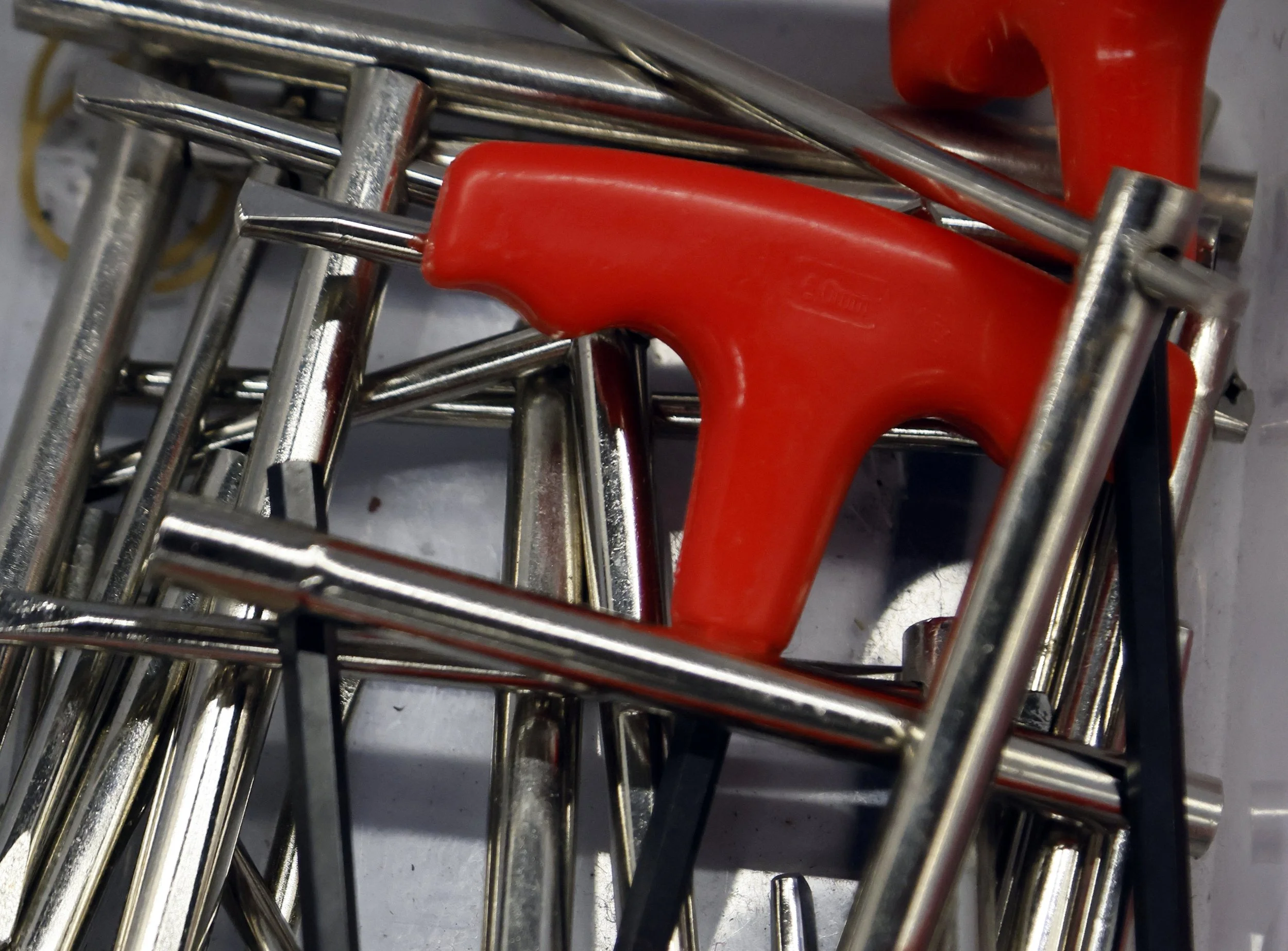
Pommel tightening wrenches are essential tools for all fencers — always have one handy and nearby, especially when you’re competing!
A very useful tool is a Swiss Army (Victorinox) “Tinker” model knife – I carry one – that can perform a multitude of repair functions only limited by your imagination.
Having the same handles, pommels and points will simplify the number of spare parts and tools you have to carry.
Carrying a spare blade, cut and fitted to your handle, is a definite positive.
With just a few simple tools, you can remedy the most common problems encountered during fencing tournaments; but nothing beats preventive maintenance before you arrive at a tournament’s venue.
Photos: Serge Timacheff/USA Fencing