
The Three Most Common Rules Misperceptions
Having hosted the referee seminar for decades, it is notable to see how certain rules have been misperceived by a significant percentage of attendees.
I always try to ascertain how they came to those wrong misperceptions. Did they read something online? Were they misinformed by a coach? Other fencers? Someone prominent in the refereeing hierarchy?
And what I have learned is that the answer is “all of the above.”
The Halt
What prompted me to cover this topic now was a recent conversation I had with veteran fencer who sent me a video clip of a call from his recent bout. In it, he was off the strip with one foot when his opponent attacked. Already off with one foot, he parried and made the riposte. As it was epee, both the riposte and the remise hit for a double touch.
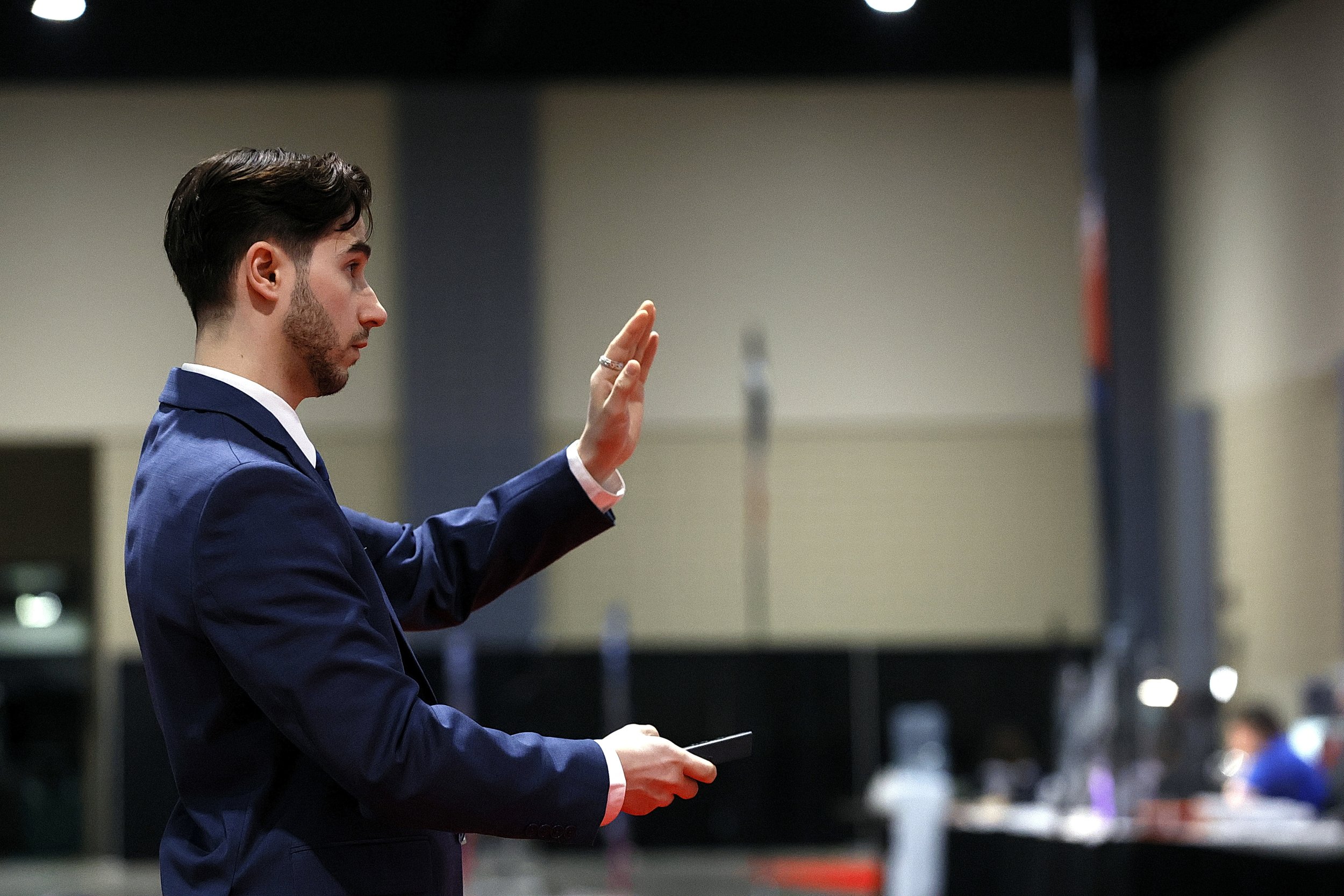
Naturally, his touch was annulled. His opponent’s touch was allowed. When he showed the video clip to another veteran fencer about whether his opponent’s touch should have counted, this fencer said, “It depends when the referee called halt.”
OMG! This is eerily similar to what the answer many seminar attendees have thought.
This is incorrect. And it needs to be clarified. More importantly, it needs to be understood why it is incorrect.
During the long seminar, there are a handful of times when I request attendees write something down. One of the staples is: “The halt is determined by the action, NOT when the word comes out of the referee’s mouth.”
In other words, if there is corps-a-corps (body contact), it requires a halt. If a fencer can do a new action after the corps-a-corps before the ref can blurt out the “halt,” and it happens regularly, that touch is not allowed.
Why?
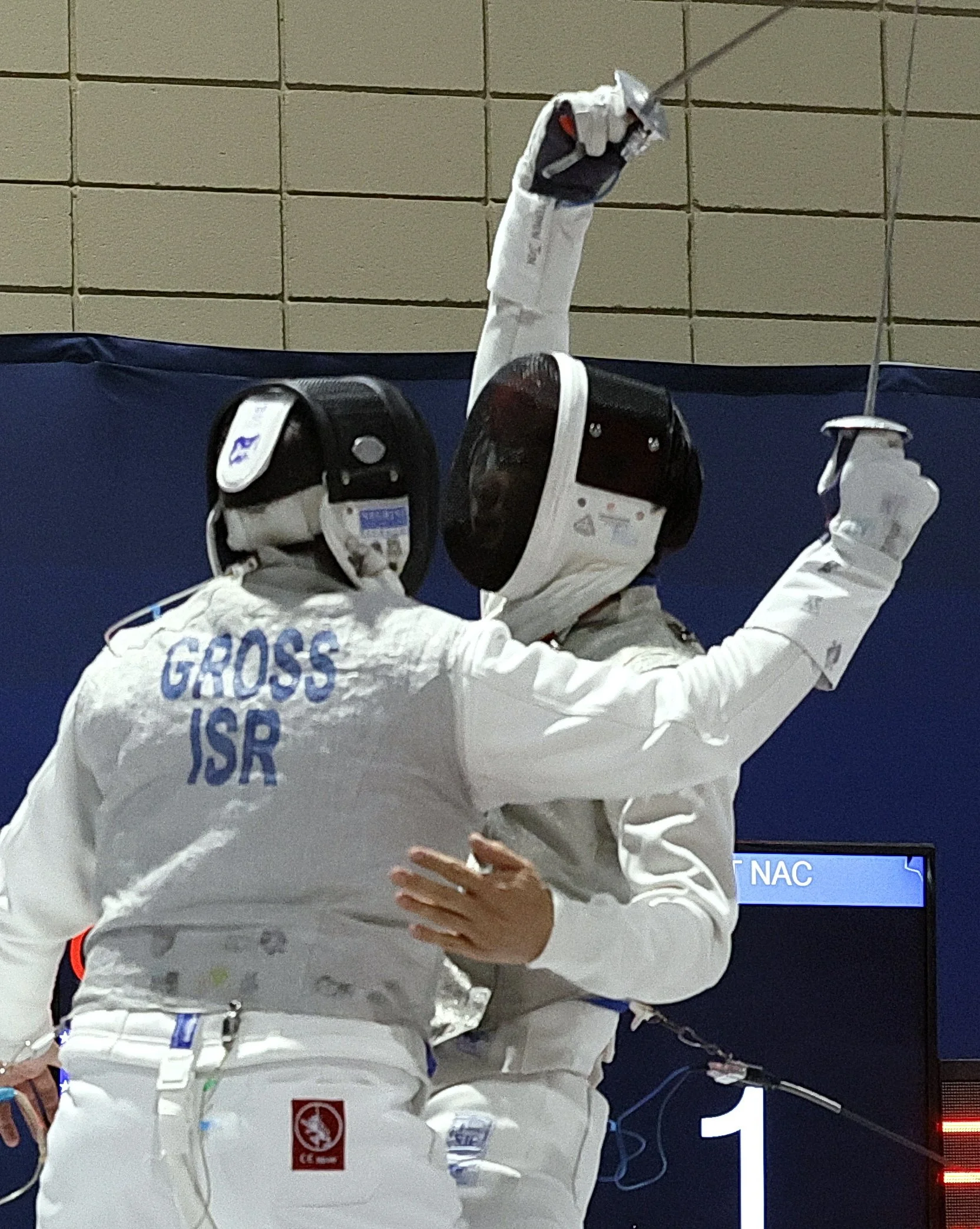
No new action can begin after the halt. And the action of the corps-a-corps determined that halt. The action and timing are black-and-white and cannot be confused by the gray timing of when a referee says the word.
It is not a race to see if a touch can be scored before the referee can say halt after something happened that mandated a halt.
The one flaw with video replay is that there is no sound. So, it can never be known when the referee actually says halt. In a case of extreme irony, the flaw with the replay system actually helps clarify these types of calls, as you can only go by what the replay showed and whether the new action commenced after the halt was warranted.
(To be clear, this is regarding touches scored before the referee called halt, not actions where the referee may have called halt BEFORE an action may have commenced.)
And, if the replay showed a corps-a-corps before a new action began, why would it matter when the referee said halt?
Now, let’s go back to what transpired on the double touch.
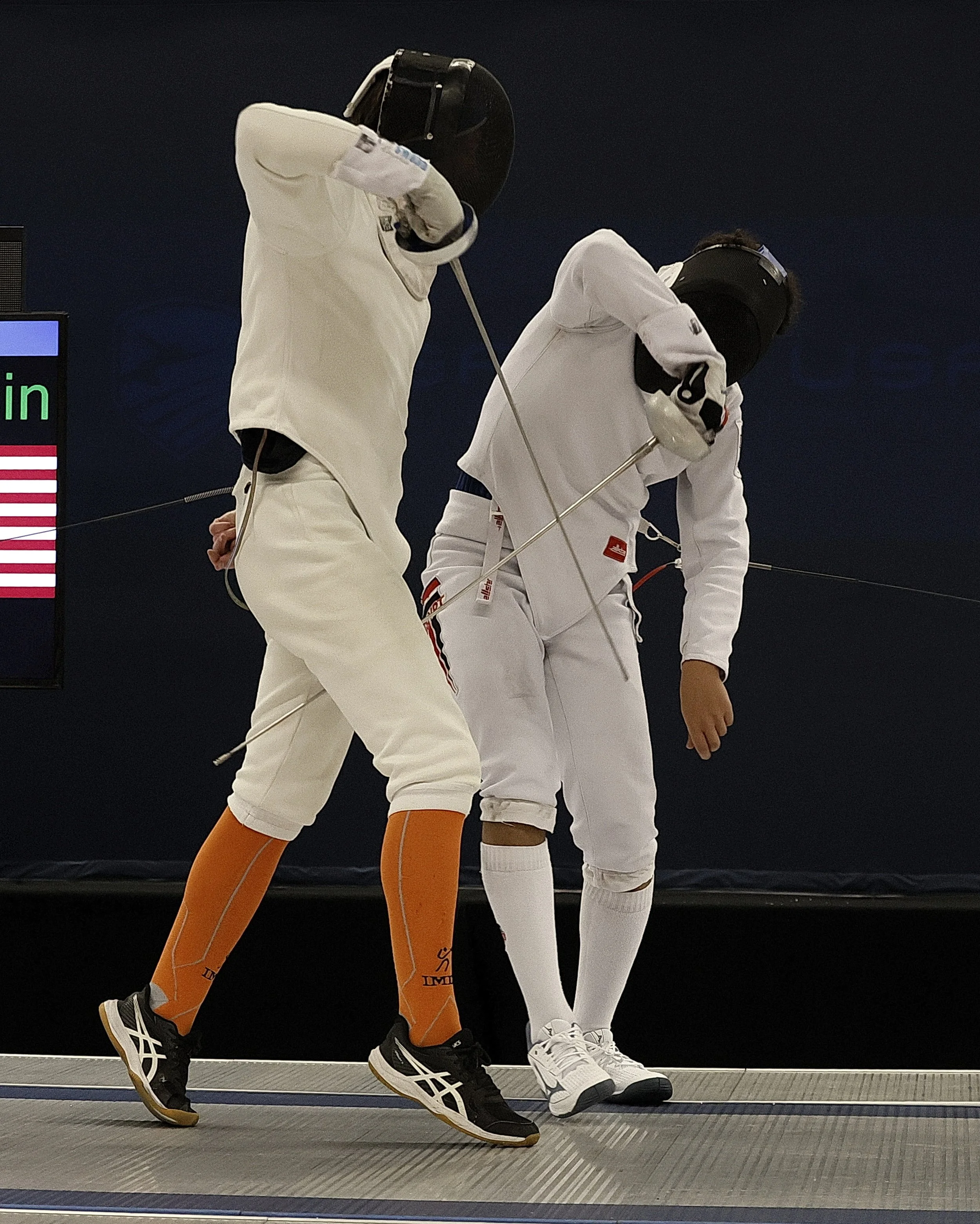
The fencer who attacked as the other fencer went off the strip with one foot would have been allowed to score on that attack. The fencer who went off with one foot while parrying and then riposted could not score, as the riposte commenced after the foot was off, as that was a new action which commenced after the halt. And, that halt was determined by the foot being off before the riposte started, not when the referee said halt.
So, I ask you. If the riposte was disallowed because it was after the halt, why would any subsequent remise be allowed to count? That, too, was a new action which commenced after the halt, not to mention a response to another action that was deemed to have started after the halt.
But that is tangential to the issue at hand, which is that No new action may begin after the halt. The halt is determined by the action, not when the referee calls “halt.”
The Fleche/Crossover
Whereas a significant percentage of attendees over the years have been confused over the halt scenario, I would say a majority have been on the wrong side of understanding how to award or annul touches made during a fleche/crossover in saber.
This included the saber fencers, as well.
I would show an example of a fencer scoring a touch before the back foot crossed over and touched the ground in front of the front foot. I make it crystal clear the touch scores first.
The hands go up without hesitation that the touch should count.
Of course, this is incorrect!
Almost without exception, a touch made while fleching will land before the back foot lands. So, if the touch landing before the foot landing was the criterion for determining whether it should count, nearly every touch with a fleche would count!
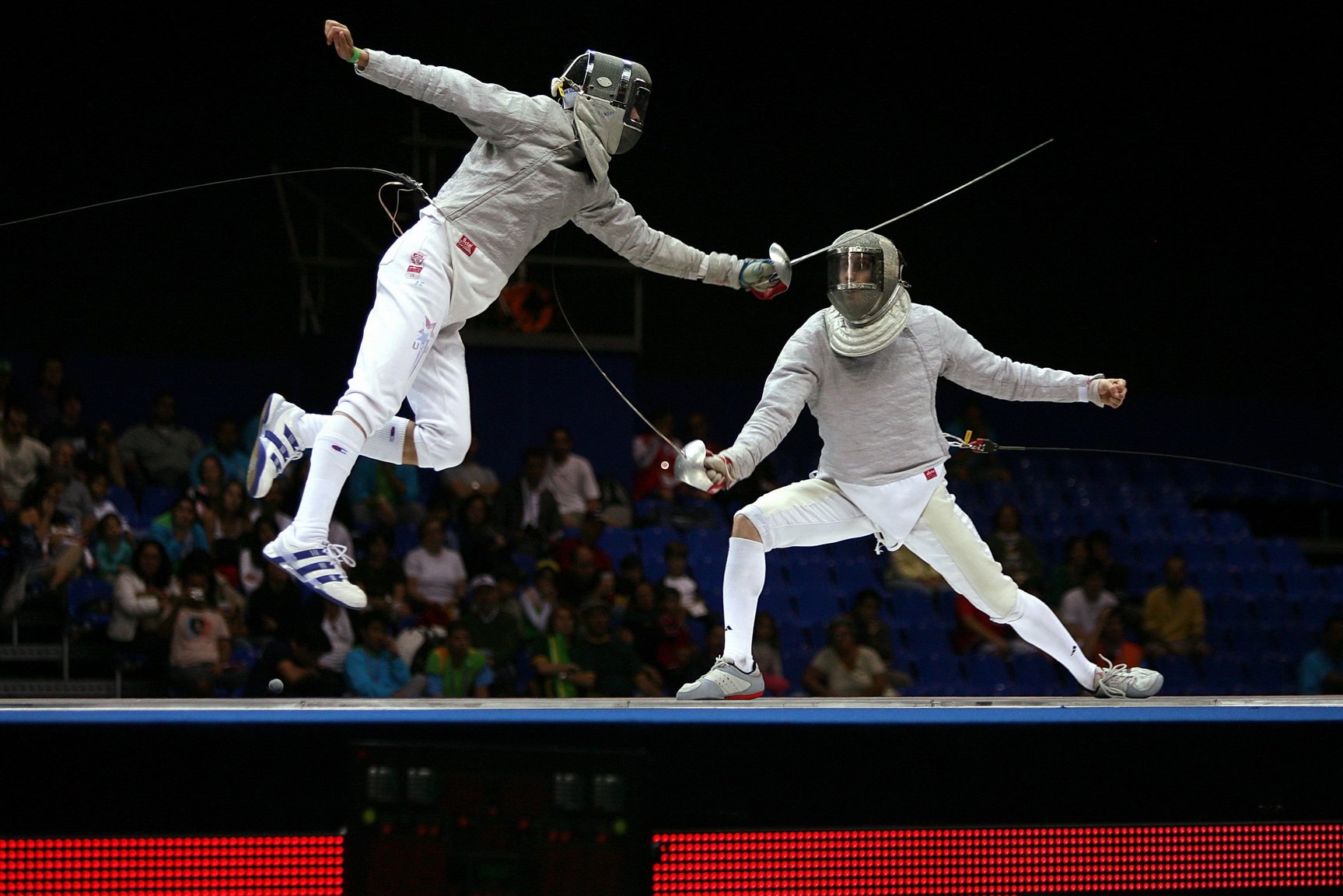
So, same as with the halt, I always ask the seminar attendees to write down the following, and with an asterisk to ensure it stands out:
*“The fleche/crossover is not determined by when the touch lands, but rather by where the back foot lands.”
In other words, the back foot must not land in front of the front foot.
When I served as USA Fencing team captain from 2003-2008, I actually lost a protest on this exact action at a World Cup, no less. We were in a team match against Hungary in Algeria when our opponent clearly and illegally crossed their feet during an attack on a very crucial touch.
The referee and video referee concurred this was a valid touch. While you cannot protest a referee’s call, you can protest a potential misapplication of the rules. So, I ponied-up the 200 Euros, or whatever the amount was at the time, and lodged an official protest. Incomprehensibly, the three-person bout committee voted 2-1 in favor of allowing the touch to stand despite the video being clear that it was a textbook fleche/crossover.
Well, at least I was reimbursed for the 200 Euros!
Now that the statute of limitations is up, I will confide a funny story told to me by Olympian Keeth Smart. As time moves on, and many of the current generation were not born yet, in 2003 Keeth Smart became the first American to earn the #1 ranking in the world in saber. Not only that, but he was the closer on the Beijing 2008 Olympic team that won the silver medal.
Keeth was tall and had long legs. When he flunged, he covered an inordinate amount of ground. And Keeth scored a zillion touches on that world-class flunge attack.
One day when we were discussing the fleche/crossover, Keeth, with that devilish grin of his, said many of his successful flunges were technically illegal.
On many of Keeth’s flunges, he would land on the front foot and then do a stork-like triple-hop down the strip. That athletic and well-balanced maneuver was something to see. But Keeth then gave the punchline: “I would go so far past my opponent that by the time my back foot landed, I was long gone. And many times, the back foot would touch down in front of my front foot.
This led to Keeth’s devilish grin morphing into a full-fledged laugh.
(When I called Keeth to see if he was ok with me confiding this story, he went right back to the full-fledged laugh!)
Funny anecdote aside, let’s remember that “the fleche/crossover is not determined by when the touch lands, but rather by where the back foot lands.”
The Front Foot Lifted in the Air Above the Endline
Full disclosure: the percentage of fencers who do not understand this pales by comparison with the previous two examples. That being said, the misunderstanding of this is pervasive enough to crack the top three.
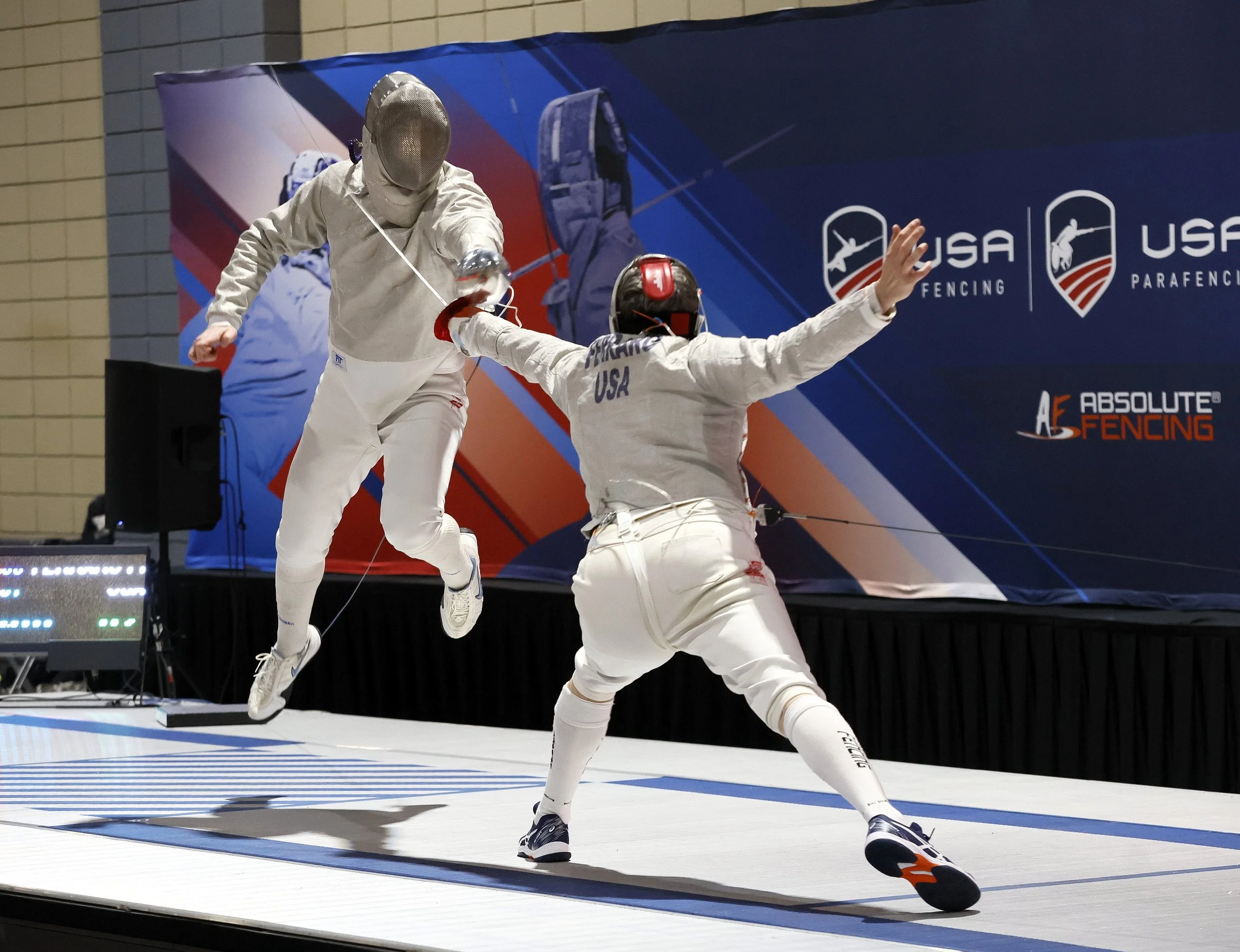
We all know this scenario. A fencer is straddling the endline, with their back foot past it (which is OK). At some point, the fencer lifts their front foot into the air, but while in the air the foot is still not behind the endline.
When the seminar attendees are asked what the call should be, far too many say the fencer is behind the endline with both feet and a point should be awarded to the opponent.
Of course, this is incorrect.
Why? Because there is vertical plane from the endline to the sky. And if the front foot has not gone behind that vertical plane, it is deemed to be still ahead of, or on the line.
The refereeing cadre fully understands this and generally calls it correctly. The key for the referees is they move down the strip with the fencers to get the best possible view.
The bottom line is that all fencers and neophyte referees must understand the vertical plane determines whether the front foot is behind the line or not.
We will cover other misconceptions in an upcoming column.
Photos: Serge Timacheff