
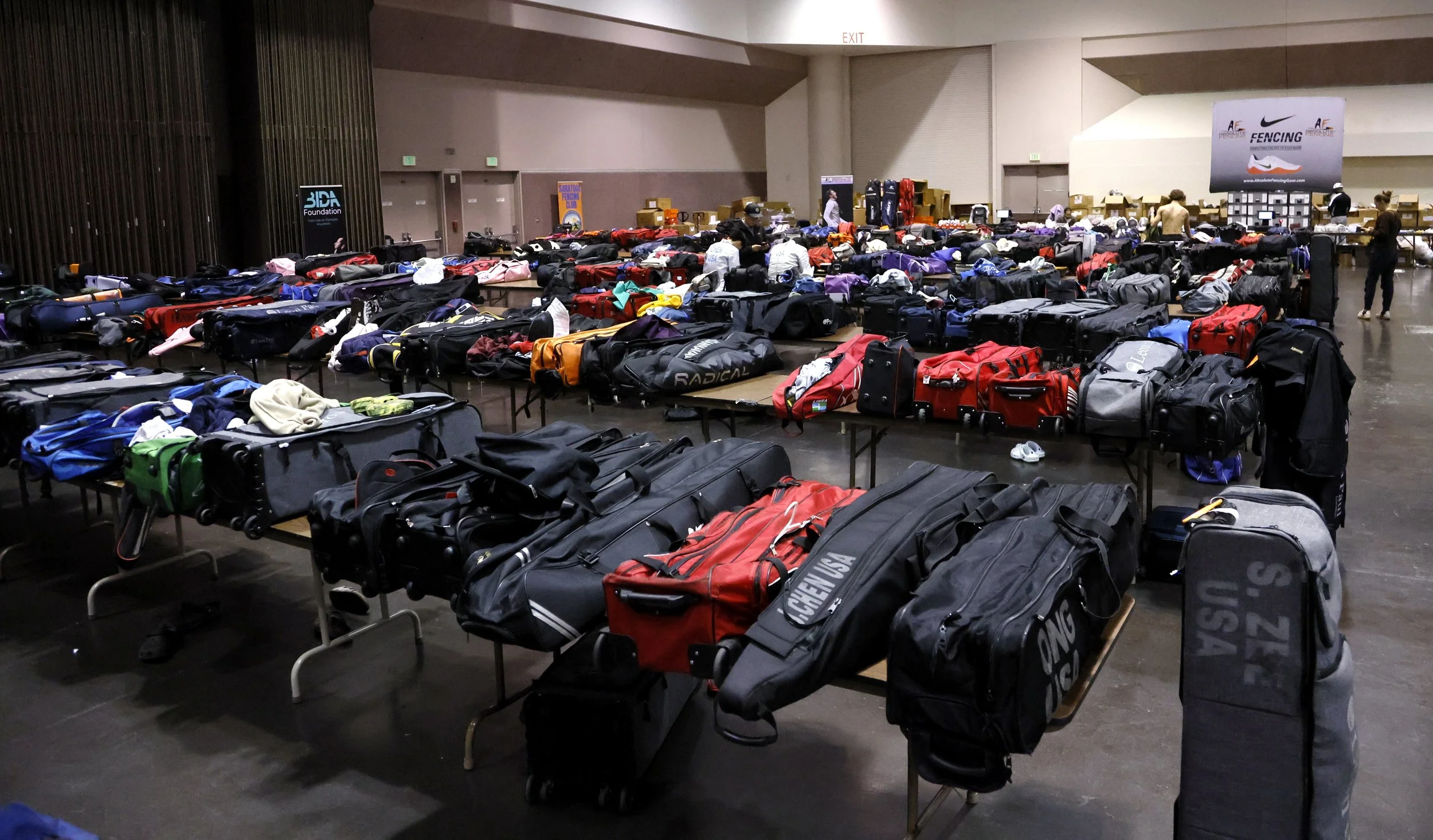
Traveling with fencing gear and bags is tough on equipment. Storing it can be even tougher.
Even if you are the most dedicated fencer, your fencing equipment spends more time in storage than in actual use. The question becomes “what happens to fencing equipment while in storage?” and “how can I prevent that from happening?”
For most fencers, the fencing bag is where most of their fencing gear resides for short and long periods of time. Weapons, body cords, masks and even whites often are crammed into a water repellant case, or stored neatly in plastic bags between fencing lessons, tournaments and seasons. Both scenarios are not ideal, as moisture – any moisture – is the long-term enemy of fencing equipment.
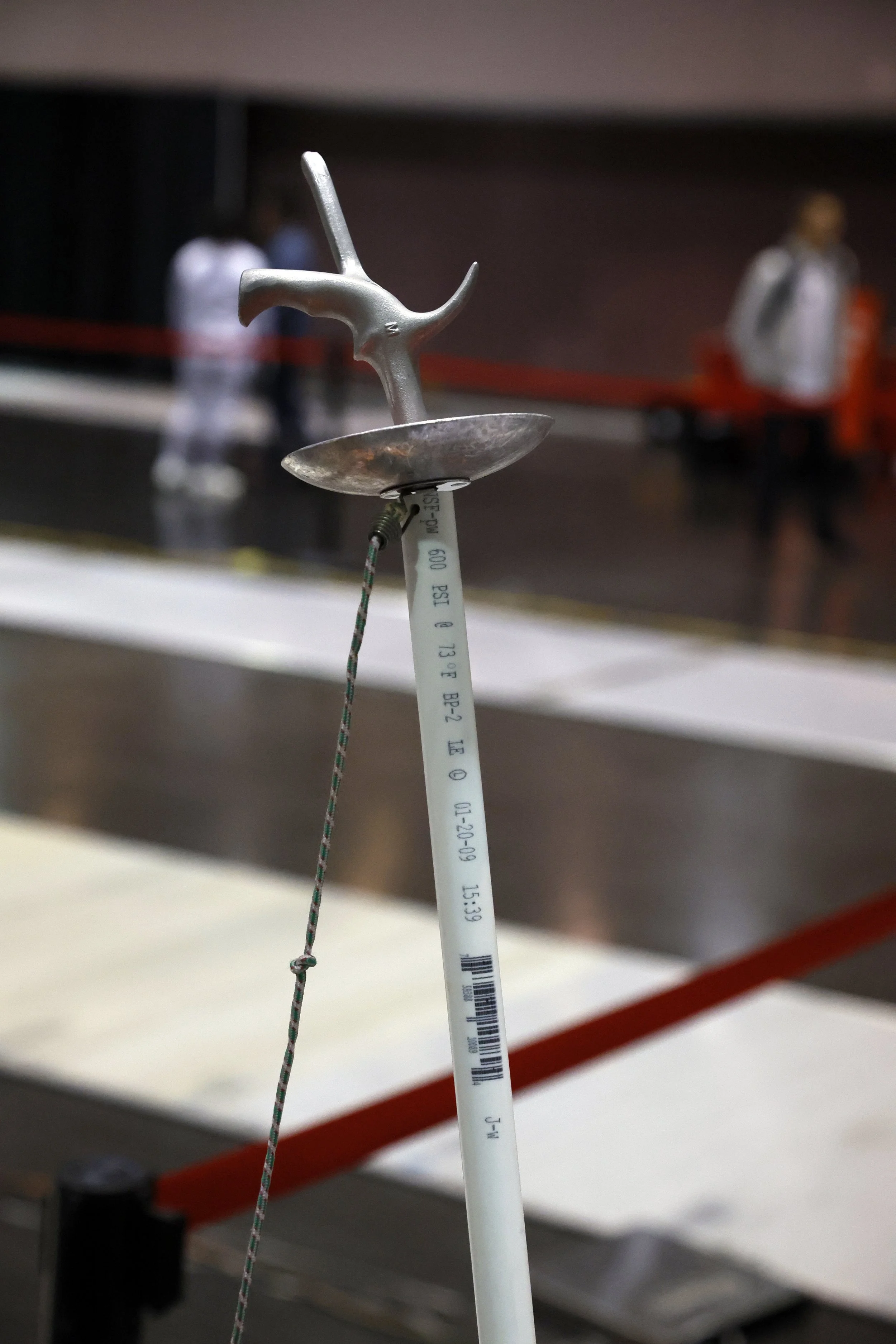
PVC tubes help protect blades from being damaged, and also keep any rust away from white uniforms.
The source of moisture in most fencing bags is the sweat soaked uniform, mask, shoes and glove. To avoid them abetting the corrosion of blades and body wires, they should be kept separate from the other fencing gear when transporting the kit after a practice or competition. Some people put their sweaty garments into dry cleaning bags for the ride home, whereas others hang their uniforms on hangers to be transported separately from their other gear. In either case, as soon as the garments arrive home, they should be either hung to dry, or washed and dried.
To protect the insulated mesh of foil and epee masks while travelling, people often use pillowcases, or purpose-made mask cases.
Continually folding lamés along the same lines is a no-no, as the constant creasing will create weak spots in the metallic threads. Many people transport their lamés on hangers, others roll them in a towel and still others just crumple them into balls. In all these cases, to maximize their lifespans, the lamés should be either washed and air-dried, or hung up to air-dry.
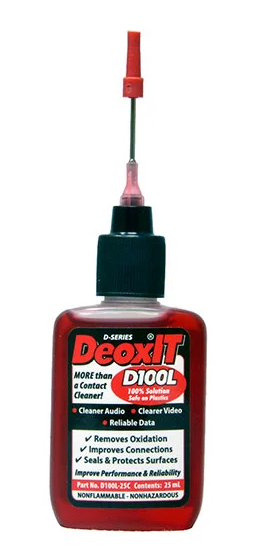
DeOxit prevents corrosion. Use it sparingly.
Have you ever wondered what the purpose of those PVC blade storage tubes is? Do they protect the blades and their tips from damage, or do they protect something else? I’ve seen fencing bags run over by cars, with no damage to unprotected blades – only the guards got deformed. Truthfully, the purpose for sheathing blades is to prevent rusty blades from transferring rust stains to a fencer’s “whites.” If you want to protect your blades from rusting, a routine quick wiping with WD-40 will help keep them rust-free. N.B. WD-40 should never be used as a lubricant, especially in foil and epee points, as it attracts and holds dust.
Storing and transporting body and mask wires in plastic sandwich bags is not a good idea, as the plastic traps moisture, hastening the corrosion of the metallic components in them (e.g., wires, clips, pins, screws). If you store cords in separate bags, store them in mesh or fabric bags that allow moisture to escape, or leave the plastic sandwich bags unsealed.
For long-term fencing equipment storage, the mantra is “keep it dry,” which is especially true for blades and cords. With proper long-term maintenance, these items can last decades. A light coating of WD-40 on blades, as for transport, can inhibit the formation of rust. A drop of a Teflon lubricant, or DeOxit, in foil and epee points will forestall corrosion. Removing any tape on foil blades and handles prevents the tape’s adhesive from degrading or concretizing. Coating body cord pins with DeOxit, as well, will prevent corrosion.
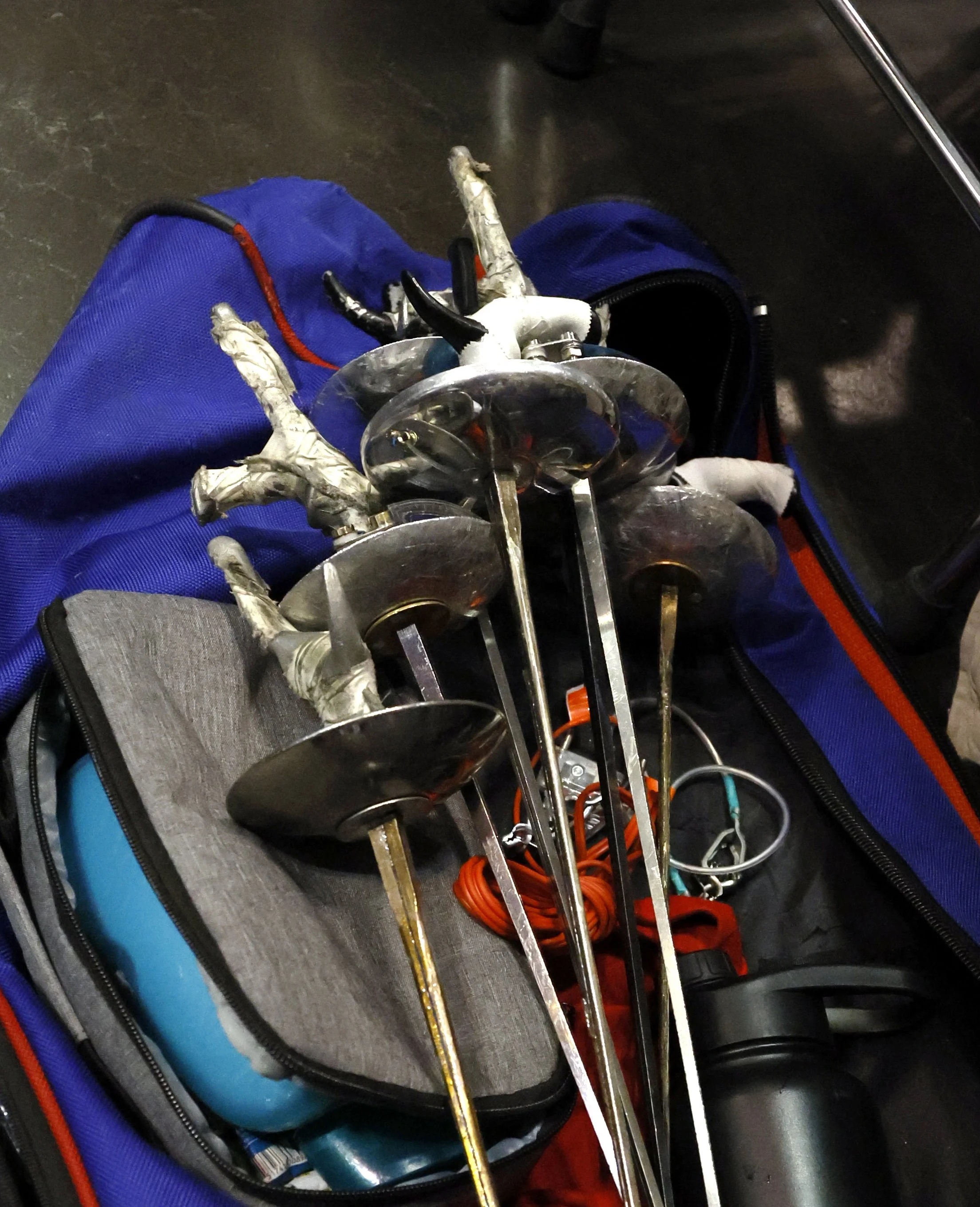
Taking good care of your gear extends its life and protects other gear, as well.
If your fencing bag is the place where your equipment spends lots of time in storage, the bag should be left partially unzipped so air can circulate, and the bag itself should be kept somewhere where it is cool and dry.
The adage, “Take care of your equipment, and it will take care of you,” certainly applies. A little bit of post-tournament and post-season maintenance goes a long way toward making your next outing less troublesome.
Photos by Serge Timacheff/USA Fencing