
From Shreveport to New York: The Freshman Student-Athlete Experience
Editor’s Note: This is the first story in our new section, “Education & Fencing.” As we approach the 2026-2027 college season, Columbia Head Coach Michael Aufrichtig chronicles his own experiences as a young collegiate fencer and shares some savvy advice for fencing students beginning their university journeys. Watch for more stories about the various aspects of how fencing and education intertwine at all academic levels.
I still remember the day I packed my bags in Shreveport, Louisiana, and headed to New York City to begin my college journey.
At the time, I had very little fear. Mostly excitement. New opportunities. A new city. New teammates. A chance to fence at a high level while studying at a university I had dreamed about attending. But after about two weeks, reality started to hit. I missed my friends from high school. I missed familiarity. I missed home.
In 1989, we could not just send a quick text message home whenever we wanted. We used calling cards, and every phone call felt expensive, sometimes one or two dollars a minute, so even staying connected felt different than it does for student-athletes today.
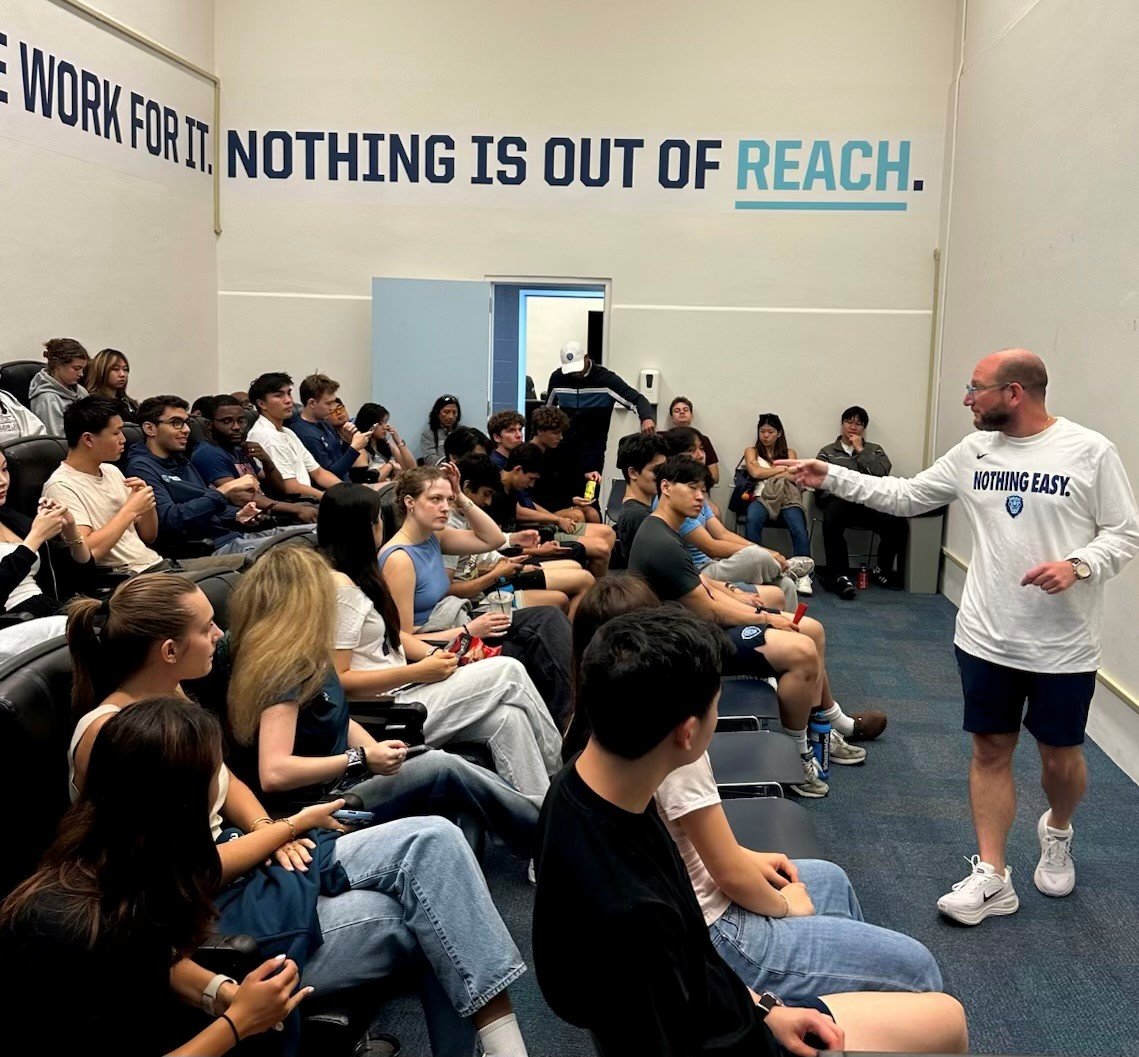
Coach Aufrichtig giving an orientation to freshman fencers.
To cope with those feelings, I developed routines. Sometimes I would visit places that symbolized New York to me, such as the Empire State Building, and simply looked out over the city to remind myself why I was there. Other times, I would throw myself into practice, fencing some of the best fencers in the country both through my university and within the New York fencing community.
Without fully realizing it at the time, fencing became more than competition for me. It became structure, connection and confidence during a major life transition.
Now, after 15 years as a college coach, I have seen many first-year student-athletes experience similar emotions.
Young athletes spend years chasing admission into their dream university. They train, study, compete, sacrifice and build resumes. But once they finally arrive on campus, many face a completely different challenge: “How am I going to do all of this?”
Academics. Athletics. Time management. Social life. Independence. Pressure. Expectations.
What many do not initially realize is they are often far more prepared than they think.
One of the first conversations we have with our incoming student-athletes at Columbia is about time. Every student has the same 24 hours in a day and 168 hours in a week. Together, we map out how those hours are spent and how their priorities fit within them.
For many freshmen, one of the biggest adjustments is learning how to manage the freedom that comes with college. In high school, students may spend more than 30 hours each week in class. In college, that number may drop to just 10 to 15 hours. Suddenly, it feels as though there is much more free time.
What student-athletes quickly discover is this is not really free time at all. It is time for studying, preparation, recovery and the countless responsibilities that come with living independently.
For some, that adjustment is surprisingly simple but important: learning how to take care of themselves for the first time. Managing sleep, making healthy choices, doing laundry and organizing a schedule without parents constantly looking over their shoulders all become part of the learning process.
Even academics can feel emotionally different. Many high-achieving students experience their first “B” in college and suddenly feel shaken. What we try to remind them is that growth often comes through discomfort. One difficult exam, grade or challenging semester does not define who they are or who they can become.
I have seen freshmen struggle with homesickness, self-doubt, injuries, confidence issues and academic pressure. But one of the biggest challenges many first-year student-athletes face is not simply academics or athletics. It is the desire to belong. And even more importantly, the desire to matter.
Every freshman walks onto campus wondering where they fit. On athletic teams, this feeling can become even stronger, especially on larger rosters where playing time, travel opportunities and individual attention sometimes feels limited. The reality is almost everyone around them is asking the exact same question.
What I constantly remind student-athletes is this: If you are there, you were chosen.
Whether recruited or a walk-on, if a coach places you on the team, it means they believe in you, not only in who you are today, but in who you can become tomorrow and how you may eventually impact the team.
The best teams help every individual understand their role and why they matter. Sometimes a freshman’s contribution may not immediately appear in results or lineups. Culture, preparation and support matter deeply over time. And eventually, their opportunity comes.
In many ways, that is also how life works. We prepare. We prepare. We prepare. Then eventually an opportunity appears, whether in sports, academics, careers, relationships or life itself.
One thing our program emphasizes heavily is connection between upperclassmen and first-year students. Early in the year, we ask our seniors to meet with the freshmen and answer a simple question: “What would you do differently if you could start college all over again?”
Seniors talk honestly about mistakes they made, lessons they learned and how they eventually found balance. More importantly than advice, they share perspective. The freshmen quickly realize their fears and struggles are normal.
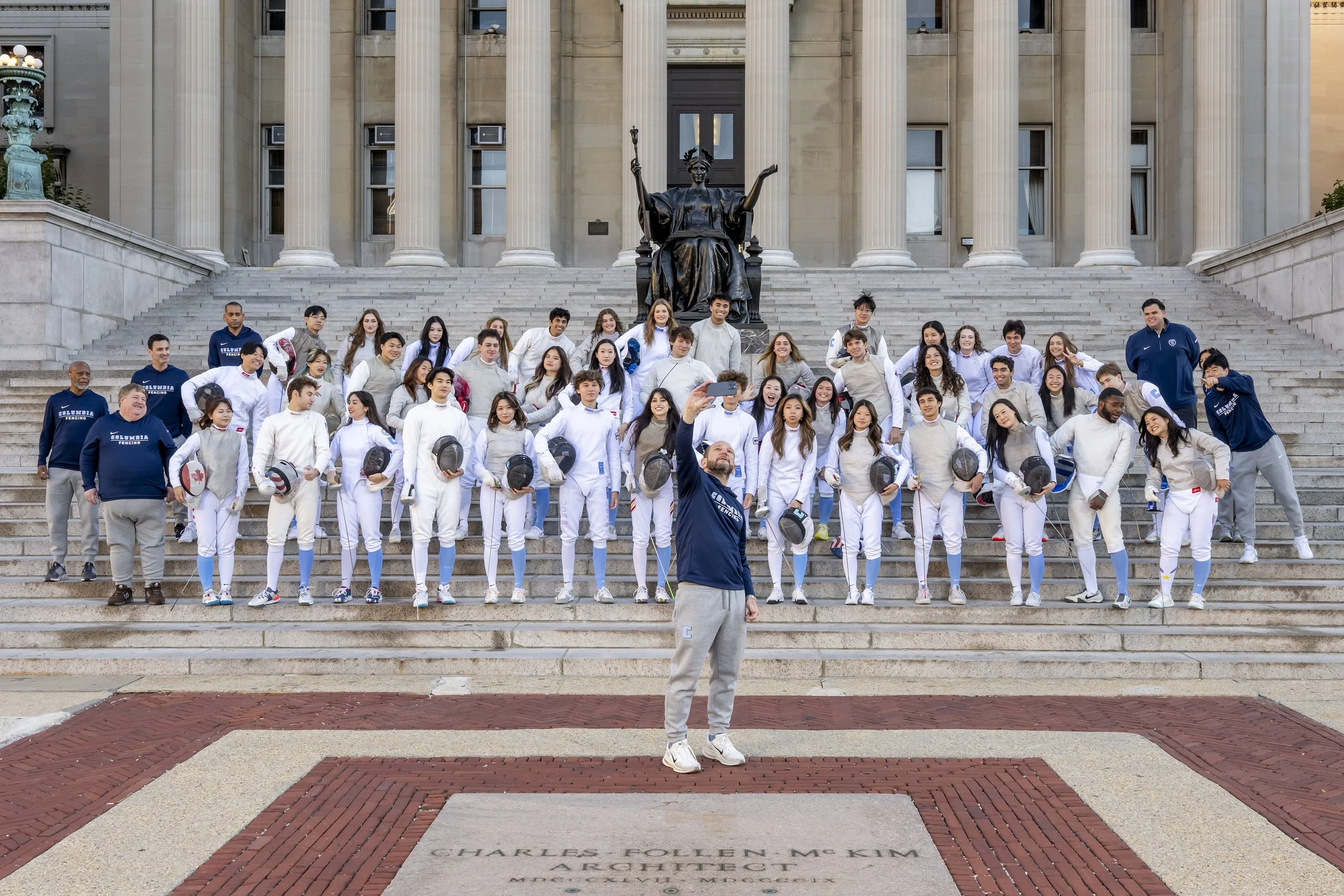
Coach Michael Aufrichtig with his Columbia team.
For some student-athletes, the adjustment to college is not only about academics or athletics. Sometimes they become so focused on performance and responsibility they forget to actually experience college itself.
I remember one first-year student-athlete who was incredibly disciplined and hardworking. She was constantly focused on academics, training and preparation. She attended practice consistently, stayed on top of her schoolwork and carried a strong sense of responsibility toward everything she did.
At one point during her first semester, I asked her a simple question: “Have you experienced anything New York yet?” She paused and answered honestly. “No.”
She had become so focused on succeeding she had not allowed herself to fully experience the city around her.
So I gave her a challenge: at least once every two weeks, she had to do something outside of fencing and academics. It did not need to be extravagant. Maybe it was seeing an off-Broadway play, visiting a museum, attending a concert, walking through Central Park or simply exploring a new neighborhood with friends.
A few weeks later, she came back excited about something she had done in the city. Then she kept going. Over time, she learned the college experience was not only about grades and athletics. It was also about exploration, relationships, curiosity and personal growth outside the classroom.
Years later, she completed both her undergraduate and graduate degrees at Columbia. But what stayed with me most was how important it became for her to embrace not just the University, but the opportunities and environment surrounding it.
No matter where a student attends college, there will always be opportunities to explore something new. One of the greatest mistakes young people can make is waiting too long to fully engage in the experiences around them. That willingness to engage often begins during a student’s very first days on campus.
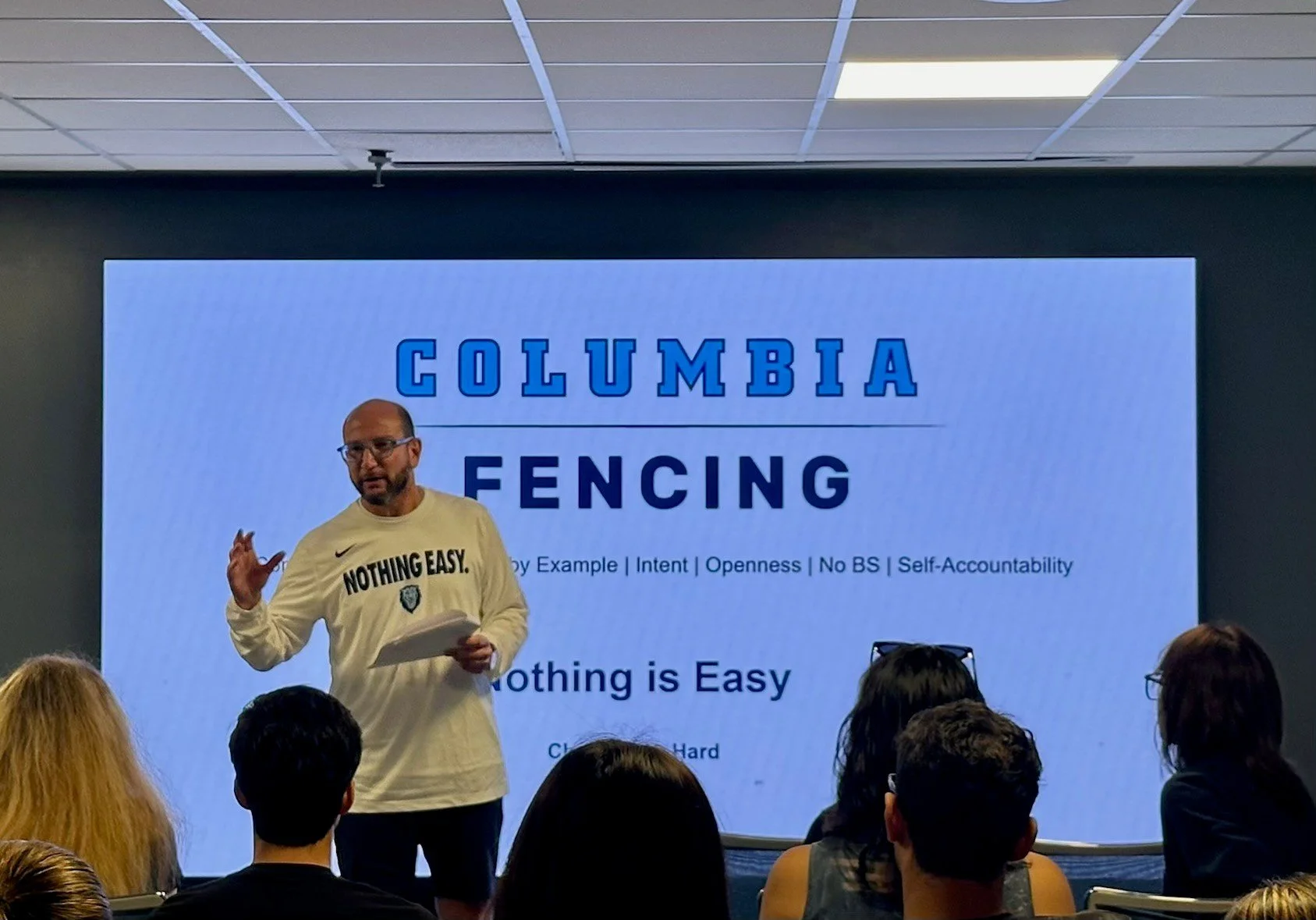
One of the best pieces of advice our returning student-athletes give incoming freshmen is to fully participate in orientation programs and new student events. Every student arrives on campus searching for connection, friendship and familiarity. What makes orientation unique is that everybody is new. Everybody is trying to figure things out.
Even naturally introverted students are often surprised by how open others are during those first few weeks. The students who thrive in college usually arrive with curiosity and an open mind.
People sometimes ask me what qualities make strong captains and leaders within our program. One answer I often give is simple: Have an open mind. Stay curious.
I believe the same advice applies to every incoming college freshman, which is one of the core values of the Columbia Fencing team: Openness. Be open to new people. New experiences. New ideas. New challenges. New perspectives.
College is one of the few times in life when people from completely different backgrounds, cultures and experiences are brought together in a single environment, with the opportunity to grow alongside one another. The students who gain the most from that experience are often the ones willing to step outside their comfort zones and fully engage.
Parents experience this transition too. While students are adjusting to a new environment, many parents are learning how to support their children from a distance while allowing them to develop independence. That balance is often where tremendous growth occurs.
A year ago, I gave a speech where I mentioned something that surprised many people. I told our athletes that although many of them may eventually stop competing in fencing after college, we never truly stop fencing.
The difference is that later in life, we simply fight for different things. Instead of fighting for points or medals, we fight for patients, clients, opportunities, ideas, businesses, families and the people we care about. Fencing simply teaches us how to prepare for those moments.
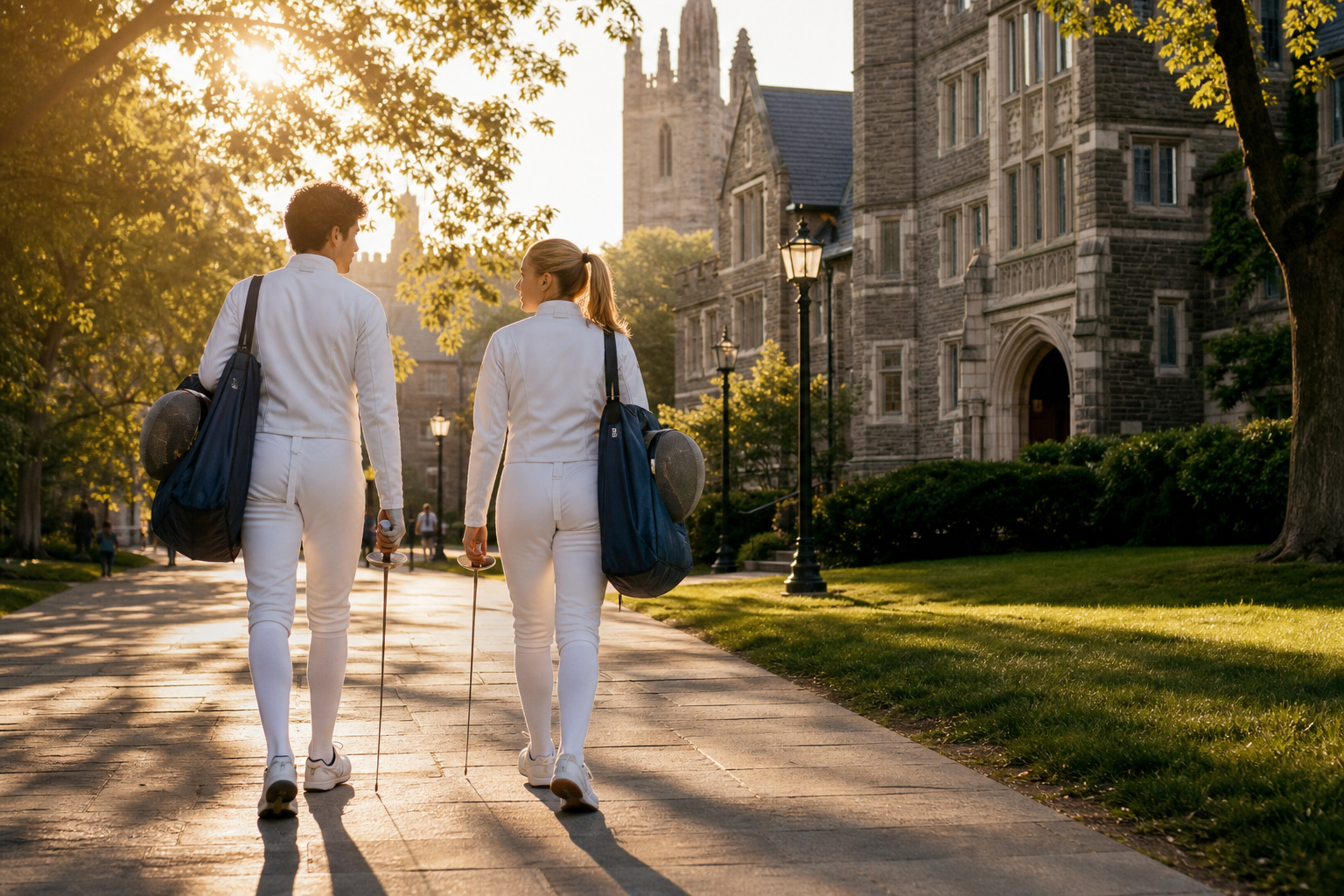
College athletics teaches much more than winning and losing. It teaches adaptability, communication, accountability and how to navigate pressure while continuing to grow as a person.
Looking back, I realize how much that time on the fencing team shaped my life. The lessons I learned extended far beyond the strip. They were lessons about curiosity, balance, relationships, perseverance and finding confidence in unfamiliar situations.
Many of those lessons continue to influence how I approach challenges, work with others and navigate life today. The same opportunities for growth are waiting for every incoming student-athlete.
To all incoming students for Fall 2026, embrace the journey ahead. There will be challenges, surprises, setbacks and moments of growth. Trust you are more prepared than you think, stay open to the people and experiences around you and remember your coaches and teammates are excited to be part of your story.
Michael Aufrichtig
Head Coach, Columbia Fencing