
The Enduring Legacy of Denise O’Connor
Because Denise believed in them, they learned to believe in themselves.
When Jennette Starks-Faulkner learned that Denise O’Connor would be traveling to Portland for the 2026 USA Fencing Summer Nationals, she began to cry.
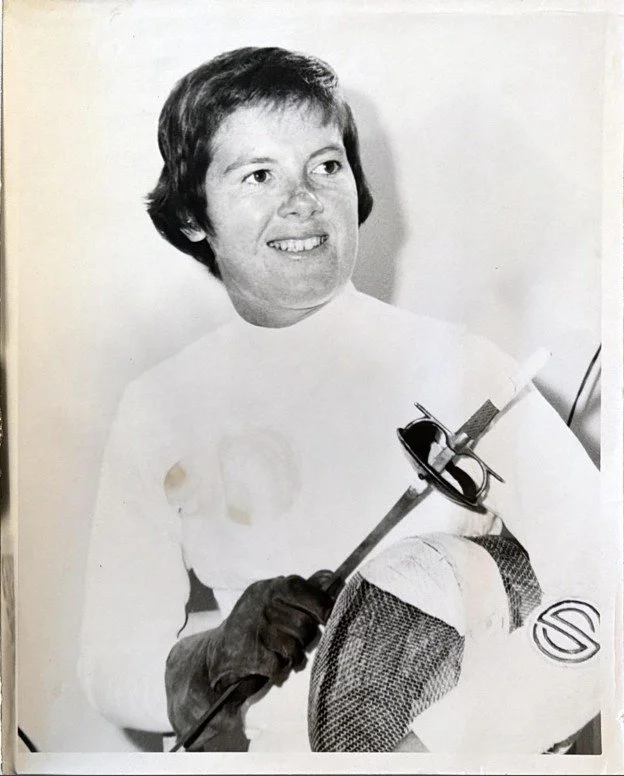
Before becoming a legendary coach and mentor, Denise O’Connor was one of America’s top foil fencers. A member of the U.S. National Team, 1964 and 1976 Olympian, she would later build Brooklyn College into a national powerhouse and inspire generations of athletes and coaches.
Not at a fencing tournament.
Not at an awards banquet.
Not even at the Hall of Fame ceremony where she would be honored.
She cried in the middle of a grocery store.
“I was standing in the produce section crying,” Jennette recalled. “I couldn’t believe she was coming.”
For many people, Denise O’Connor is remembered as an Olympian, coach, professor and one of the most influential figures in American women’s fencing.
For Jennette, she was something more.
She was the coach who believed in her long before she believed in herself.
Over the course of several weeks, I spoke with ten former athletes, colleagues, teammates and friends whose lives intersected with Denise O’Connor’s. Some became Olympians. Some became Hall of Famers. Some built nationally recognized collegiate programs. Others helped shape officiating, education and leadership within American fencing.
Yet despite their different paths, nearly every conversation returned to the same idea.
Denise O’Connor saw possibilities in people before they saw them in themselves.
Perhaps Dr. Nikki Franke summarized it best:
“Because Denise believed in me, I believed in myself.”
That simple sentence may be the most accurate description of Denise O’Connor’s legacy.
The Santelli Influence
Before she became Professor O’Connor, Denise was one of Giorgio Santelli’s students.
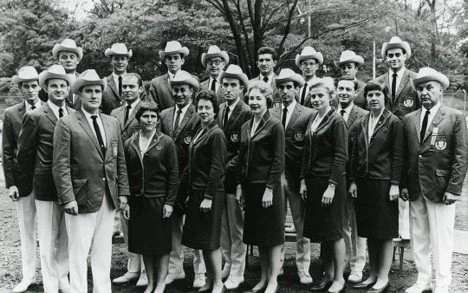
1964 U.S. Olympic Team (Tokyo). Denise O’Connor (front row, second from right) with the United States Olympic Fencing Team at the 1964 Olympic Games in Tokyo. A two-time Olympian (1964, 1976), O’Connor later became one of the most influential coaches and mentors in American women’s fencing.
Long before she became one of the most influential coaches in American fencing, O’Connor established herself as one of the sport’s pioneering athletes. A two-time Olympian (1964, 1976), she represented the United States in five World Championships and earned a bronze medal at the 1975 Pan American Games. For nearly two decades, she remained among the nation’s top women’s foilists while helping lead Salle Santelli to multiple national titles.
Yet the accomplishments that matter most to those who know her are not found on a resume.
They are found in the lives she changed.
Santelli’s influence on American fencing is well documented, but the 1976 Olympian and 2012 USFA Hall of Fame Ed Ballinger and the 1972/1976 Olympian Annie O’Donnell Russell described something equally important about his salle: it was inclusive.
At a time when many athletic spaces were not, Santelli’s club welcomed people from different backgrounds and walks of life. Ballinger and O’Donnell Russell both recalled an environment where athletes were judged by their effort and ability rather than anything else.
Many of Denise’s former students believe she carried that same philosophy into Brooklyn College.
She did not simply inherit Santelli’s technical knowledge. She inherited his belief in people.
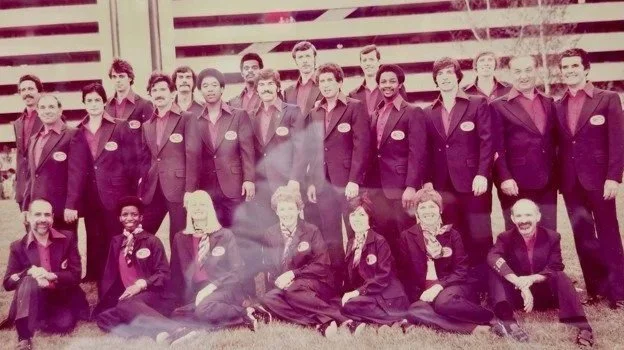
1976 U.S. Olympic Team (Montreal). Denise O’Connor (front row, second from right) and Nikki Franke (front row, far left) with the United States Olympic Fencing Team at the 1976 Olympic Games in Montreal. Student and coach stood together as Olympic teammates, reflecting a mentorship that would influence generations of American fencers.
Throughout her career, that belief would become the foundation of her own coaching philosophy.
The Denise Difference
If modern coaching often feels loud, Denise’s coaching style was remarkably quiet.
Former Stevens Institute head coach Linda Vollkommer-Lynch, who spent nearly five decades building one of the nation’s most successful collegiate programs, remembers a coach who relied on encouragement rather than intimidation.
Santelli rarely attended competitions, preferring to prepare athletes beforehand and allow them to solve problems themselves. Denise adopted a similar philosophy.
She believed coaching happened before the bout and after the bout, not during it.
“Hit them five times before they hit you.”
Simple.
Direct.
Classic Denise.
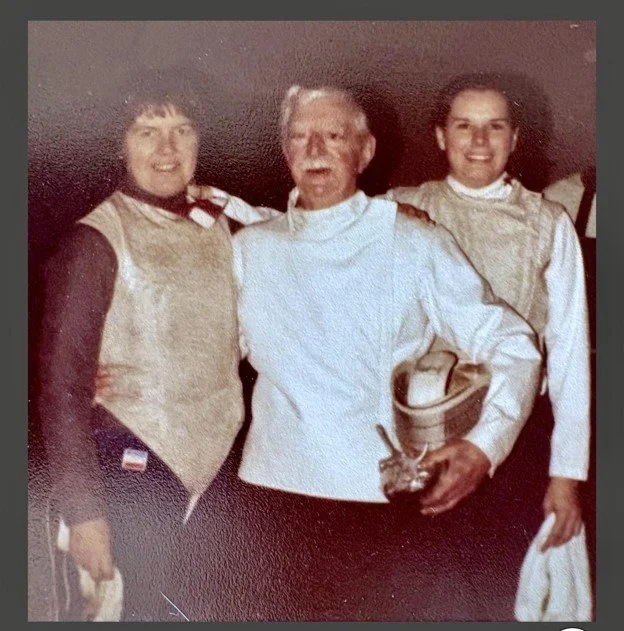
Denise O’Connor, Giorgio Santelli, and Linda Vollkommer-Lynch
Three generations of fencing mentorship: Giorgio Santelli (center), his student Denise O’Connor (left), and Denise’s student Linda Vollkommer-Lynch (right). Vollkommer-Lynch later became head fencing coach at Stevens Institute of Technology, one of many students whose careers were shaped by O’Connor’s mentorship.
Former students still laugh when repeating the phrase decades later. Beneath the humor was a philosophy reflecting her coaching style: keep it simple, trust your preparation and fence with confidence.
When asked what she noticed most about modern coaching, O’Connor had a simple answer:
“The yelling.”
Vollkommer-Lynch agreed.
Both women expressed concern that many modern athletes are coached from the sidelines rather than taught to think independently.
Denise trusted her athletes to figure things out.
She prepared them thoroughly, then believed in them enough to let them compete.
A Room Where Everyone Belonged
For Dr. Nikki Franke, Denise’s influence extended far beyond fencing.
When Franke attended Brooklyn College from 1968 to 1972, America was still in the midst of the Civil Rights era. As a young Black woman, she often found herself navigating spaces that did not always feel welcoming.
The fencing room was different.
Inside Brooklyn College fencing, Franke found acceptance, support and opportunity.
Years later, she would recall that while the world outside the fencing room sometimes reminded her she was different, she never felt that way inside Denise’s program.
Everyone belonged.
That lesson would shape her life.
After graduation, Franke had little desire to leave New York City. Family ties were strong, and moving away seemed unlikely. Denise saw a future Franke could not yet see for herself.
Recognizing her potential, Denise encouraged her to pursue a graduate assistant coaching position at Temple University. According to Franke, Denise even spoke with her mother, whose opinion carried tremendous weight, helping convince both mother and daughter the opportunity was worth pursuing.
The decision changed the course of collegiate fencing.
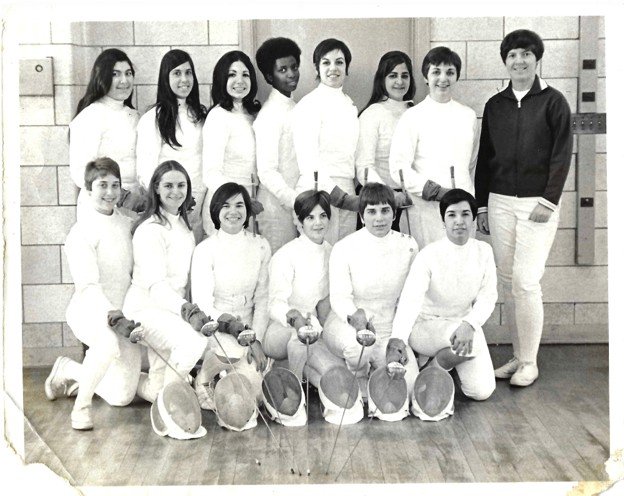
Denise O’Connor (far right) with her inaugural Brooklyn College women’s fencing team. Among the athletes are Sharon Everson (top row, far left) and Nikki Franke (top row, center), whose careers would reflect the lasting impact of Denise’s mentorship and leadership.
Franke left New York and spent more than five decades building one of the nation’s most respected collegiate programs at Temple University. Along the way she developed NCAA champions, All-Americans and generations of student-athletes while becoming one of the most respected coaches in NCAA history.
In 2026, she received the NCAA Pat Summitt Award, recognizing her lifetime commitment to leadership, mentorship and service.
Looking back, Franke sees a direct connection between that career and the coach who first believed she could do it.
“Because Denise believed in me, I believed in myself.”
Quietly Opening Doors
One theme surfaced repeatedly throughout the interviews.
Denise O’Connor rarely spoke publicly about advancing women in fencing.
She was not known for speeches, slogans or public campaigns.
Instead, her actions spoke for her.
O’Donnell Russell recalled an incident involving a Reader’s Digest photo shoot in which several female fencers risked losing their amateur status with the AFLA (Amateur Fencers League of America) because of concerns surrounding compensation and eligibility. According to O’Donnell Russell, Denise worked quietly behind the scenes to help protect the athletes and resolve the situation.
Years later, Jennette Starks-Faulkner experienced that same quiet advocacy.
While traveling with the Brooklyn College team, Jennette recalled an incident at Cornell where access became an issue for several athletes. Without hesitation, Denise simply introduced them by saying:
“These are my daughters.”
The matter was settled.
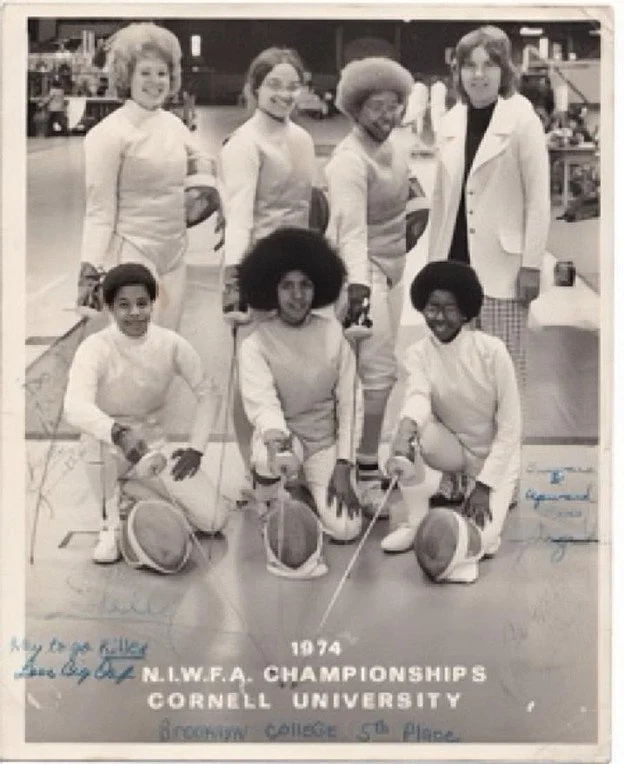
1974 NIWFA Championships, Cornell University. The Brooklyn College women’s fencing team at the 1974 NIWFA Championships at Cornell University. Denise O’Connor often described this as one of the finest teams she coached. The squad completed an undefeated regular season, finished fifth nationally, and helped establish Brooklyn College as a national contender in women’s collegiate fencing. Front row: Jennette Starks-Faulkner (left) and Anne-Marie Walters (center).
Her support often extended far beyond fencing itself. Former Brooklyn College fencer and former Temple University assistant coach Zoila Palacio recalled a difficult period in her life when she briefly faced housing insecurity. Rather than simply offering encouragement, Denise actively helped her search for housing and navigate the situation.
Palacio would go on to become one of the few Latina women coaching at the United States Fencing Association Coaches College at the Olympic Training Center, later founding the Fencing Academy of Orlando and helping establish one of the first middle-school fencing programs in Central Florida.
“That’s just what Denise did,” Palacio recalled. “She took care of people.”
It was another example of the practical, personal ways she cared for the people around her.
Stories like these rarely appeared in newspaper headlines.
Yet they surfaced repeatedly throughout the interviews.
Repeatedly, former athletes described a coach who did not seek recognition for helping others, but who consistently stepped forward when support was needed.
Whether encouraging Nikki Franke to pursue Temple University, mentoring Linda Vollkommer-Lynch as she entered coaching, supporting colleagues such as Nat Goodhartz, helping Zoila Palacio through a difficult period in her life or creating an environment where athletes of different backgrounds felt welcomed and valued, Denise’s approach was remarkably consistent.
She opened doors.
Quietly.
And often without anyone realizing it at the time.
Years later, the women who walked through those doors would go on to shape American fencing themselves.
The Coaching Tree
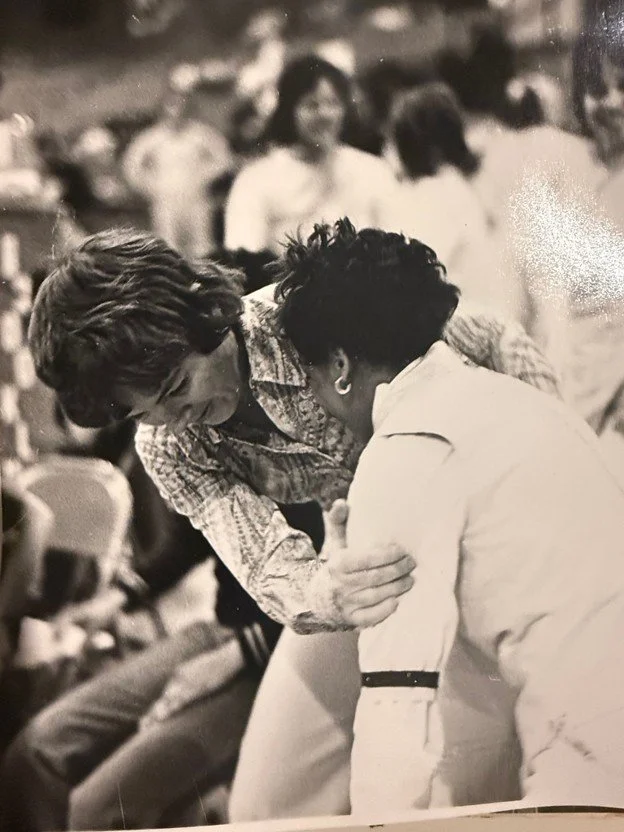
Coach Denise O’Connor speaks with Jennette Starks-Faulkner moments after the decisive victory. According to teammates, O’Connor returned to the venue after an earlier absence to find Brooklyn College trailing. Her guidance and belief helped prepare Starks-Faulkner for the match that would turn the competition around.
Franke was not the only member of Denise’s coaching tree to leave a lasting mark on American fencing.
Sharon Everson was hired as fencing coach and physical education instructor at Barnard College in 1981, serving as coach until 1983 before transitioning full-time into physical education. She became Chair of Barnard College’s Physical Education Department in 1993 and served in that role until 2007, retiring in 2011.
Although she stepped away from collegiate coaching, Everson did not stop teaching the sport. Once again, Denise played a role in the next chapter of her career. O’Connor introduced her to her longtime friend Betty Santelli, who offered Everson a coaching position at Salle Santelli New Jersey. Everson taught and coached there from 1983 through 2004, continuing to develop fencers while building her career in education.
Her influence extended well beyond coaching.
Everson later became one of the most respected officials in American fencing and received USA Fencing’s Referee Emeritus distinction, one of the highest honors awarded to officials for lifetime contributions to the sport. Through decades of work in referee development, education, and officiating leadership, she helped shape standards for generations of referees.
Like Franke, Everson traces much of her philosophy back to Brooklyn College and Denise O’Connor.
Through her work in officiating, education, coaching and leadership, Everson helped shape the experience of countless fencers who may never have realized how far Denise’s influence had reached.
Linda Vollkommer-Lynch represents another branch of that coaching tree.
After fencing under Denise and Santelli, Lynch became the first female coach at Stevens Institute of Technology, where she spent nearly 50 years building one of the country’s premier collegiate fencing programs.
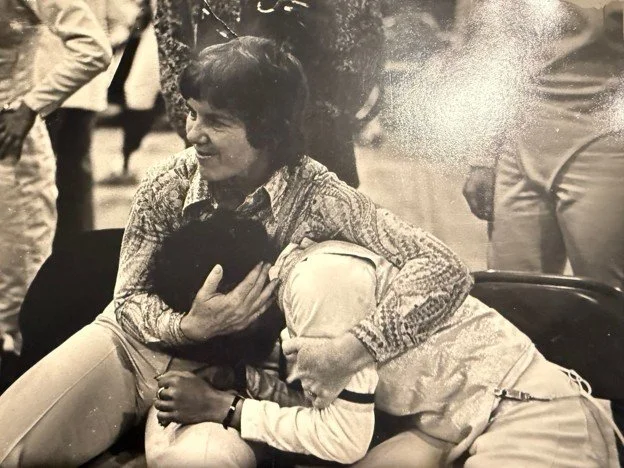
Overcome with emotion after defeating Vincent “Vinnie” Hurley Bradford and securing the team victory, Jennette Starks-Faulkner embraces Coach Denise O’Connor. The photograph captures a relationship that would become a defining theme of O’Connor’s legacy, believing in her athletes before they believed in themselves.
During her interview, Vollkommer-Lynch described Denise as one of the most influential people in her life.
“She was a huge influence on my life,” Lynch said. “A lot of what I do is completely due to her.”
Lynch also recalled Denise’s remarkable selflessness. When legendary coach Giorgio Santelli chose to coach her, Denise stepped aside without hesitation. Years later, when Lynch was considering the opportunity to coach at Stevens, Denise encouraged her to take the leap. What began as a coach-athlete relationship evolved into one of mentor, colleague and friend.
A Colleague, A Confidante, A Friend
Nat Goodhartz knew Denise O’Connor differently than many of the athletes interviewed for this article.
Goodhartz attended Brooklyn College before O’Connor became head coach, yet over the years the two women developed a friendship rooted in mutual respect and shared experience.
That experience was significant.
Goodhartz would go on to become one of the pioneering figures in American fencing, founding Ohio State University’s first women’s fencing team, coaching both the U.S. men’s and women’s national foil teams and becoming the first woman fencing coach inducted into the USA Fencing Hall of Fame.
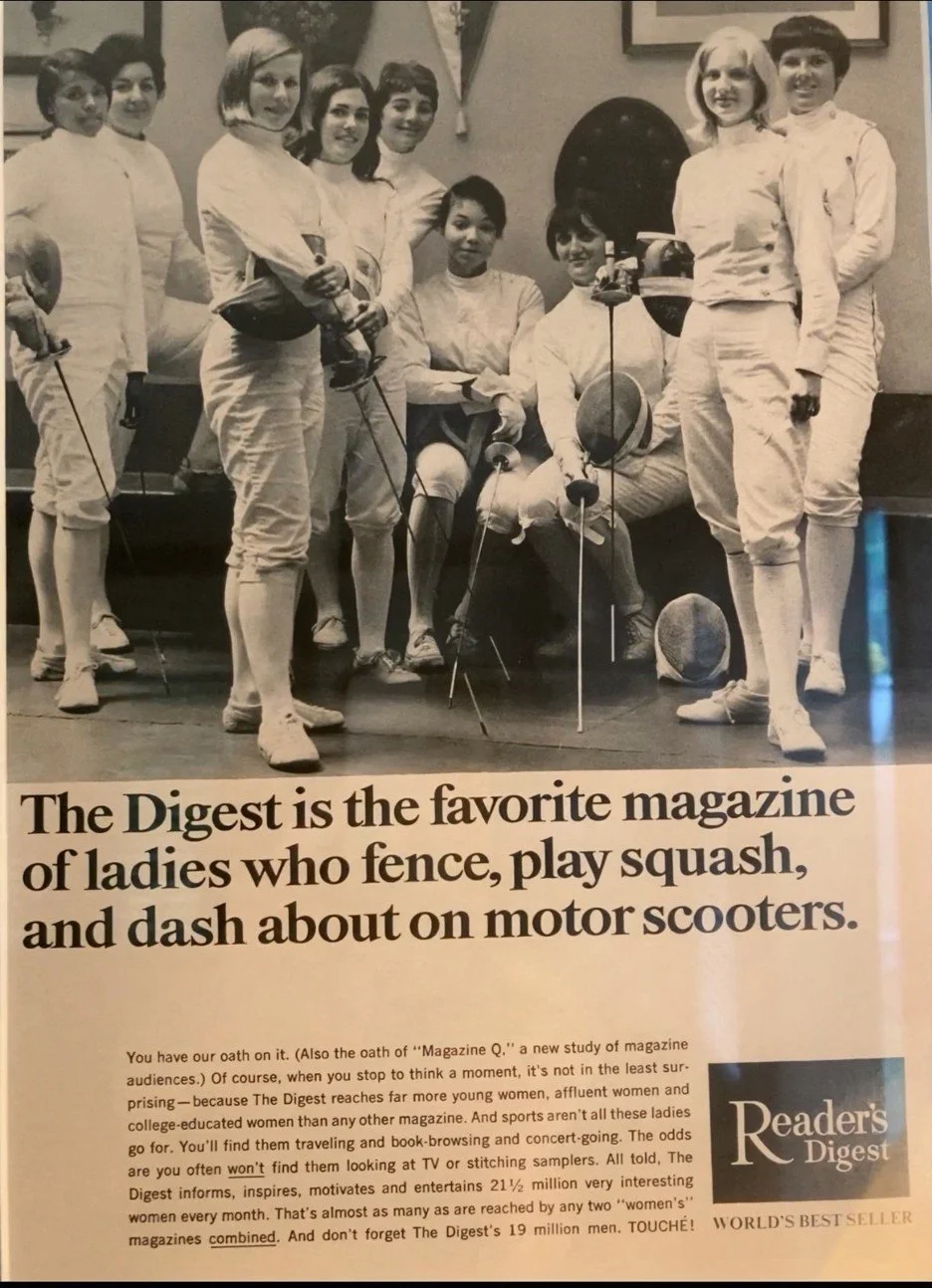
Georgio Santelli’s fencers pose for a Reader’s Digest article during the era when Olympic eligibility depended upon maintaining amateur status. After the photo appeared, concerns were raised within the Amateur Fencers League of America (AFLA) that participating athletes may have received compensation, potentially jeopardizing their amateur standing and Olympic eligibility. Although the fencers were not paid, the controversy prompted efforts behind the scenes to restore their status. Denise O’Connor played an important role in advocating for the athletes involved, an early example of the quiet leadership and steadfast support that would define her career.
As women navigating leadership roles in an era when women coaches were still rare, Goodhartz and O’Connor understood challenges few others could fully appreciate.
According to Goodhartz, Denise was someone she could always turn to for support, perspective and understanding.
Their friendship reflected another dimension of O’Connor’s legacy.
Not only a mentor to athletes, she was also a trusted colleague to many of the women who helped shape American fencing.
Long before formal mentorship programs existed, O’Connor quietly built a network of support among female coaches, administrators and leaders who were often forging paths where few women had gone before.
For Goodhartz, Denise’s greatest gift was not simply technical knowledge.
It was her willingness to stand beside other women as they built careers, programs and opportunities for future generations.
Looking across the careers of Franke, Everson, Vollkommer-Lynch, Goodhartz, Starks-Faulkner, Walters and Huey, a pattern emerges. Long before women’s leadership initiatives became common in sport, O’Connor was quietly helping women build careers, pursue opportunities, and navigate a profession where female coaches, administrators, and officials were still uncommon. Her influence extended far beyond the athletes she coached directly. She helped shape a generation of women leaders who would go on to influence American fencing.
Unlike many of the athletes interviewed for this article, Goodhartz was not Denise’s student. Her admiration was earned peer-to-peer, coach-to-coach, making her perspective particularly meaningful. Together, these women represent one of the most enduring parts of O’Connor’s legacy: not simply the athletes she coached, but the leaders she helped create.
The influence of Denise O’Connor extends far beyond the athletes she coached directly.
Through the careers of Franke, Everson, Vollkommer-Lynch, Goodhartz, Walters, Starks-Faulkner, Huey, Palacio and countless others, her impact continues to reach new generations of fencers.
As Nikki Franke reflected:
“All of our students are like Denise’s grandchildren.”
It is a fitting description of a legacy now spanning decades, institutions and generations throughout American fencing.
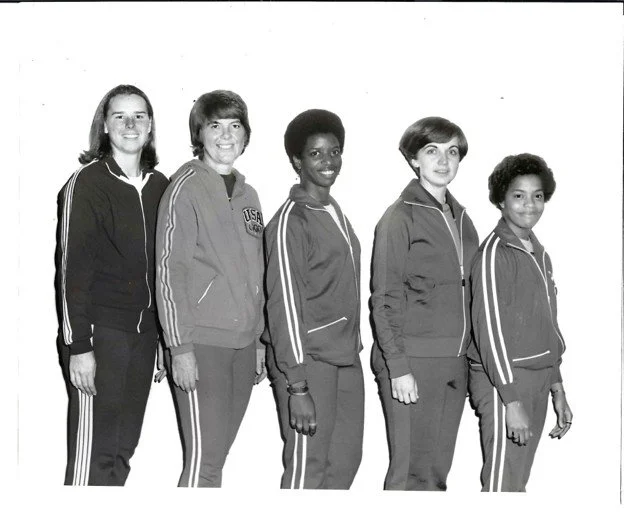
Denise O’Connor (second from left) with Linda Vollkommer-Lynch, Nikki Franke, Sharon Everson, and Jeanette Starks-Faulkner. Together they represent multiple generations of Denise’s influence on American fencing. Each would go on to leave a lasting mark on the sport as athletes, coaches, officials, administrators, and mentors, extending the impact of Denise’s guidance far beyond Brooklyn College.
Denise’s Girls
For many former athletes, the phrase “Denise’s girls” still carries special meaning.
One of the most cherished photographs from Brooklyn College fencing shows a young Jennette Starks-Faulkner in Denise O’Connor’s arms after an emotional victory. The image was taken following the final regular season match against powerhouse San Jose State, with Brooklyn College’s undefeated record hanging in the balance.
Her opponent was Vincent “Vinnie” Hurley Bradford of San Jose State University, a nationally recognized Junior Olympian who would later become a member of the 1984 U.S. Olympic Team.
San Jose State’s roster was filled with tall, highly accomplished college fencers who were expected to dominate collegiate competition.
Few believed a petite Brooklyn College fencer could defeat one of the country’s rising stars.
Denise did.
Long before the victory, Denise had already seen something in Jennette the fencer struggled to see in herself.
The upset shocked many observers, but for Jennette the photograph represented something far greater than a victory.
It captured the trust between athlete and coach.
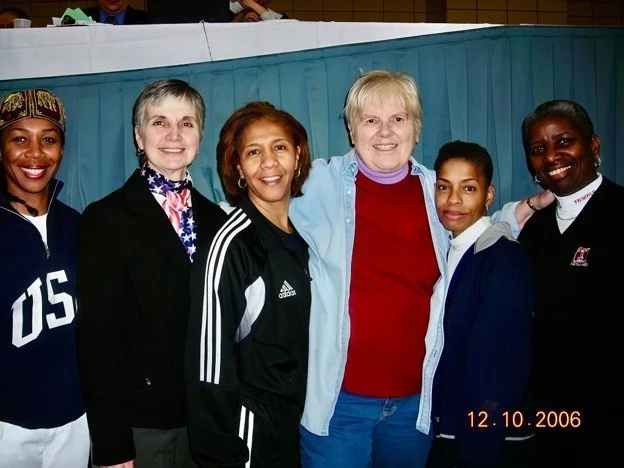
From left to right: Sharone Huey, Sharon Everson, Anne-Marie Walters, Denise O’Connor, Jeanette Starks-Faulkner, and Nikki Franke. Collectively, these women represent the reach of Denise O’Connor’s impact on American fencing. As athletes, coaches, officials, and mentors, they carried forward the lessons she taught and the confidence she inspired. Their stories echo a sentiment shared by so many of Denise’s students: “Because Denise believed in me, I believed in myself.”
Throughout her interview, Jennette repeatedly returned to the same theme.
“She was always trying to remind me that I was better than I thought I was,” she said.
Like many of O’Connor’s students, Anne-Marie Walters carried Denise’s influence far beyond her collegiate career. After coaching at Texas A&M University for seven years, Walters continued competing internationally, representing the United States at 18 Veteran World Championships while helping promote and develop fencing in her native Trinidad and Tobago.
What began as a college sport became a lifelong passion. Walters has now spent more than two decades competing in veteran fencing and represented the United States at 18 Veteran World Championships.
Reflecting on O’Connor’s influence, Walters said:
“Denise shaped and influenced my life.”
Sharone Huey, another member of the extended Brooklyn College fencing family and now an assistant coach at Yeshiva University, echoed many of the same themes. A longtime veteran competitor, Huey captured gold in the Vet-70 Women’s Foil event at the 2026 Can/Am Veteran Cup and continues to give back to the sport through coaching and competition.
As Anne-Marie Walters put it:
“Once you were one of Denise’s girls, you were always one of Denise’s girls.”
More than 50 years later, that bond remains one of O’Connor’s most enduring legacies.
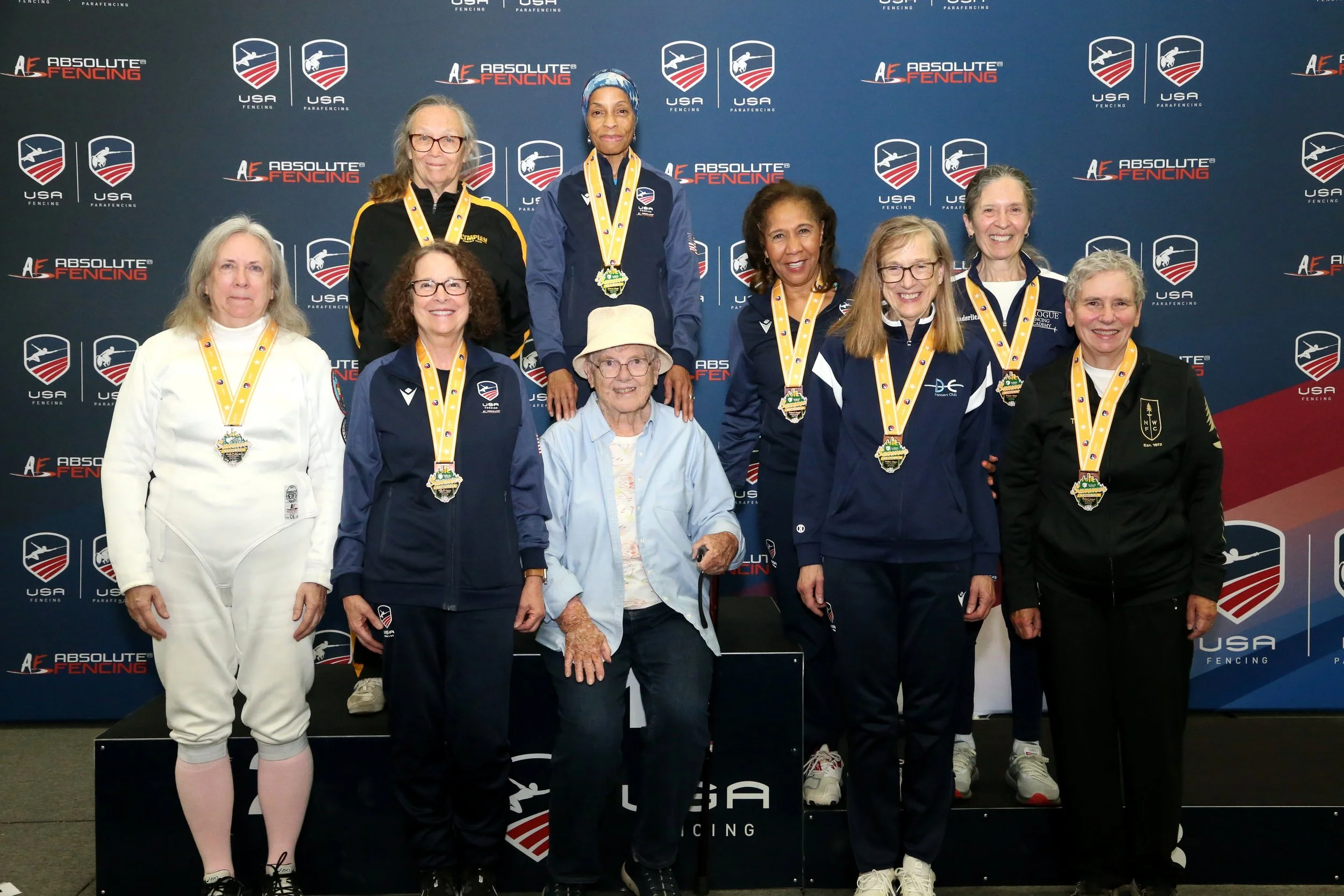
Vet 70 Women’s Epee medalists from 2026 Portland Summer Nationals. Denise O’Connor (lower center, seated) gave out medals, including gold to Jeanette Starks-Faulkner (center, top) and bronze to Anne-Marie Walters (upper row, second from right). Photo: Serge Timacheff/USA Fencing
A Legacy Still Competing
Today, Denise’s influence remains visible on strips around the world.
Jennette Starks-Faulkner is one of the most accomplished veteran fencers in U.S. history. A member of the U.S. Veteran World Championship Team for nearly two decades, she and Anne-Marie Walters have qualified for every Veteran World Championships since returning to competition in the mid-2000s.
In 2025, Starks-Faulkner made history at the Veteran World Championships in Bahrain, becoming the first American believed to medal in all three weapons at a single Veteran World Championships. She captured six medals, including gold in Vet-70 Women’s Foil, gold in the Grand Veteran Women’s Team Foil event and gold in the Grand Veteran Women’s Team Saber event, while also earning bronze medals in Vet-70 Women’s Saber, Vet-70 Women’s Epee and Grand Veteran Women’s Team Epee.
Starks-Faulkner is also believed to be the first veteran woman fencer to qualify in all three weapons for a single Veteran World Championships. Her achievements have helped redefine what is possible in veteran fencing and stand as a testament to a lifetime dedicated to the sport.
Huey also competed in Portland, continuing a lifetime of involvement in the sport as both a veteran competitor and collegiate coach.
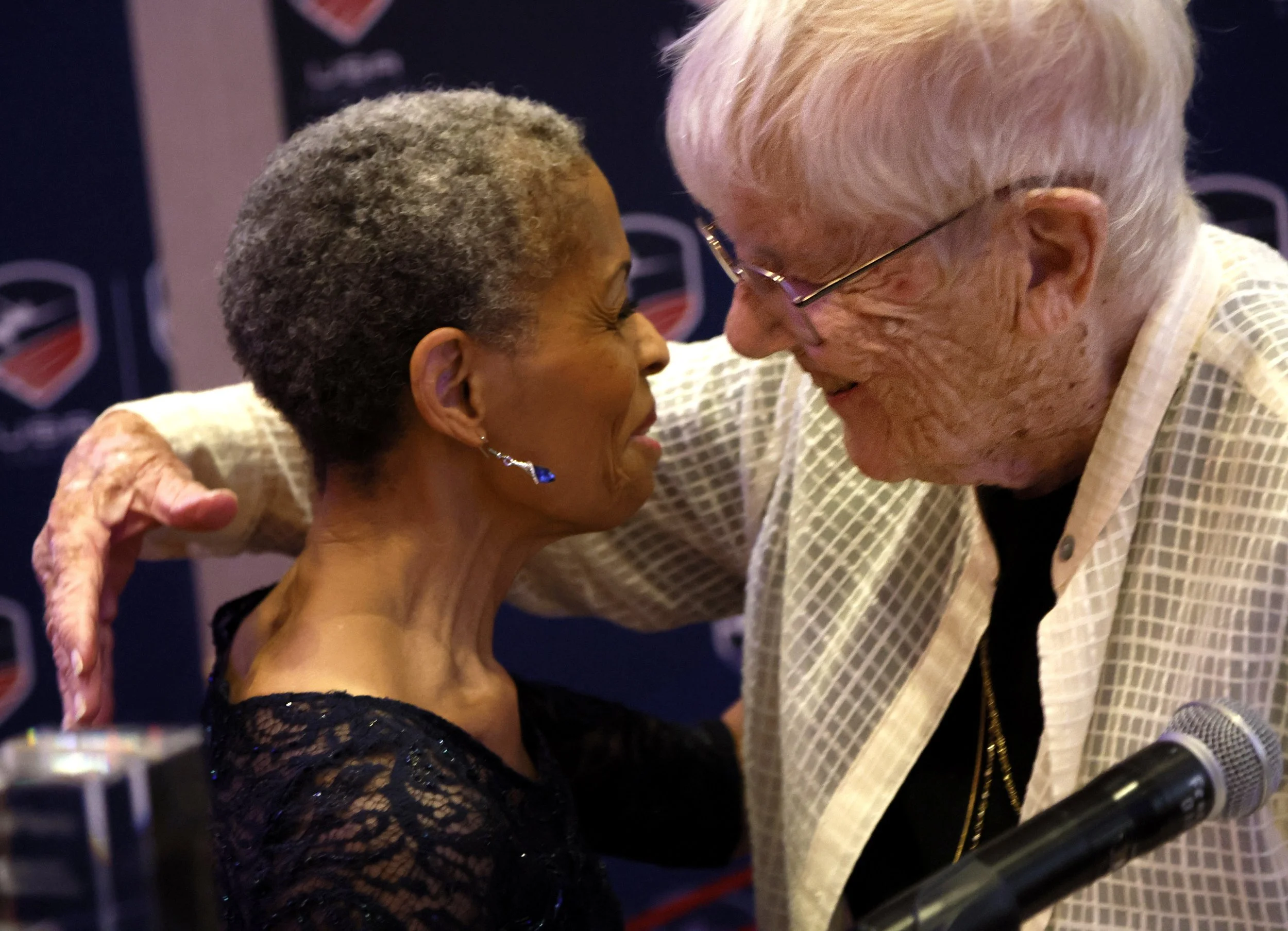
Jeanette Starks-Faulkner and Denise O’Connor at the 2026 USA Fencing Hall of Fame event at Summer Nationals in Portland, where Starks-Faulkner was honored and inducted. Photo: Serge Timacheff/USA Fencing
Together, they represent living examples of the values Denise instilled decades ago.
A Reunion Decades in the Making
This summer in Portland, many of Denise O’Connor’s former students, colleagues and friends gathered once again.
Olympians.
Hall of Famers.
National coaches.
Collegiate administrators.
Referee leaders.
Veteran World Team members.
Among them were Nikki Franke, Sharon Everson, Jennette Starks-Faulkner, Anne-Marie Walters, Sharone Huey and Zoila Palacio, each representing a different chapter of Denise’s enduring influence on American fencing.
Many traveled not simply to compete or celebrate accomplishments.
They came to see Denise.
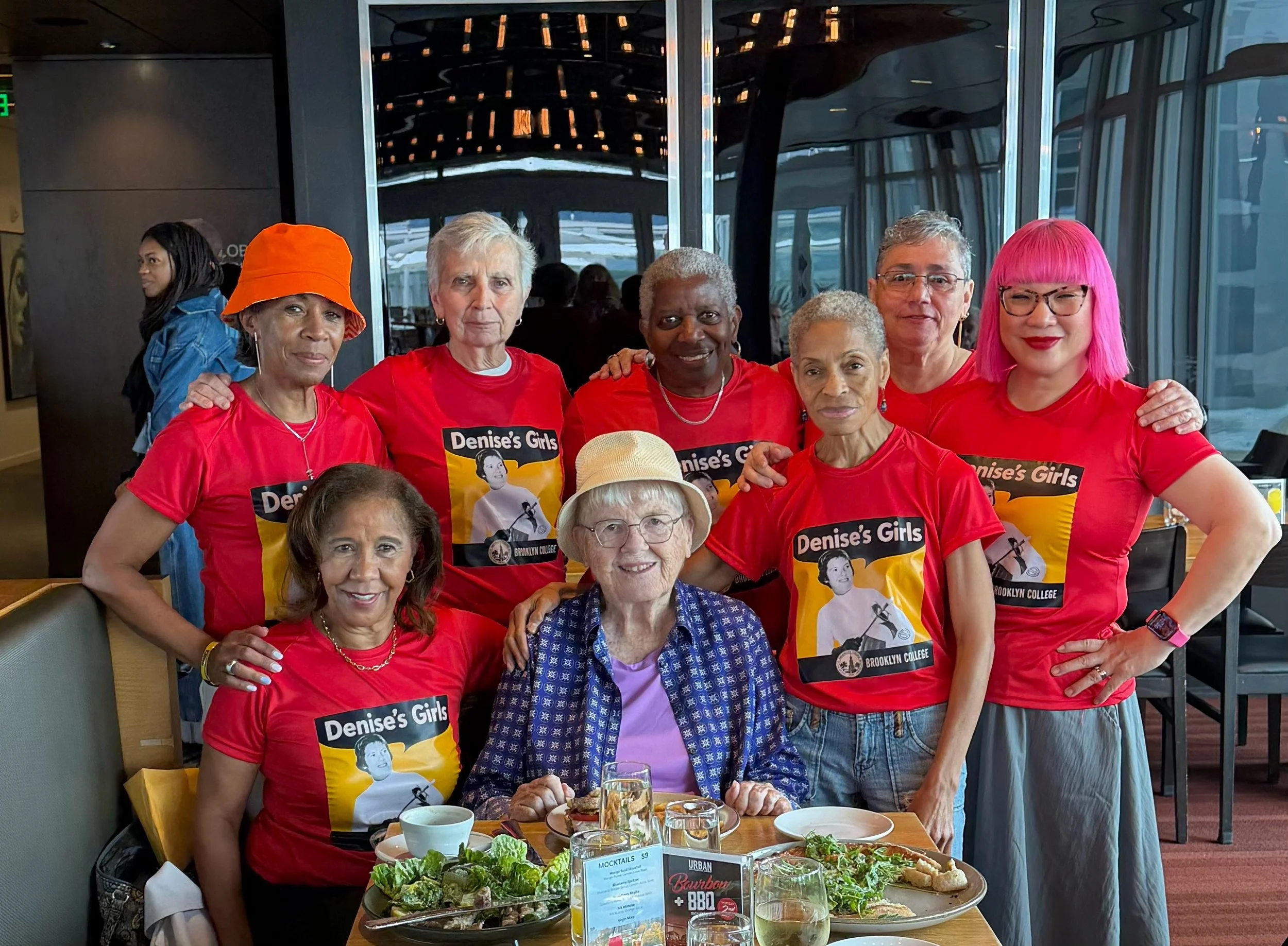
Denise’s Girls, Left to right: Sharone Huey, Sharon Everson, Nikki Franke, Zoila Palacio, Adeline Chung-Feder (top), Ann Marie Walters, Denise O’Connor, Jennette Stalks-Faulkner (bottom)
Some had not stood in the same room together in decades.
For O’Connor, now in her nineties, the reunion offered an opportunity to witness the impact of a lifetime spent in the sport she loves, first as a two-time Olympian and later as a coach, mentor, administrator and advocate for generations of fencers.
For those whose lives she changed, it offered something equally important.
A chance to thank the woman who believed in them first.
Because Denise believed in them.
And because of that, they believed in themselves.