
Or, the Trap of Expectations…
Editor’s Note: In the second contribution to our new “Fencing & Education” column, Corwin Duncan investigates and reports on fencing performance expectations, sharing his own experiences along with cited insights from contemporary researchers, along with tips and tricks for athletes.
Falling into the trap
I was a pretty good fencer — I won nationals a few times, made the world team twice and got some national and international medals (20, but who’s counting) — but I’m still susceptible to the expectations trap.
In my first year as a junior fencer, I wasn’t worried about my results — I was focused on making the national team in my second and third years, when I figured I’d have a better shot. Somehow that season went great, and I ended up ranked 4th nationally. I didn’t go to World Championships however — I didn’t want to go as the alternate, and I figured I’d qualify the next two years.
My second year was a different story. Aside from a good result at the beginning, it was one disappointment after another. Without a single national result all season, I got so discouraged I didn’t even want to go to JOs — I knew I’d do badly and didn’t want to face that pain. I stopped training and resigned myself to missing the competition. At the last minute I had second thoughts and decided to go and fence.
To my surprise, I fenced great. Everything came together: Even when I was down 14-9 in my third DE, I stayed focused, listened to my coach and won 15-14, going on to get second place in the competition.
I went into the season with great expectations and did terribly — then went into one competition with no expectations and did great.
This is an all-too-common pattern we see playing out with other fencers, which brings up a broader question:
What is the impact of expectations on performance?
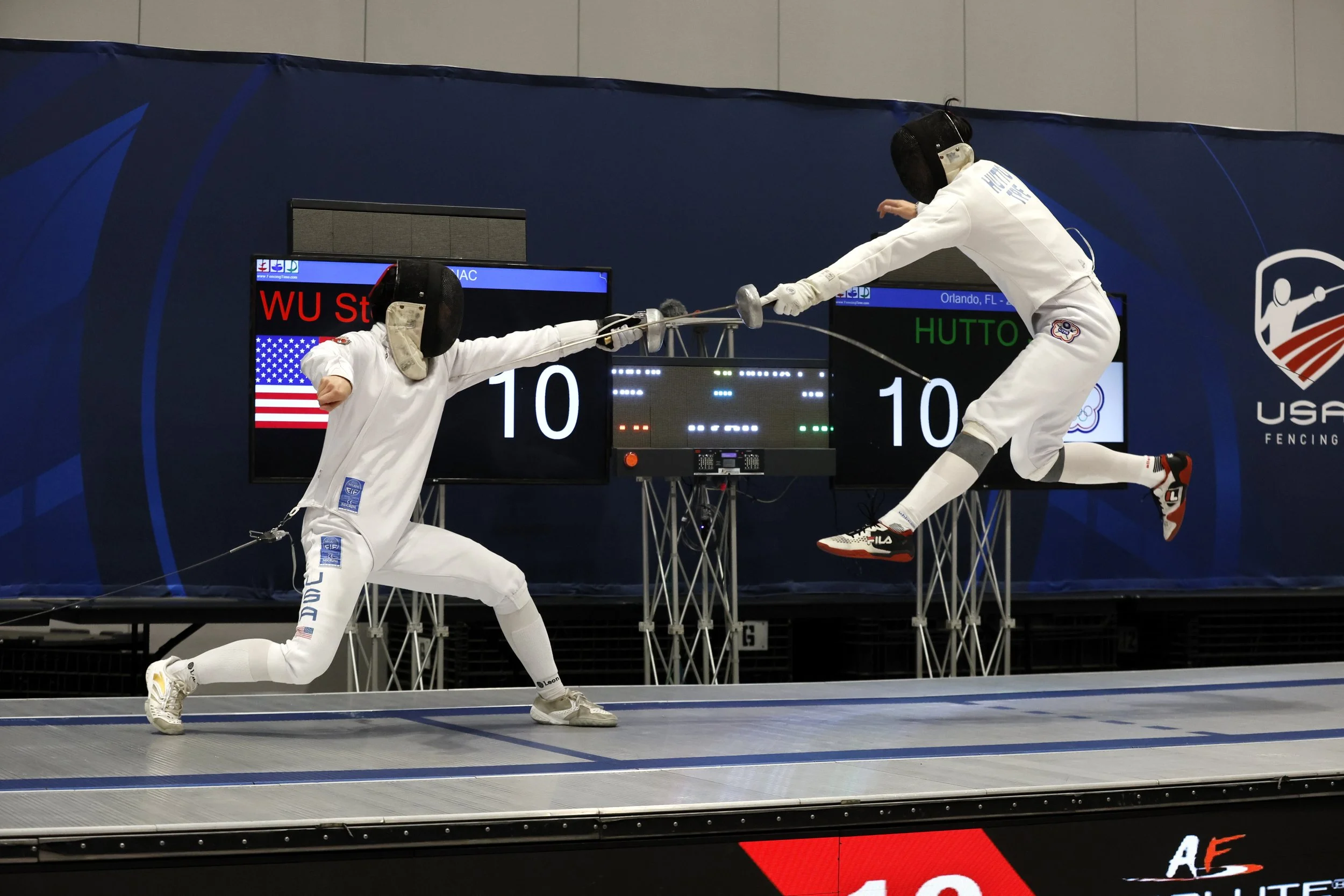
Many fencers have an image of how they should do at each competition they go into—either a specific result in mind, such as making top eight, or fencing at a certain skill level. This may come from past results, a coach or just hope for a brighter future. Unfortunately, there is often a mismatch between the fencer’s expectations of themselves and reality of their performance. The resulting inner turmoil may lead to frustration and a downward spiral.
I’ve heard numerous parents describe this pattern, with an all-too-frequent ending in tears and declarations of quitting the sport, only to go through the whole cycle again a few weeks later. If left unchecked, behavioral scientists have found this can lead to a baseline level of stress going into competitions as the fencer unconsciously anticipates disappointment, making even ‘easy’ bouts anxiety-inducing. If you see this pattern it may be helpful to work with a behavioral professional with outside perspective on the situation, experience in the mental aspects of sports performance and skilled in navigating these situations.
A growing body of research shows the pressures athletes face are not simply performance itself, but also their own and others’ expectations of their performances.
There are different types of expectations: parental expectations, internal expectations — or “self-oriented perfectionism” — and others’ perceived expectations (what we think other people expect of us), termed “socially prescribed perfectionism” by researchers. All of these can add stress and/or hinder performance.
According to a 2025 study on adolescent tennis players, parental expectations may lead to an increase in anxiety within the context of competitions and add a “psychological burden that erodes perceived competence.” In other words, having high expectations of your fencer may not only be causing them anxiety, but can make them feel less confident in their abilities. (1)

(The anxiety caused by expectations can show up physically, or mentally as self-doubt — “cognitive concerns regarding performance” — which helps explain why so many fencers feel less confident after a good result or season.)
Both expectations from oneself and perceived expectations from others have been shown to be related to a “contingent sense of self-worth” — that is, an internal feeling of self-worth being dependent on an outside factor, such as success in athletics. Some fencers may also face “social evaluation anxiety,” or the fear of being viewed negatively by their peers. Many parents of fencers frequently express concern about how their social group at the club will react if their child have a poor performance at a competition. (2)
Finally, when it comes solely to one’s own expectations of oneself, striving towards a high level of performance is often accompanied by a strong negative reaction to imperfection or perceived errors, which can lead to more stress, and in fact athletes’ perceived expectations of success may lead to a performance slump. (3,4)
So where does all this pressure come from? The scientific community refers to it as negativity bias. Humans generally have a tendency to notice, recognize and remember negative experiences rather than positive ones. (5)
That means it’s easy to see positive things as neutral, and neutral things as bad. If you’re expecting to win easily and get ahead, it doesn’t feel like a success but rather just the way things should be. On the other hand, if the score is tied it can feel like you’re already failing.
That may lead to tension, stress, self-criticism and often a snowballing sense of confusion and panic — the feeling of “Why is this going wrong?”
Progress is Up and Down

Many fencers base their expectations on the best results they’ve gotten, but after a standout performance, you’re more likely to have an average or below-average one, a phenomenon called “regression to the mean” — the farther you are from average on one day, the more likely you are to return to average the next.
Expectations vs. Reality
Unmet expectations create tension between the image in your head and what’s actually happening. When you have high hopes and big expectations, that opens the door to fear, stress and tension.
Educating and Learning What to Do
There are a few things that help with releasing expectations, staying in the moment and fencing your best. Educating yourself or your child on the factors already addressed above will help you have a foundational understanding of what’s happening, and even a sense of when to seek help if it’s needed. Trying some of the techniques below may help in the face of frustration and disappointment. If it’s a frequent or significant problem, however, consulting with a professional may be helpful to help guide you in navigating the stress and challenges inherent in fencing.
Try these suggestions below. That said, setting goals for competitions is great, but do it with the understanding and acceptance that some factors are outside of your control, and may or may not happen.
Process orientation
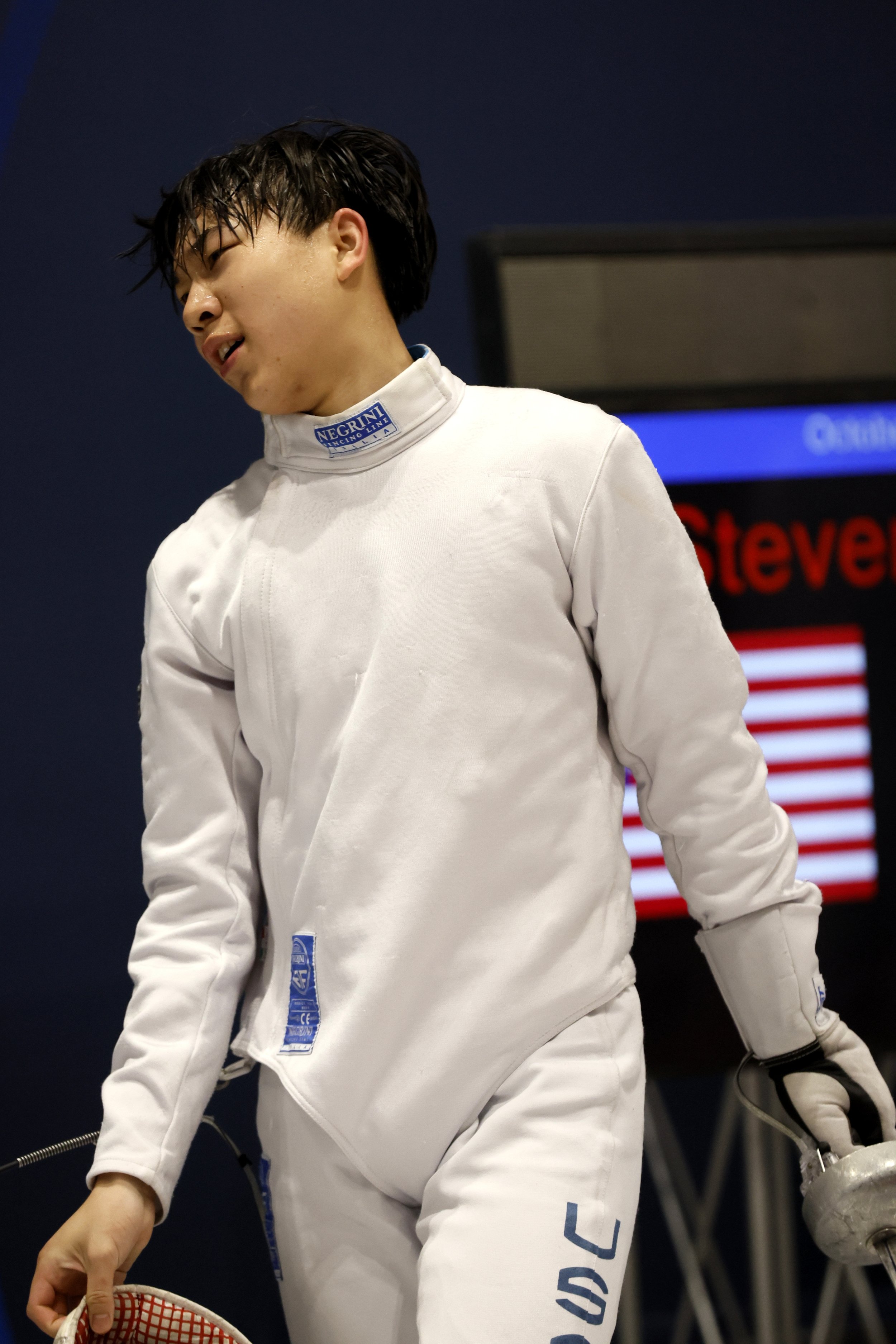
The most important thing you can do to manage expectations (and improve your own or your fencer’s performance) is to focus on the process, or the immediate and concrete actions you can take, and let go of anything outside of your control. Easier said than done, but it gets better with practice. (3,7)
Mindfulness
Practicing mindfulness, or intentional and non-judgmental awareness of the present moment, has been shown to improve emotional regulation. (6) There are many online and in-person resources available to help guide you in learning practicing mindfulness, andr you can find out more about it from books such as Pema Chödrön’s “When Things Fall Apart.”
Breathing
Similarly, mental performance coaches often teach breathing techniques to help athletes focus more fully on their breath, which inherently brings the attention away from expectations and into the present moment. One popular example is box breathing, which involves alternating breathing with holding the breath in a pattern of in-hold-out-hold, typically for four seconds each. Another technique you can try on your own is to take a deep breath in, then another little breath, and then let it all go and relax.
Growth mindset
Finally, it’s helpful to understand that every competition is part of the larger journey of personal development and adopt the attitude that any failure is an opportunity to improve. Looking at every setback as another “rep” in building resilience helps take the sting out of a disappointing performance.
References:
(2) Perfectionism and burnout in junior elite soccer players) (https://pmc.ncbi.nlm.nih.gov/articles/PMC11130505/#s4
(5) https://assets.csom.umn.edu/assets/71516.pdf
(6) https://pmc.ncbi.nlm.nih.gov/articles/PMC10048023/#sec4-healthcare-11-00898
(7) https://www.sciencedirect.com/science/article/abs/pii/S1469029207000921?via=ihub
Photos by Serge Timacheff/USA Fencing
Check out Corwin Duncan’s SharperMindTraining.com as a resource about this and other topics related to performance training.